


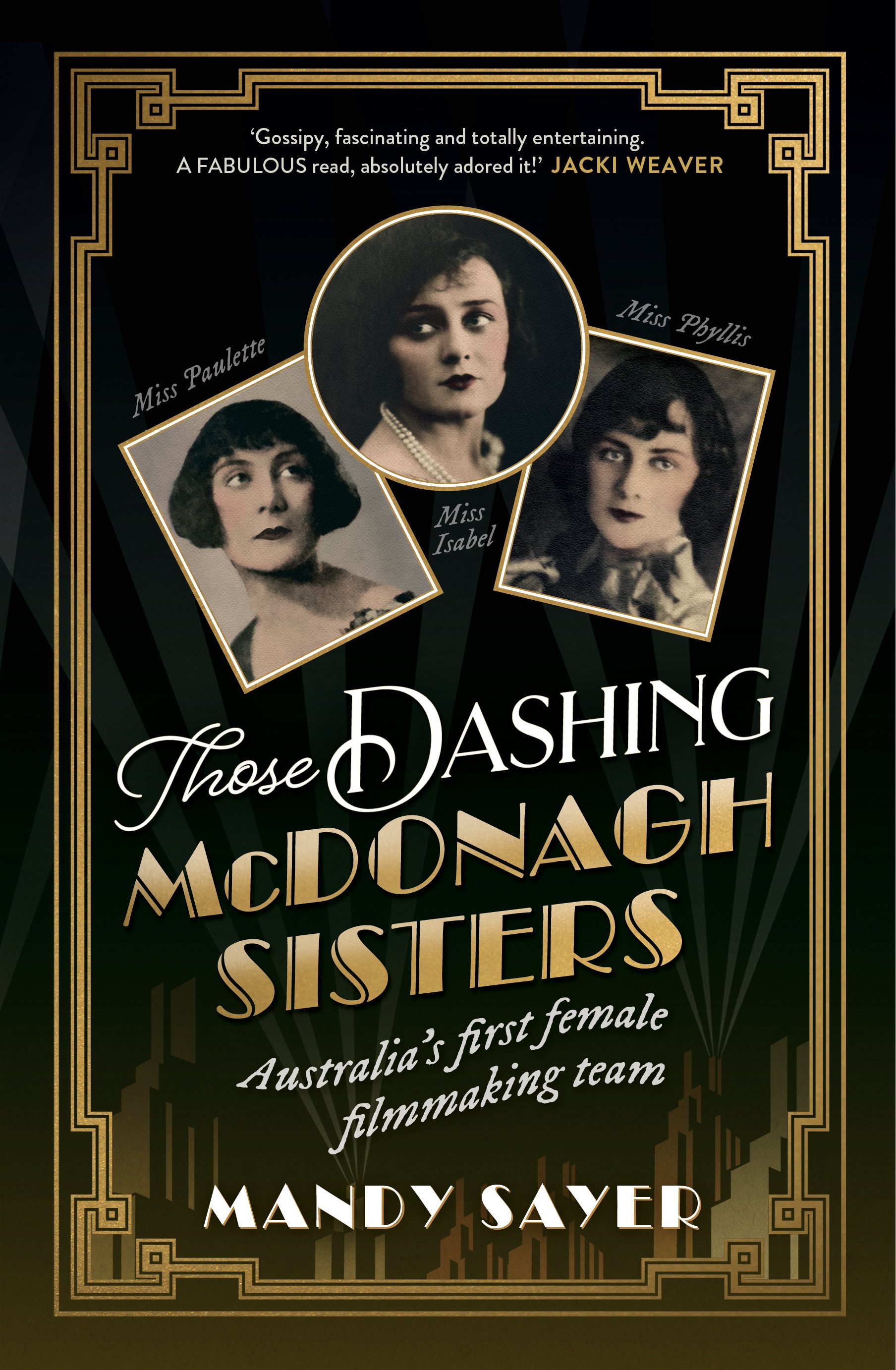
For a trio of siblings who made filmmaking history in Australia, the McDonagh sisters are almost unknown to the modern general public. Between 1926 and 1933, they made four independent feature films in Sydney and a series of documentaries. The three were born to a prominent Sydney doctor and his wife of Chilean descent, with Isabel, Paulette and Phyllis inheriting her dark good looks.
Paulette wrote and directed most of the films they made; Phyllis was producer, art director and publicity manager; and Isabel, under the name of Marie Lorraine, acted as the female leads. As the eldest of seven children, when their parents died within a few years of each other, they undertook to raise their siblings.
Sayer not only details the films they made, with Paulette then being one of only five female film directors in the world, but also traces the history of Australian cinema, from silent films to the talkies, and the battles the McDonagh sisters had by remaining independent of the big studios and film distributors. Their work has been acclaimed in recent years, with the London Film Festival in 2020 screening their most famous silent film, The Cheaters (1929).
Determined to change the early Australian cinema obsession with the outback and the bush, resulting in what they mocked as ‘haystack movies’, the sisters concentrated on urban settings and scenarios.
Sayer describes a major aspect of their lives as ‘enmeshment’, with the seven siblings bound together so closely, they took years to form outside relationships. For anyone interested in early Australian cinema and the bohemian lifestyle the McDonagh sisters embraced, this is a riveting read.
Reviewed by Jennifer Somerville
ABOUT THE AUTHOR
 Mandy Sayer is an award-winning novelist and non-fiction writer (The Poet’s Wife). As the daughter of a musician, she spent her childhood and adolescence living a nomadic existence in Australia and America. Sayer’s work has been published in the US, UK, Germany, Brazil, Japan and China. She lives in Sydney with her husband, playwright and author Louis Nowra, and their two dogs, Coco and Basil.
0 Comments