




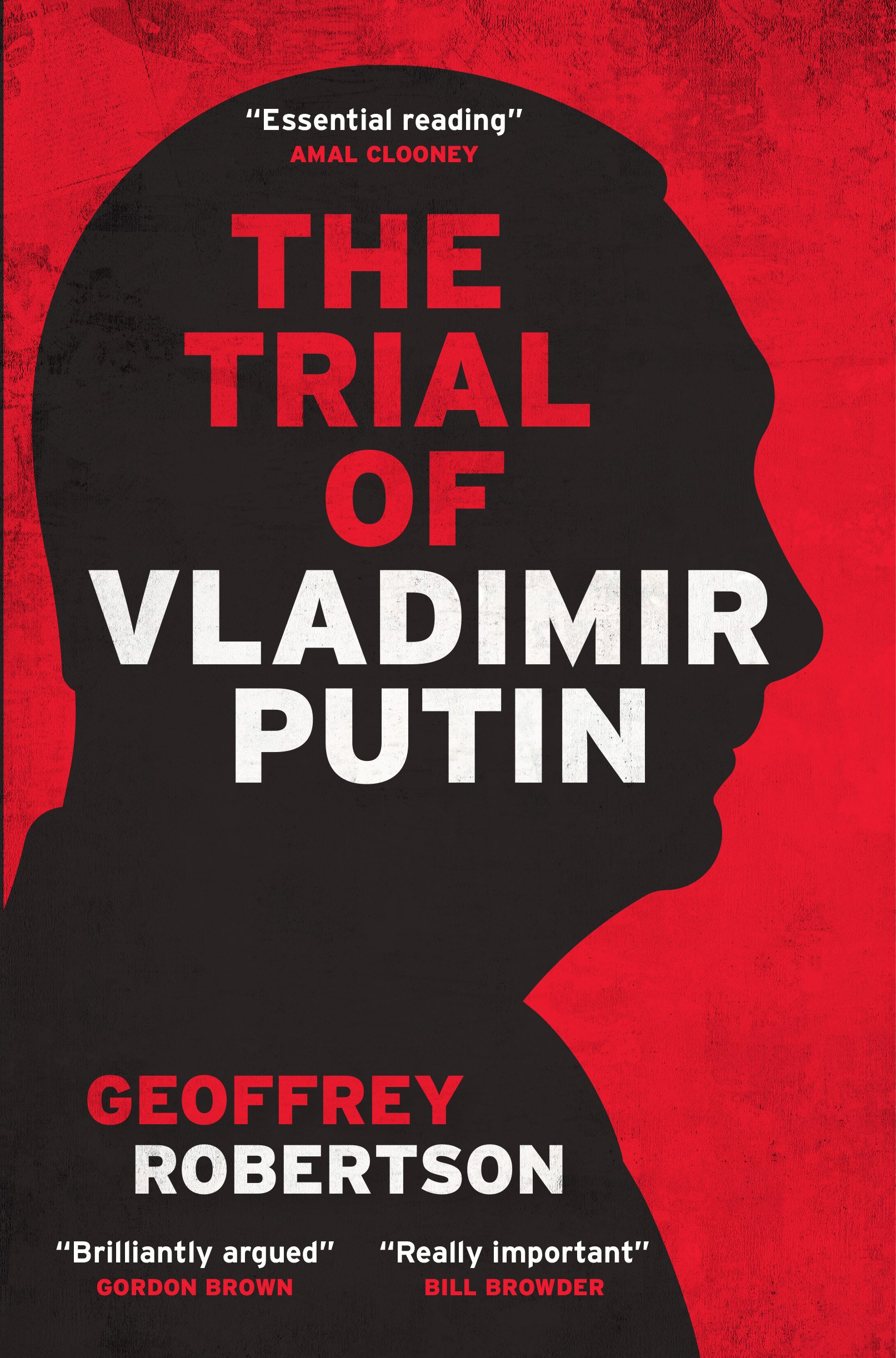
Readers with long memories will recall the ABC panel show Hypotheticals that featured Geoffrey Robertson QC back in the ’90s. The Trial of Vladimir Putin is something of a hypothetical as well – the chance of Putin ever entering a jurisdiction where he may be arrested for war crimes being basically zero. But Robertson is an eminent human rights lawyer who has been at the coal face, running cases involving human rights law for 40 years, so if anyone can make the case for the utility of international law in relation to human rights and war crimes, it’s him.
As Robertson points out, the Serbian war criminal Milosevic was once considered invulnerable. Serbian domestic politics changed, and he was rendered by the Serbs to an international tribunal in return for a lifting of sanctions. It is hard to imagine Putin surviving the fall of his regime long enough to face justice, but it is a theoretical possibility. The Trial of Vladimir Putin explains what would happen at such a trial (or one in absentia) and its juridical basis.
As such, this is something of a primer on International Human Rights Law and the International Criminal Court. Perhaps surprisingly, international law goes back at least to the treaty of Westphalia in 1648 (which concluded the Thirty Years War) but the current system was established in the wake of World War II and the Nuremberg and Tokyo war crimes trials.
While exemplifying the principle that wicked people should only be shot after a fair trial, they influenced the three bases of International Human Rights Law – the Universal Declaration of Human Rights, the Geneva Convention, and the Genocide Convention. After the Balkan wars of the 1990s the Security Council established a tribunal pursuant to its powers under the UN charter. Other tribunals were established for Rwanda and Sierra Leone. In 2002 the ICC was established pursuant to an international treaty.
So you get the picture – these international tribunals can have real force – provided their constituent members agree. Robertson points to many successful prosecutions of third world war lords and fallen dictators.
The catch with the ICC is that US, China, Israel, and Russia are not members of the ICC. For Putin to face justice he will have to be handed over by a very reformed Russian State. That is hard to imagine. What is easier to imagine is a series of prosecutions arising from the current war in Gaza. Now that would make an interesting hypothetical.
Reviewed by Grant Hansen
ABOUT THE AUTHOR
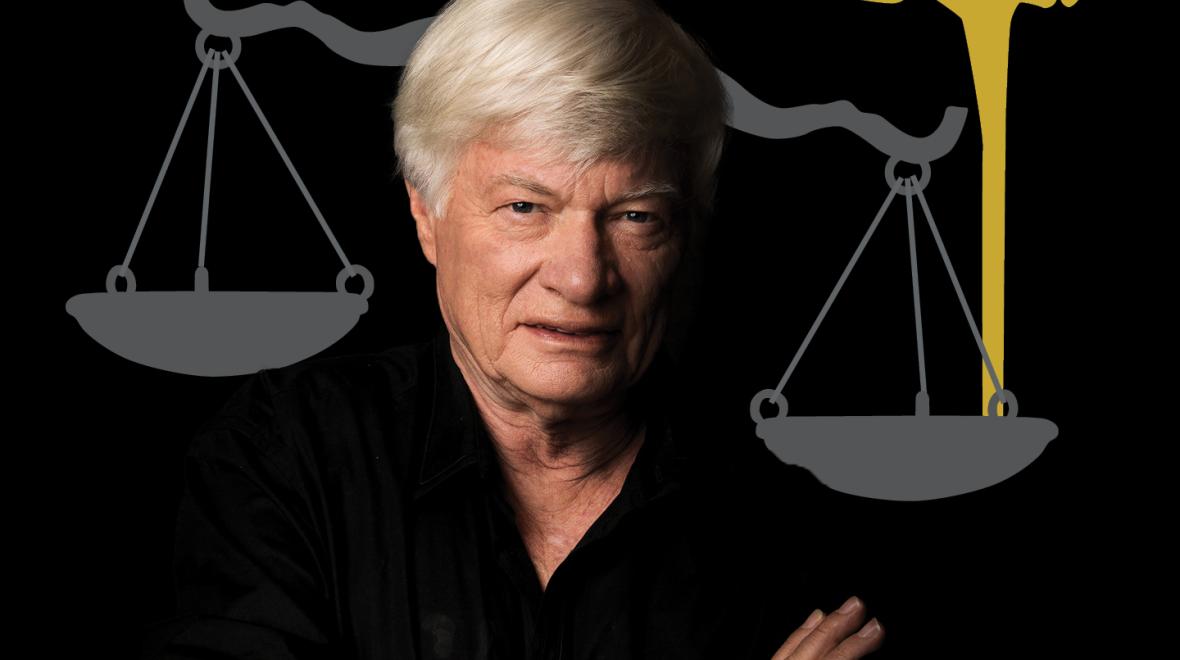 Geoffrey Robertson AO QC is a barrister, author and one-time host of ‘Geoffrey Robertson’s Hypotheticals’ on the ABC. He is founder and head of Doughty Street Chambers; now the largest human rights practice in Europe; where he has been mentor to Amal Clooney, Jen Robinson, Keir Starmer and others.
Robertson was born and bred in Sydney. A Rhodes scholarship took him to England where he is now based, and he holds dual citizenship. He is a Master of the Middle Temple and a visiting professor at the New College of Humanities. His autobiography, “Rather His Own Man – In Courts with Tyrants, Tarts and Troublemakers” was published by Penguin/Random House in 2018.
From his outspoken leadership of students in the 60s to his work fighting for the lives of death row inmates, GR’s career has been marked by courage, determination and fierce independence. He was involved in the prosecution of General Pinochet and Hastings Banda and in the defence of Salman Rushdie, Mike Tyson, Julian Assange and Lula (former president of Brazil). Among much else, he secured Yulia Tymoshenko’s release from prison in Ukraine, exposed the Medellin Cartel’s gun-running in the Caribbean and helped restore democracy in Fiji. He is credited with changing the way we think about human rights, notably through his book Crimes Against Humanity.



0 Comments