




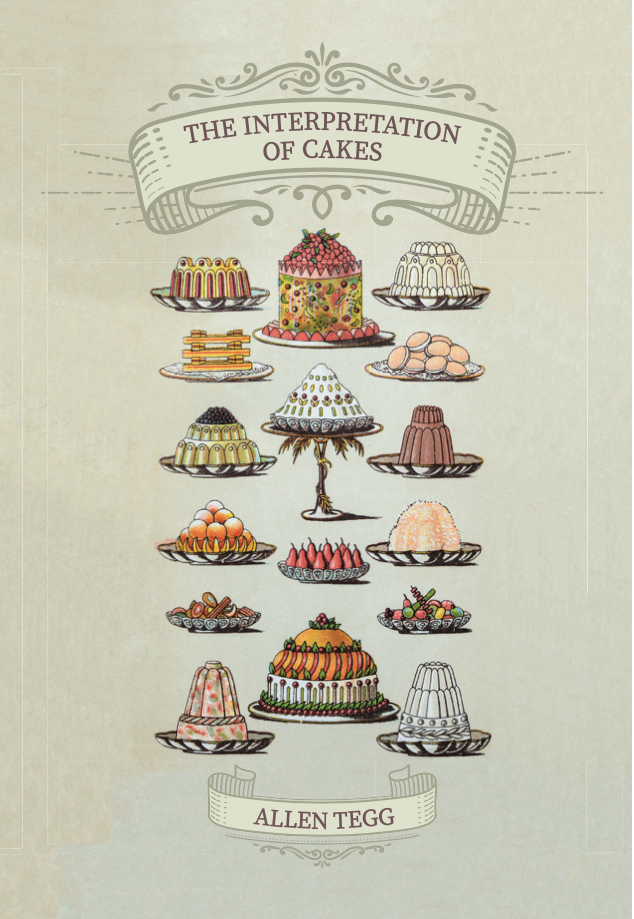
I’m not quite sure what to make of this novel. The title refers to a cake shop in the Jewish area of Budapest pre-World War I and the use of its cakes in helping residents in psychological distress. It’s listed as fiction, and the title suggests the contents might be whimsical, but the narrative relates to quite serious issues, and it reads in part – especially with intrusions by the narrator – as a psychotherapy primer.
In 1916, Yaakov Brodsky loses the mental strength to keep his patisserie running. In a frenzy, he bakes cakes and fills all available window space with different cake varieties. Yaakov retreats home and locks himself in the pantry. His son, Isaak, mans the shop counter but has little life experience.
His first customer, Hershko Kubrinszky, thrusts his fist into a cake and walks out. Isaak begins to wonder if certain cakes have meaning for those purchasing them, and if other cakes might be more relevant to their particular psychological states. Keila Davidovitis has an outpouring of emotion (on multiple levels) and a potential love interest for Isaak, Aliza Lövy, needs to feel ‘goosebumps’ in the presence of a man.
Talking with Isaak seems to help these characters break through their troubles. Students passing by the shop remark, ‘A revolution in a cake shop. How Hungarian. How Jewish.’ Isaak divides his time between the shop and the family home, where his sister, Shoshana, is held captive by her own beauty, and his mother, Nina, overshares her personal life with her children.
The dialogue is very stylised, with history and exposition aplenty. The concept is original, however, and the reading is slow, despite The Interpretation of Cakes being a very short book.
Reviewed by Bob Moore
ABOUT THE AUTHOR
 In his early 20s, Allan completed his Commerce Degree with a major in economics and was employed as a management trainee with the BHP Pty Ltd. Allan decided he was not ready to settle into a career, particularly in the corporate world. It was a life changing moment.
Allan was absorbed into the cosmology of the community. He was told Dreamtime stories, taken to sacred sites, held sacred objects, danced in corroborees and attended initiation ceremonies. He was also taken to places where Aboriginal people had been massacred in the early days of white settlement.
Being immersed in another culture challenged Allan to explore the assumptions that underpinned his own upbringing and encouraged him to develop a wider view of what it meant to be human.
Allan gained a First Class Honours and moved to Sydney to undertake a PhD. However, he had become increasingly interested in the inner world and started to explore psychotherapy.
Allan has worked as a psychotherapist in private practice in Sydney since 1991.
He and his partner live in the Sydney’s Inner West. His three children are married and work in various professions.



0 Comments