



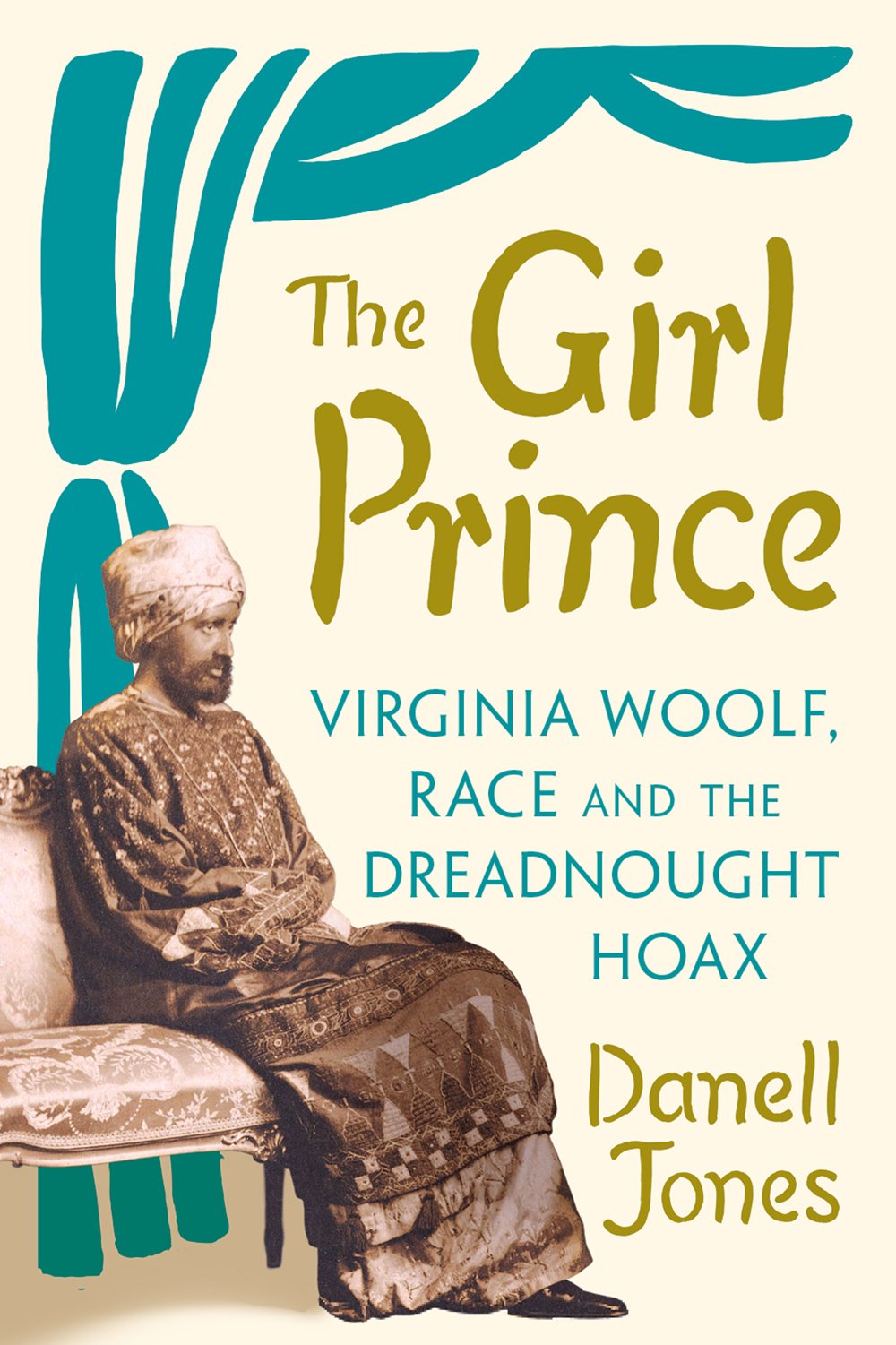
This book is in three parts. Firstly, it is the story of a group of young people who in 1910 dress up as Abyssinian royalty and manage to board Britain’s battleship the Dreadnought. Secondly, it is about the early life of Virginia Stephen (better known by her married name, Woolf). Lastly it is an examination of British attitudes towards race, in particular to Africans.
The stunt on the Dreadnought seems to have taken on various meanings over time. From Woolf’s protest about war and her own pacifism to a critique of the early 20th century British Empire and all it stood for. In the end we accept it was a ‘prank’, a stunning hoax, from a group of young people who came from a privileged background.
That Virginia was part of this hoax is by far the most interesting part. How her early life experiences helped shape her into one of the most important modernist 20th century authors. Virginia, although brought up in an ‘enlightened’ household, was nevertheless subject to the prevailing attitudes towards women.
Lastly it examines British attitudes towards Africans. The fact that a group of educated young people blackened their faces with cork, dressed in outlandish costumes with appropriate beards and created non-sensical words (supposedly Abyssinian) says a great deal about the attitudes of that time. This is contrasted with Africans in England at the time and their lived experiences of racism.
I’m not convinced the three sections are really connected. It is a long bow the author draws to join them to produce a cohesive book. But if you take the parts individually, The Girl Prince is an interesting read and well researched.
Reviewed by Anthony Llewellyn-Evans
ABOUT THE AUTHOR
 Danell Jones’s poetry, fiction, essays, and reviews have appeared in various publications including the Denver Quarterly, Beyond Baroque, Red River Review, Gingko Tree Review, Sow’s Ear Poetry Review, Tonopah Review, The Virginia Woolf Miscellany, and Virginia Woolf: Themes and Variations. She regularly reviews contemporary poetry. She was awarded the Jovanovich prize for poetry from the University of Colorado and has been a finalist for both the Breadloaf Writers’ Conference Poetry Prize and the PEN/Nelson Algren in Fiction.
Jones has a Ph.D. from Columbia University, where she was awarded a Whiting Fellowship in the Humanities and a Bennett Cerf Award for her work on Virginia Woolf. She is the author of The Virginia Woolf Writers’ Workshop: Seven Lessons to Inspire Great Writing (Random House), Desert Elegy (Finishing Line Press and a finalist for the New Women’s Voices Prize in Poetry), and An African in Imperial London (Hurst), which won the High Plains Book Award for Nonfiction.



0 Comments