




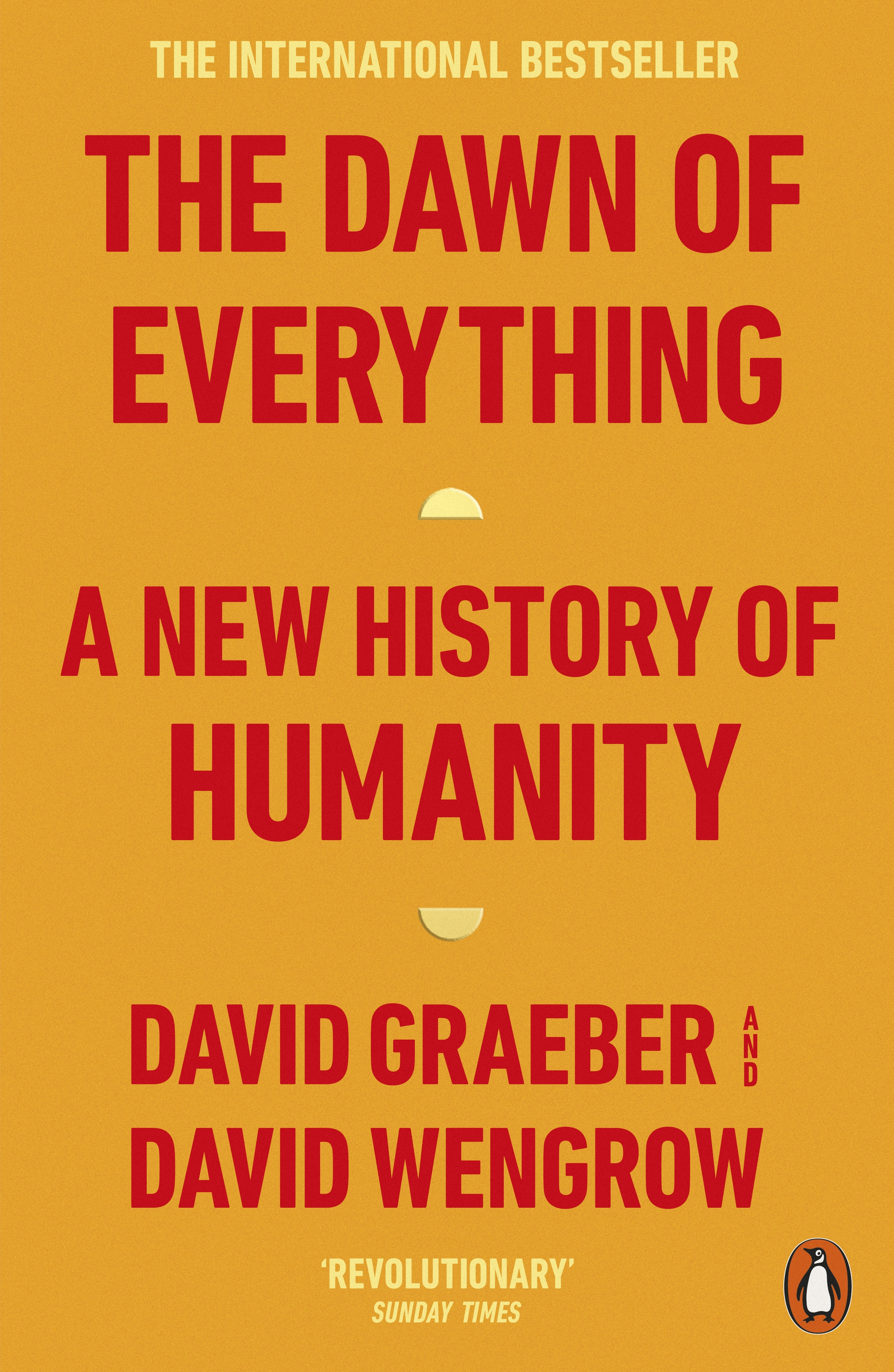
As the subtitle suggests, The Dawn of Everything is an ambitious book. Its premise is that there are essentially two competing theories of the nature of early human society: Thomas Hobbes famously posited that in a state of nature human life was ‘nasty brutish and short’, whereas Jacques Rousseau, au contraire, posited a noble savage who succumbed to the imperatives of agriculture. More recently anthropologists and archaeologists have argued for a lineal transition from egalitarian, small scale hunter-gatherer groups through to hierarchical agriculturalists organised into city states. kingdoms and empires.
Graebner and Wengrow attempt to show that there was nothing linear or simple about the evolution of human societies and that many groups experimented with agriculture but then rejected it while maintaining the capacity to run large scale societies and carry out major construction works such as Stonehenge. In the course of their argument, they produce plenty of fascinating accounts of complex hunter-gatherer societies from both the distant past and more recent studies of existing communities.
The only problem with all this is that their target is a massive straw man. Although Hobbes and Rousseau are important in the history of ideas, the simplistic lineal model of human social evolution they purport to attack is only found in naive universal histories – poor old Francis Fukuyama and Jared Diamond come in for a kicking for their somewhat simplistic analyses of early human society but neither of them is an expert in that field and the work of scholars who specialise in prehistory are far more nuanced – and indeed it is on the work of such scholars that Graebner’s and Wengrow’s argument is based.
That said, it’s a good argument. They may be pushing at an open door but there is no doubt this is a useful synthesis of modern thinking and research on early human societies. The picture that emerges is anything but linear.
People in Britain adopted then abandoned most forms of agriculture but still built Stonehenge. In Meso America the Teotihuacan adopted then rejected a hierarchical priestly society and human sacrifice while continuing to live in a large stone built city. In the Ancient Middle East free literate cities in the lowlands were in stark contrast to the nearby warrior hill tribes who scorned literacy. In Bulgaria and the Ukraine mammoth hunters built small cities.
The point they want to make is that everything in human history is contingent. Agriculture was not always associated with hierarchical power structures. Hunter-gatherers built monuments. Warfare as we understand it was not endemic.
The question this all begs of course is why, by the time we get to recorded history, hierarchy and agriculture were dominant. Societies such as Classical Athens with its radical democracy based on the appointment of officials by lot were an exception. And even Athens had an economy based on slavery.
Even so, this is an optimistic work that argues we are not hardwired for oppression. As the authors ask: ‘What happens if we accord significance to the 5000 years in which cereal domestication did not lead to the emergence of pampered aristocracies, standing armies or debt peonage, rather than just the 5000 in which it did?’ It’s a good question.
Reviewed by Grant Hansen
ABOUT DAVID GRAEBER
 David Graeber was a professor of anthropology at the London School of Economics. He is the author of Debt: The First 5,000 Years and Bullshit Jobs: A Theory, and was a contributor to Harper’s Magazine, The Guardian, and The Baffler. An iconic thinker and renowned activist, his early efforts helped to make Occupy Wall Street an era-defining movement. He died on 2 September 2020.
ABOUT DAVID WENGROW
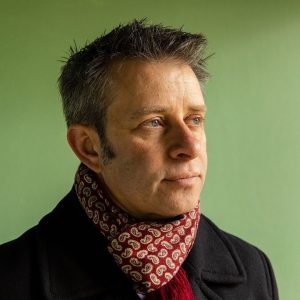 David Wengrow is a professor of comparative archaeology at the Institute of Archaeology, University College London, and has been a visiting professor at New York University. He is the author of three books, including What Makes Civilization?. Wengrow conducts archaeological fieldwork in various parts of Africa and the Middle East.
Listen to a TED TALK by David Wengrow



0 Comments