




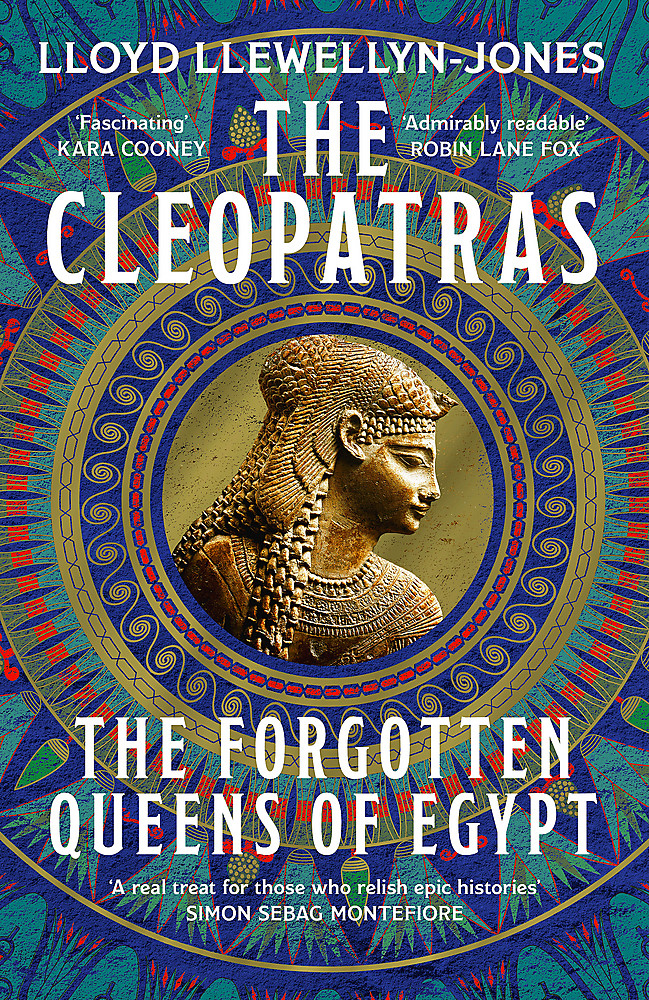
Indeed, before Cleopatra VII – the famous one – (thanks to Shakespeare, Elizabeth Taylor and Lyndsey Marshal in the classic HBO series Rome) there were six Queens of the Ptolemaic Kingdom of Egypt with the name Cleopatra. There were also some other Cleopatras who married other Hellenistic monarchs. Undeservedly, they are largely forgotten.
Undeservedly because, while the Ptolemies were a prime example of the dangers of inbreeding and included some highly sociopathic figures, the Ptolemaic project – the attempt by the dynasty descended from one of Alexander’s generals who seized control of Egypt – to create a stable kingdom based on a synthesis of Egyptian and Greek culture and religion is of profound interest. And, as Jones makes clear in this readable and well-researched narrative history, the Cleopatras were much more than figureheads and played a key role in creating the unique, hybrid civilisation which was Ptolemaic Egypt.
For those who came late, this is the Hellenistic period (from about 323 BCE to 32 BCE) when kingdoms established by Alexander the Great’s generals carved up and ruled his empire. The Ptolemies took Egypt, the Seleucids took Syria and Iran, the Antigonids took Macedonia. This was a multipolar world which spread Greek culture as far as Afghanistan but in Egypt, more so than in its competitor states, the Ptolemies embraced local practices and institutions and presented themselves to their subjects as Pharaonic rulers who worshipped Egyptian Gods, wore Egyptian clothes and understood and used Egyptian symbols. Sibling marriage and other enormities ensued but most of the time the Ptolemaic Kingdom was stable and wealthy – and was ruled by teams of closely related (but not necessarily harmonious) men and women.
In The Cleopatras Jones does a good job of stitching together the scattered but numerous sources for Ptolemaic Egypt (all that surviving papyrus!) to give us a detailed account of the lives of these extraordinary women.
Ultimately, the Ptolemies, like the Antigonids and the Seleucids before them fell prey to the Romans but the last woman standing was Cleopatra VII who nearly pulled off the survival of her dynasty while charming some of the most dangerous characters the Roman Republic ever produced – she failed, but Cleopatra VII at least was not forgotten.
Reviewed by Grant Hansen
ABOUT THE AUTHOR
 Lloyd Llewellyn-Jones is Professor of Ancient History at Cardiff University. He has spent extensive time in Egypt, the Middle East and Iran and is a specialist in the histories and cultures of Near Eastern and Hellenistic antiquity and champions a global approach to the study of the ancient world and its reception.
Lloyd has appeared on the BBC, Channel 4, in The Times and other media outlets and in many popular podcasts. He has worked closely with the British Museum on major exhibitions. His previous books include Persians: the Age of the Great Kings, Ancient Persia and the Book of Esther, The Hellenistic Court, Sister-Queens in the High Hellenistic Period, Aphrodite’s Tortoise: The Veiled Women of Ancient Greece, and Designs on the Past: How Hollywood Created the Ancient World. He is currently writing a book on the ancient mega-city of Babylon.
Born in Cefn Cribwr, Lloyd lives in Taffs Well, Wales.



0 Comments