



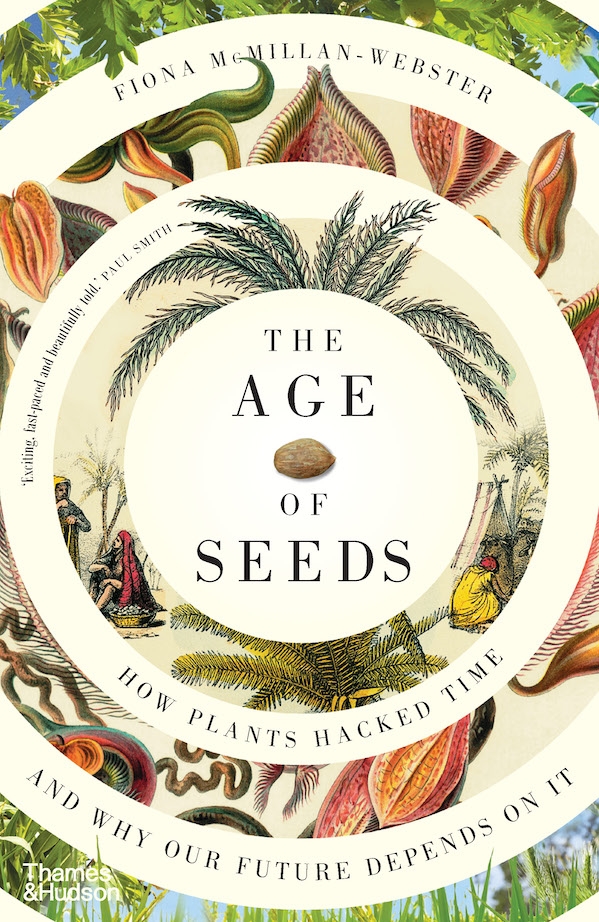
Disarmingly, this erudite but highly readable book about seeds starts with a scenario familiar to many home gardeners: a forgotten packet of sunflower seeds failed to germinate.
This set the author, a Brisbane science writer, on a mission across the world, to know why some seeds stand the test of time, while others do not. She discovered that seeds are time travellers, and many have fascinating stories to tell. Starting with the amazing story of 2000-year-old date palm seeds which were persuaded to germinate in Israel.
When speaking to a professor of plant ecology at the University of Kentucky, she heard a phrase to which she often returns in this book: ‘A seed is a baby plant in a box with its lunch.’ That gets to the heart of the matter because most seeds contain a very small immature plant, complete with a stem, root structure and at least one leaf, and most seeds also have their own food supply.
How seeds disperse, and how they originally dispersed through the dropping of animals and birds, makes fascinating reading, particularly the fact that 10 million years ago, the large seed of the avocado of Central America was dispersed by giant sloths. Ouch! Dormancy, the use of heat and smoke to germinate seeds, and how humans changed seeds are dealt with in easy-to-read detail.
There is much thought-provoking detail of The Life of Seeds, but the author brings it back to the basics, with each seed starting as a ‘baby in a box with its lunch’.
Reviewed by Jennifer Somerville

0 Comments