




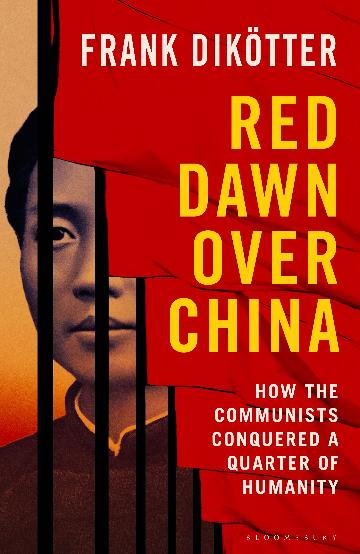
Frank Dikötter has written extensively on modern Chinese political history, and there is no doubt he knows his plenary session from his Politburo. Yet he appears deeply frustrated by what many would describe as the measurable ‘success’ of the Communist-controlled Chinese state — success defined by the economic indicators a neoclassical economist might privilege.
In Red Dawn Over China, Dikötter examines how the Communist Party in China survived the ’20s and ’30s and defeated Kuomintang in the civil war.
He refutes all the hoary myths of Chinese Communism: the Long March was a poorly disguised rout; the Jiangxi Soviet a tiny backwater; Mao a hopeless general; the Battle of Luding Bridge a beat-up; the Red Army avoided the Japanese and was ineffectual against the KMT; they only won the civil war because the Soviets helped them.
What Dikötter can’t really explain is how, despite their intrinsic communist-induced hopelessness, they won the civil war, and 76 years later China is the world’s largest economy by Purchasing Power Parity and the second largest in nominal terms.
His visceral dislike of Communism – however understandable – becomes a genuine obstacle to historical understanding.
Having travelled extensively in China on business, this reviewer understands the author’s antipathy to the CCP. Yet, as we survey the wreckage of the Rules-Based Order and consider a US alliance increasingly transactional in nature, we need more than what sometimes reads as a personal grudge. Dikötter’s research is undeniably impressive — it is the way it is wielded that often lacks explanatory power.
Reviewed by Grant Hansen
ABOUT THE AUTHOR
 Frank Dikötter lives in Palo Alto, California, where he is the Milias Senior Fellow at the Hoover Institution, Stanford University. He is also Chair Professor of Humanities at the University of Hong Kong. His books have changed the way historians view China, from the classic The Discourse of Race in Modern China to his award-winning ‘People’s Trilogy’ documenting the lives of ordinary people under Mao.
Visit Frank Dikötter’s website



0 Comments