



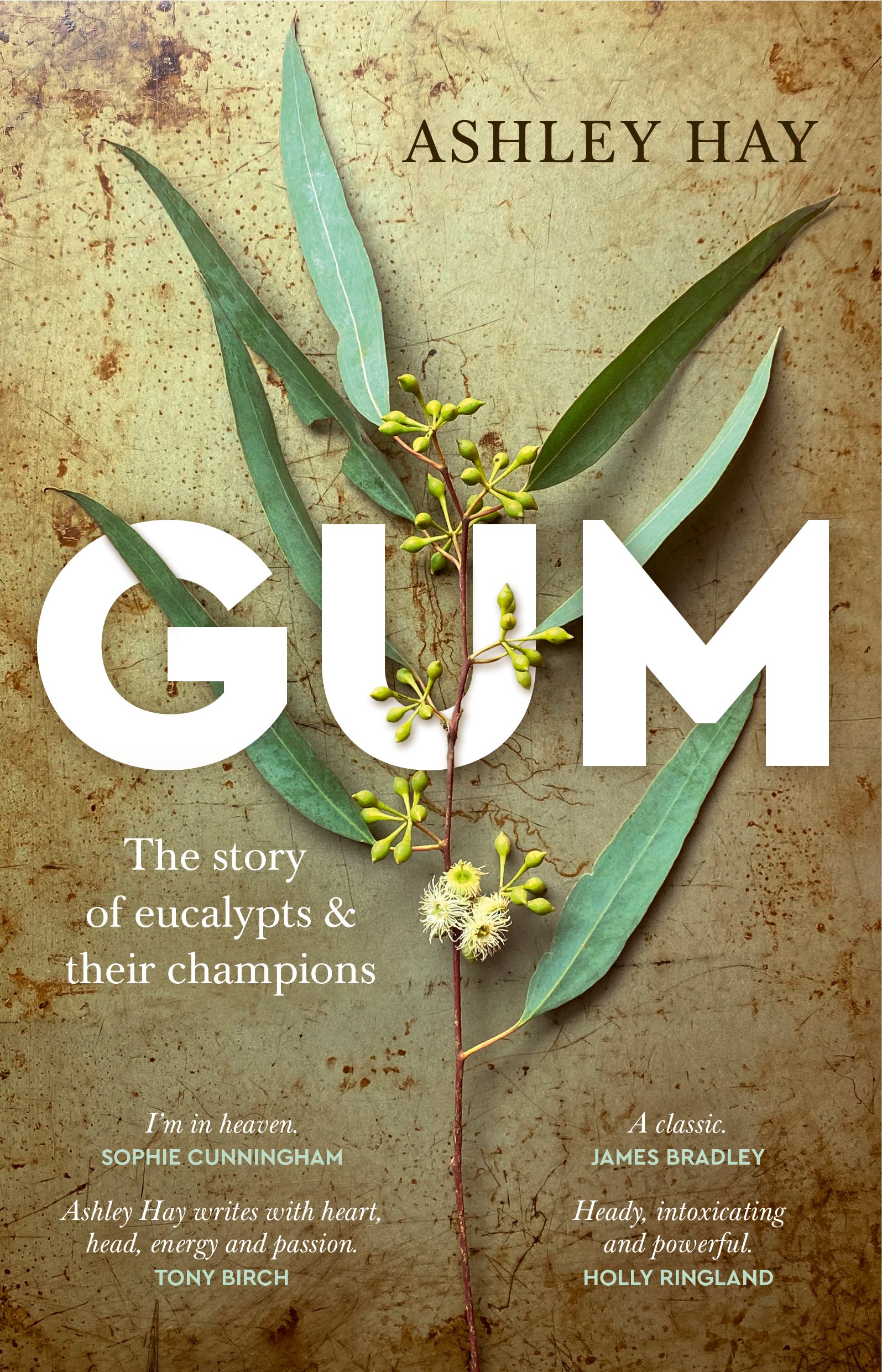
Right at the end of Gum, first published in 2002, Hay has a set of words: Adaptable, diverse, tenacious, interactive, opportunistic, unique. She instructs her readers to use them for the people who have lived, and live, and will one day live among these trees, working to unravel and understand them in so many ways; and of course, use them for the trees.
What James Cook’s botanist Joseph Banks in 1770 simply called ‘gum trees’ because of the sticky resin seen oozing from them, we now know as eucalypts. They were not named by Banks as, when he arrived home in England with his 3600 different species of plants, he committed the botanical equivalent of stuffing them under the bed and was too busy being feted for being famous.
The collection sat in his London house, able to be viewed but not named. It was a Frenchman working with that collection in 1786 who named and classified eucalypts, seeing the shape of a dried gumnut, and naming it from the Greek: eu meaning ‘well’ and klyptus, meaning ‘covered’.
Australia’s explorers and early settlers noted the eucalypts; early artists painted and drew them, showing how the sky was visible through their leaves. Ferdinand Mueller, the first Victorian government botanist, travelled Australia widely collecting specimens; and before he died in 1896 had published 800 books and major articles and sent eucalyptus seeds around the world.
While a plethora of artists used eucalypts as subject matter, Hay affectionately details the work of illustrator and storyteller May Gibbs, whose Gumnut Babies, Gum-Blossom Babies, Snugglepot and Cuddlepie, were a huge success, and botanically accurate.
The role of eucalypts in forestry, in fires and in absorption of carbon is being studied around the world; as are the ways of relating to eucalypts, particularly by First Nations people. Thanks to Mueller, who in 1861 despatched more than 50 000 packets of seeds overseas, by 2010 they covered 20 million hectares of plantation in more than 100 countries across six continents, with varied results.
Hay exhorts her readers to step outside and find a eucalypt. Stand with it, take in its shape and colour, feel its bark, feel its age, its life and its being.
Reviewed by Jennifer Somerville
ABOUT THE AUTHOR
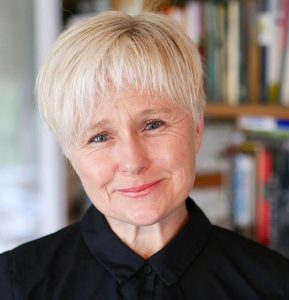 Ashley Hay has worked as the editor of Griffith Review, curating, commissioning and collaborating with more than 500 emerging and established writers across all genres. She draws on more than 30 years experience in the world of words in her work as a writer, editor, mentor and facilitator. In her design and delivery of bespoke workshops, coaching sessions and other writing opportunities for individuals and groups.
She completed a Doctorate of Creative Arts through the University of Technology, Sydney. She lives in Brisbane, where she is an adjunct associate professor affiliated with the School of Humanities, Languages and Social Sciences at Griffith University. She is also an editorial consultant for the Climate Justice Observatory.



0 Comments