




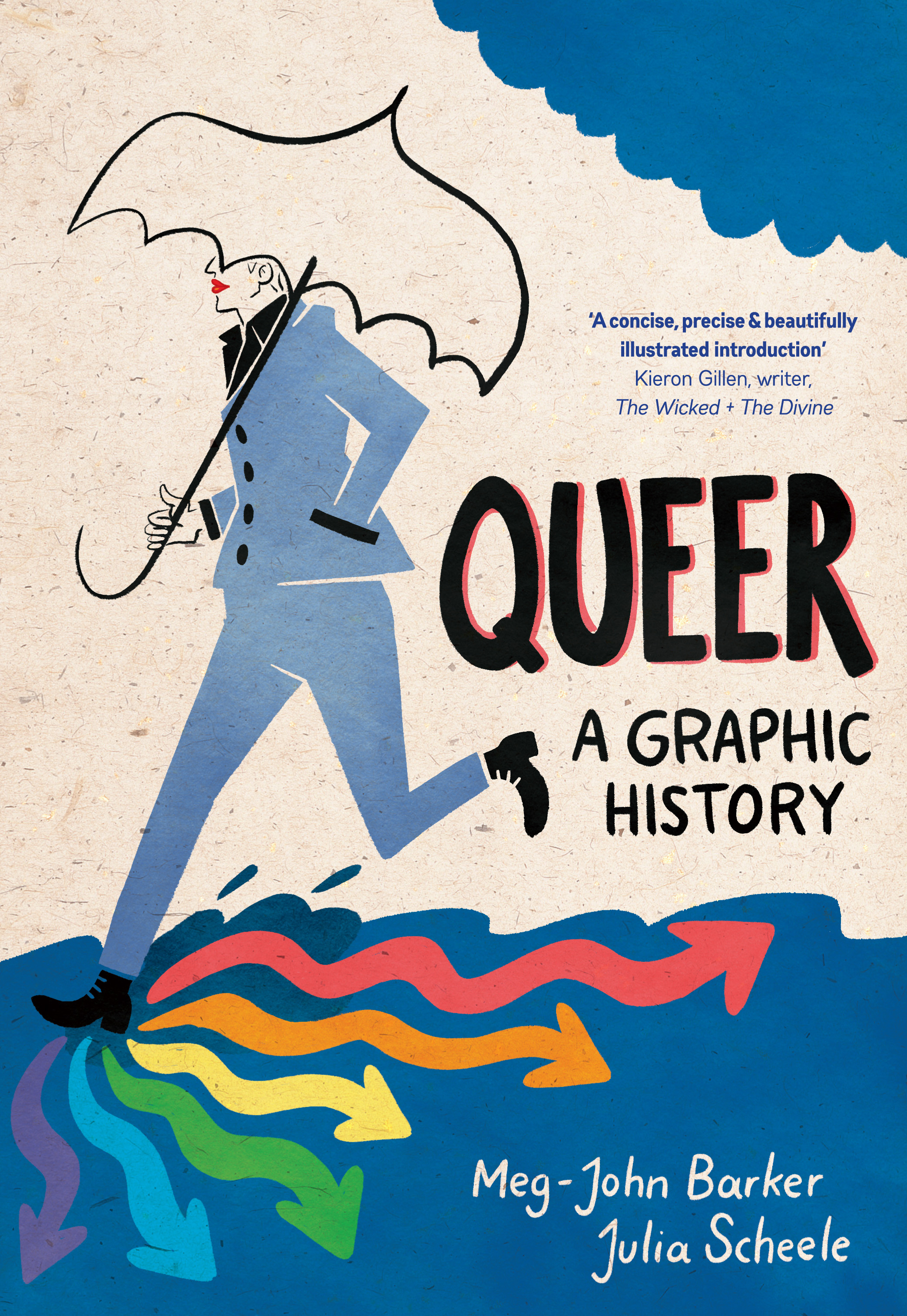
At the height of his fame in 1894, Oscar Wilde became the first person recorded to have the epithet ‘queer’ hurled at him in reference to his sexuality. Queer: A graphic history departs from this point and moves through our recent history to examine changing scientific, cultural and academic attitudes towards sexual diversity, gender and the word ‘queer’. Multisyllabic jargon can easily obfuscate queer theory and gender studies. But with its tongue-in-cheek illustrations this book converts impenetrable academic screeds about gender and sexuality into readable prose.
Gender performativity, for example, states that gender is not who you are but what you do. When a man puts on a suit and tie, he’s not dressing as a man; he’s performing a behaviour that society expects of a man. A graphic in the book provides a further example: a woman asks a drag queen, ‘Why do you dress up like a woman?’ – and the drag queen shoots back the same question.
As this book busts our restrictive assumptions about gender and sexuality, it provides a crash course in the theories of Freud, Sartre, and Foucault. Theories such as post-structuralism and neoliberal consumer capitalism are converted from seemingly perplexing concepts to graspable ideas.
Psychologists, biologists and sociologists are all approaching the consensus that gender and sexuality are fluid and complex. This book shows the extent to which our behaviour is dictated by heteronormative notions and outdated misconceptions.
Reviewed by Angus Dalton



0 Comments