




As a film and entertainment reporter I had the pleasure of interviewing Werner Herzog once. Just like in his films, that sonorous, smooth voice and almost comically formal way of phrasing thoughts is exactly as you imagine in real life – as smooth as silk and as quietly menacing as a coiled cobra. While reading this book, you can almost hear that droll, commanding monotone in your head.
In both the structure and the prose in his biography, Herzog tells his story like he makes his films; they’re never quite linear even though they have a story to tell, they’re poetry as much as narrative, and the tiniest aside can capture his attention and have him plumbing the depths of the cosmos and the human condition.
Just as he’s recounting the famously hellish shoot for his 1982 epic Fitzcarraldo, he’s telling you about a guy he met in Australia and travelled around the country with on what can only be described as a whim because he felt a kinship. He talks about extreme poverty and deprivation in his youth in Germany during and after World War II, and (amazingly in this day and age of cancel culture) quite openly remembers a beloved uncle who was a dedicated Nazi Party member.
When I talked to Herzog (it was for his role in the big screen Jack Reacher, starring Tom Cruise), someone asked him if he considered himself a journalist – aside from making as many documentaries as fictional films, he’s always interested in truth. No, he answered, he’s a poet. Every Man for Himself and God Against All bears that out, and if you’re a fan of his work you’ll get a lot out of it.
Reviewed by Drew Turney
ABOUT THE AUTHOR
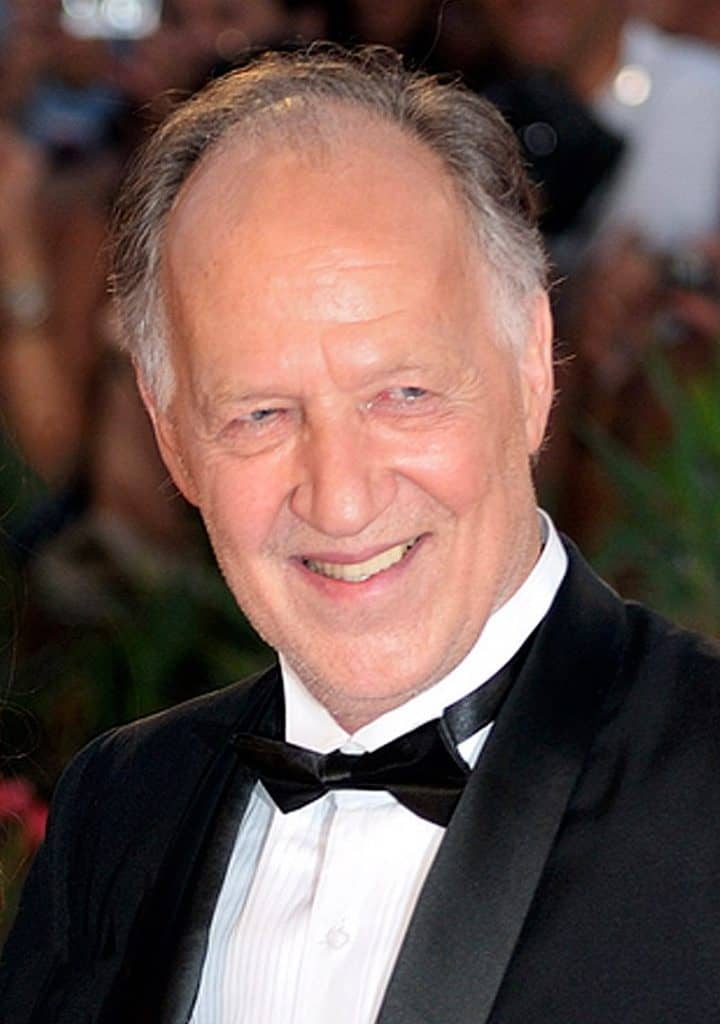 Werner Herzog was born in Munich on 5 September, 1942. He grew up in a remote mountain village in Bavaria and studied History and German Literature in Munich and Pittsburgh. He made his first film in 1961 at the age of 19. Since then he has produced, written, and directed more than 60 feature and documentary films, such as Aguirre der Zorn Gottes (AGUIRRE, THE WRATH OF GOD, 1972), Nosferatu Phantom der Nacht (NOSFERATU, 1978), FITZCARRALDO (1982), Lektionen in Finsternis (LESSONS OF DARKNESS, 1992), LITTLE DIETER NEEDS TO FLY (1997), Mein liebster Feind (MY BEST FIEND, 1999), INVINCIBLE (2000), GRIZZLY MAN (2005), ENCOUNTERS AT THE END OF THE WORLD (2007), Die Höhle der vergessenen Träume (CAVE OF FORGOTTEN DREAMS, 2010).
Werner Herzog has published more than a dozen books of prose, and directed as many operas. Werner Herzog lives in Munich and Los Angeles.



0 Comments