




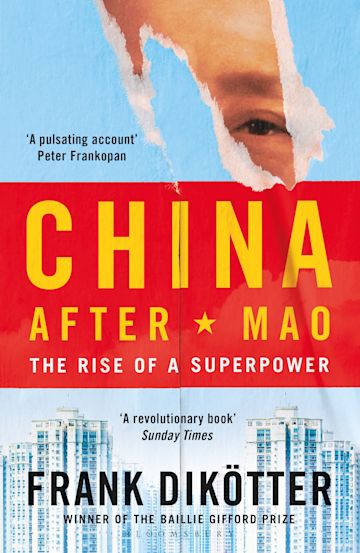
In China After Mao, Frank Dikötter does a job on the Chinese Communist party which a Cold War Warrior such as Robert Conquest (Stalin – Breaker of Nations et al) would surely approve of. Notwithstanding the subtitle, one searches in vain for anything in this book that could possibly have given rise to a viable State, let alone a Superpower.
Dikötter has form on this front – his ‘Peoples’ Trilogy’ did for Mao what this book does for Deng. Having a visceral dislike for the CCP is hardly a character flaw – this reviewer has travelled extensively in the PRC on business and has always held the view that if Chinese GDP growth drops below six per cent per annum there will not be enough lamp posts to hang the cadres from. But it is a problem for a serious historian of modern China.
Dikötter struggles to reconcile the clear fact that the post-Mao leadership remained ardent Communists, with the equally clear fact that, economically at least, they were doing something right.
Dikötter deals somewhat summarily with the events that led to the establishment of Deng Xiaoping as the dominant force in the CCP by November 1978 – the fall of the Gang of Four in October 1976; the (second) rehabilitation of Deng in mid-1977; Deng’s substantive defeat of Hua in November 1978 (and Hua’s gradual removal from office over the following two years). Now on any view this is a critical period.
Had the Gang of Four been able to consolidate their power, the world would look a very different place indeed. And the (second) rehabilitation of Deng over the objections of Hua Guofeng and Hua’s subsequent removal from positions of power commencing in November 1978 meant the CCP was going to take a pragmatic approach to economic development. But Dikötter does not really attempt to analyse the policy differences of the contenders – for him, the politics of the CCP are intensely personal.
The result is that Dikötter’s dense narrative lacks explicatory power. We know what happened (and here he performs well), but we don’t know why. Just as anyone familiar with the Cold War account of Stalin struggles to understand how such a creature could have led the Soviet Union to defeat Nazi Germany, so the readers of China After Mao will be left wondering how China ever got to where it is now.
Reviewed by Grant Hansen



0 Comments