




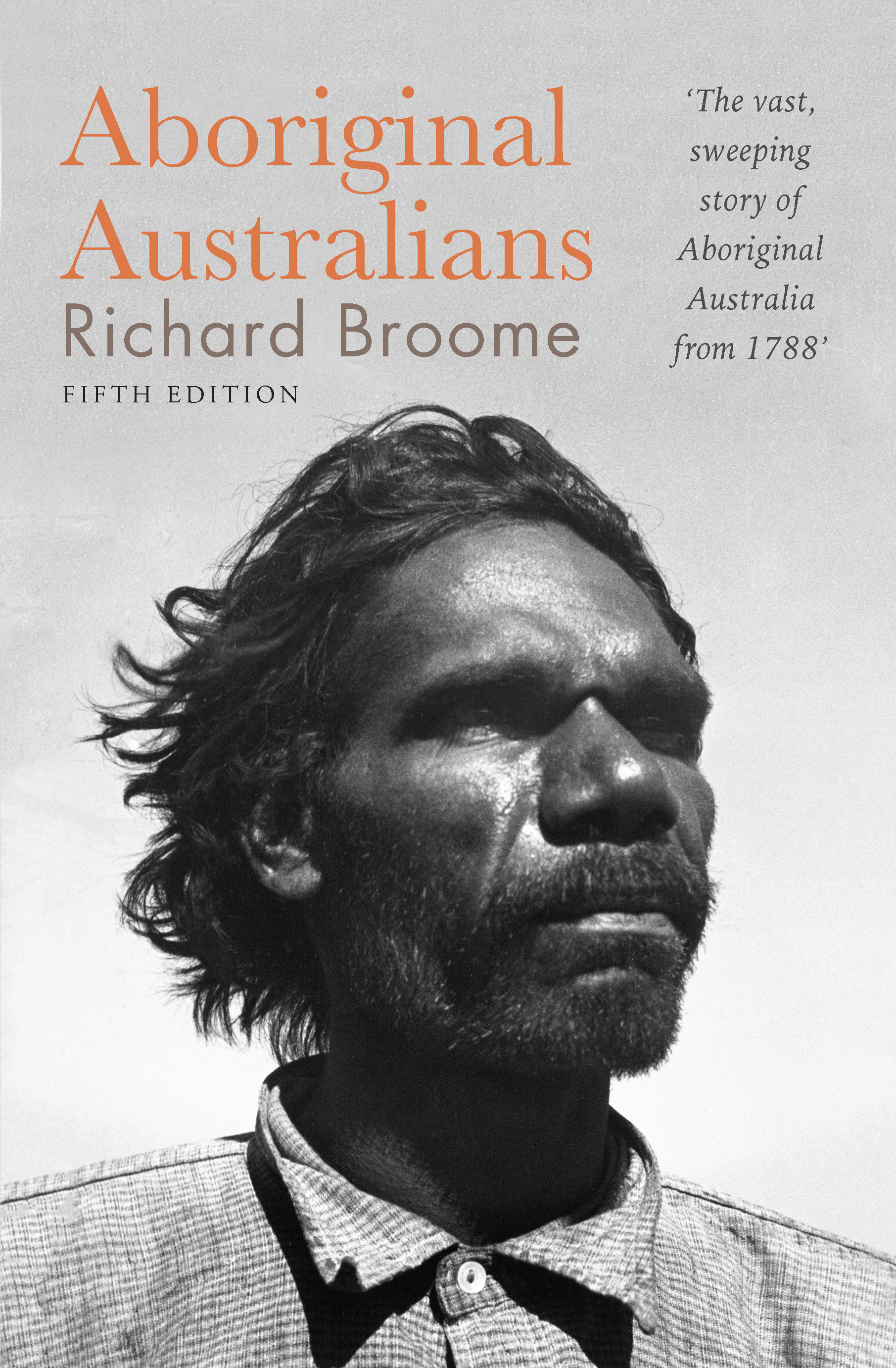
I first read Richard Broome’s Aboriginal Australians in 1983. Back then, the study of Aboriginal response to European settlement was just getting underway. W E H Stanner’s influential Boyer Lectures on The Great Australian Silence had been broadcast in 1968 and called on historians to address the then prevalent collective amnesia about the dispossession of the Australian indigenous population.
It took a while, but historians and society responded. In the ’70s Whitlam put land rights on the national agenda. Since then we have seen a huge increase in acknowledgment of Aboriginal history; Keating’s Redfern Speech, Mabo, Wik, The Black Armband pushback; the Intervention, The Apology and most recently the Voice to Parliament. The Gap may only be closing slowly but the Great Australian Silence is long dead.
What Aboriginal Australians does extremely well is synthesise the scholarship of the last 40 years and provide a coherent narrative of the period 1788 to now. Much of the book addresses relatively recent events and most of its positions represent what could be called the consensus view of historians.
That is not so easily done. During the last 40 years there have been some significant refinements in the historical understanding of the Australian frontier. No-one today would call their work ‘The Destruction’ of Aboriginal society and the most recent scholarship does tend to recognise Indigenous adaptation to settlement and the continuity of Aboriginal presence even in the longest settled parts of Australia.
At the same time an enormous amount of work has gone into quantifying the amount of violence on the Australian frontier and the number of Indigenous people violently killed in frontier conflict is thought to be between 20 000 and 30 000. Broome is across all of this research and gives due acknowledgement to both the level of violence, disease and dispossession and the tenacious survival of Aboriginal people and culture.
Above all, Broome acknowledges the complexity of the Australian frontier and settlement as it affected the Indigenous peoples. Violence was widespread but not universal. Individual clans had their individual responses to the arrival of the Europeans. The experience in the south-east was completely different, if not less violent, than the experience in the north.
Broome takes the story up until 2019. This is an excellent one volume survey of Aboriginal history and historiography since 1788.
Reviewed by Grant Hansen



0 Comments