




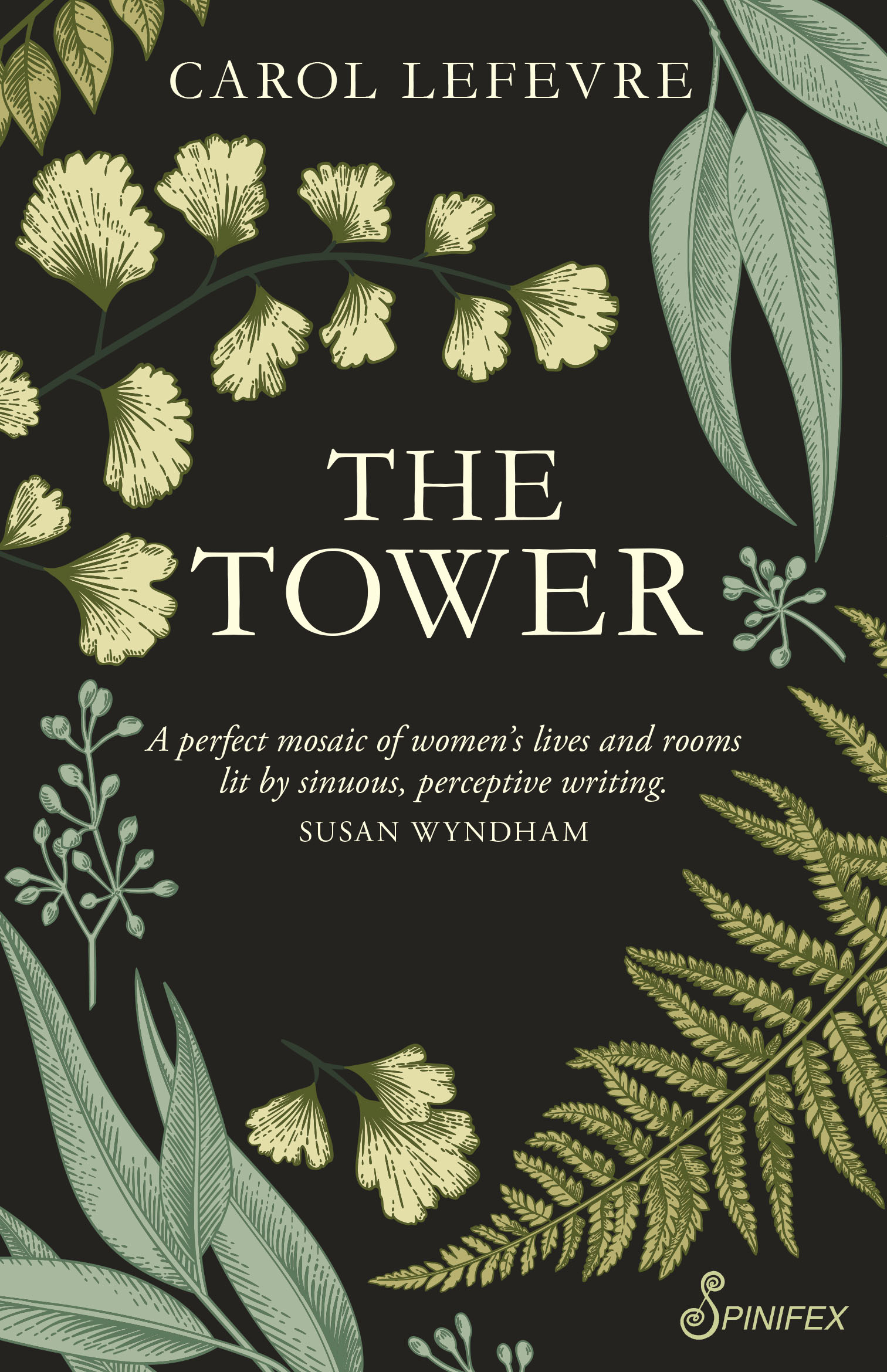
This book is a series of interconnected stories with a central pillar. Dorelia is a recently widowed elderly lady. She, along with her friend Bunty accidentally come across a house for sale. Its tower – integral to, but stretching above the property – is the reason she sells the family home. It’s to be a creative space, but her decision causes division within the family as she hasn’t consulted them.
The narrative around Dorelia, her children and Bunty form an appropriately tower-like spine in the book, with the other stories branching from it and sharing alternate chapters. Time frames range from the ’60s through to the present. Whereas chapters relating to the tower are urban stories. Here, recurring characters, sisters Mariel and Sheena begin to emerge from adolescence and a dysfunctional homelife. Mariel breaks away from the small-minded, gossip-ridden life and travels widely; the others in her family don’t.
Ageing, memory and death are central. Dorelia’s children are concerned for her welfare but they each have their own problems. Art and creativity also feature. Dorelia, Bunty and Mariel all pursue careers in art. Only Bunty succeeds.
The cast of secondary (and tertiary) characters in The Tower can be difficult to corral. In Dorelia’s tower, her stories – restoring and empowering negatively drawn female characters, such as Rapunzel’s witch – restore her as well. A different book altogether may have arisen had her revised stories formed the alternate chapters. I would have relished that myself.
Reviewed by Bob Moore



0 Comments