




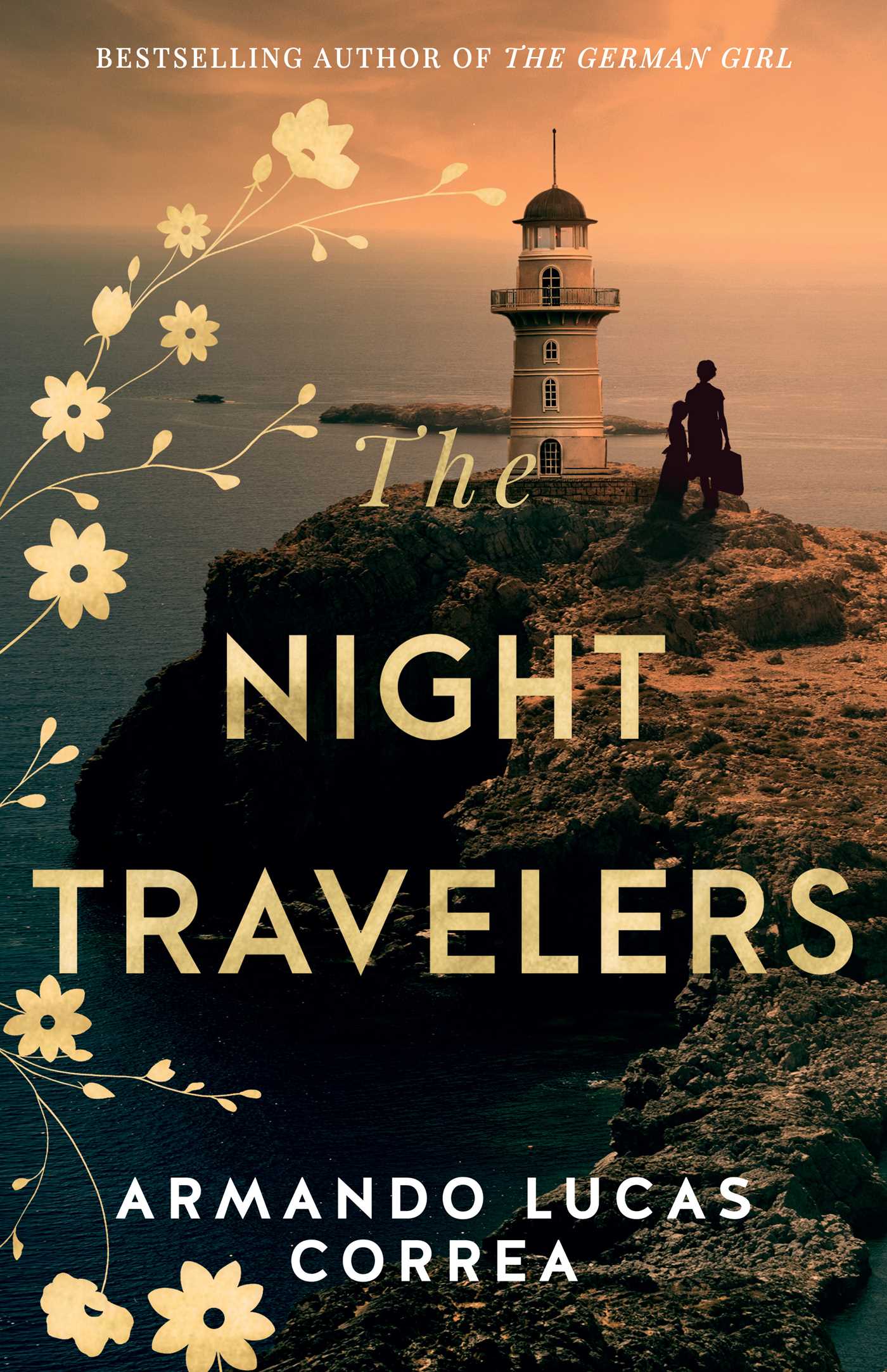
Narratives of war will find an audience for as long as war persists. And those that heighten our knowledge of the human cost of such interminable conflicts should always be heard. The Night Travelers is one of these, showing how the intergenerational stain of war is ineradicable.
Four generations of women are caught up in the crucible of world conflicts, ranging from the upsurge of Nazism in Germany in 1931, to the Communist-induced Cuban revolution of the 1950s, and culminating in the 1989 fall of the Berlin Wall. Ally Keller, a struggling poet in Berlin, falls in love with a Black German musician and has a daughter by him. As a girl growing up under the shadow of Hitler’s ascendancy, Lilith embodies a transgression of Aryan purity and the corrupt science of eugenics. She is taught by her mother that she can only survive by living ‘in harmony with the night’, because ‘by night we’re all the same colour’.
Ultimately, Lilith’s survival is only assured by Ally negotiating her escape from Berlin to Havana, where she begins a new life. Lilith, her daughter, Nadine, and Nadine’s daughter, Luna, are all scarred by the political traumas that frame their lives. Regardless of time and place, they all confront the pain of conflicted motherhood, abandonment and shattered family history.
The women are connected not only by blood, but by a poem, ‘The Night Traveler’, from which the novel takes its title. Written by Ally for Lilith when she turned seven, it is precariously safeguarded through the generations and comes to represent the redemptive potency of a mother’s love.
Towards the end, cumbersome passages of backstory slow down the momentum of the narrative. Overall though, it’s a compelling portrayal of the courage of women in the face of overwhelming odds.
Reviewed by Anne Green
MORE
Listen to a podcast with Amando Lucas Correa
Read an interview with Amando Lucas Correa
Read an interview about The German Girl by Amando Lucas Correa
ABOUT THE AUTHOR
 Armando Lucas Correa is the author of three historical novels: The German Girl, The Daughter’s Tale and The Night Travelers.
His memoir, In Search of Emma: How We Created Our Family, about fatherhood, surrogacy, and IVF was published in Spanish in 2021.
He is hard at work on a fourth novel, The Science in Her Eyes, a psychological thriller about a motion-blind young woman entangled in act of violence connected to a new tenant in her New York apartment building.
Armando began his career as an editor and reviewer at Tablas, a national theater and dance magazine in Havana, before joining the reporting staff of El Nuevo Herald, the Spanish edition of The Miami Herald, in 1991.
In 2022, Correa received the Cintas Foundation Creative Writing Fellowship for The Night Travelers. In 2017, at the International Latino Book Awards, La niña alemana won the First Place (Best Fiction Book in Spanish) and The German Girl, Second Place (Best Fiction Book Translated from Spanish to English). He is the recipient of various outstanding achievement awards from the National Association of Hispanic Publications and the Society of Professional Journalists. He was the Hispanic Public Relations Association’s Journalist of the Year in 2017 and received the AT&T Humanity of Connection Award in 2018.
Armando lives in New York City with his husband and three children.



0 Comments