


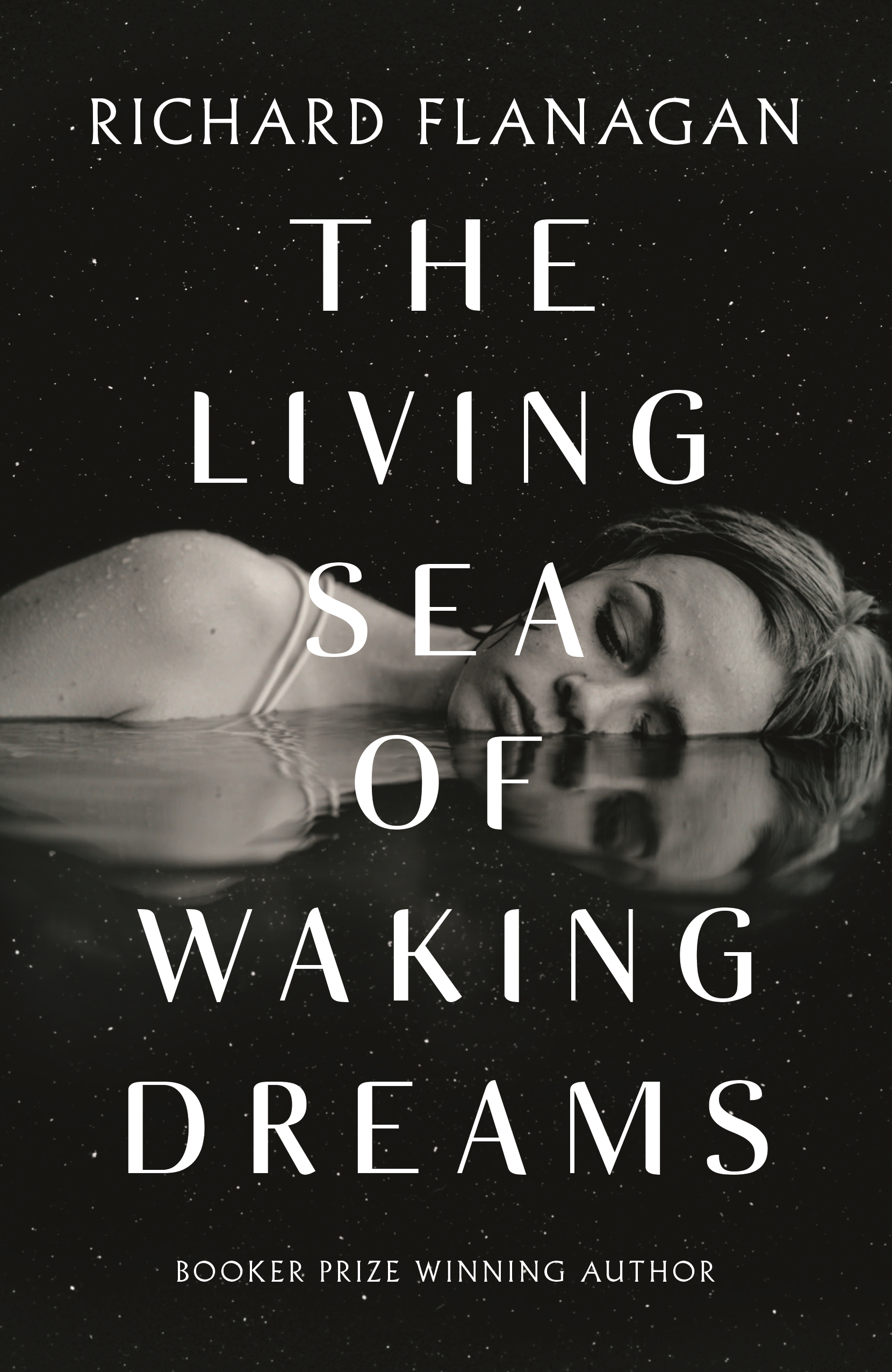
What joy – and what anguish – to live in Tasmania. Richard Flanagan lives and writes in this paradise at the edge of the world. But flora and fauna have disappeared and, because of humanity’s rapaciousness, it’s no longer a pristine Eden. Flanagan cares deeply. He cares about the environment and he cares about his writing. He cares about his writing about the environment.
In this glorious novel Flanagan poses a philosophical question to the reader: how can words make a difference when all the known words have been used before to little effect? When no-one seems to be paying attention? When no-one sees? A novel is, by circumstance and necessity, black words on a white page. So, if a writer must use words, how can that same writer tell the same story in such a manner as to make the words visible enough, effective enough?
His solution is evident from the first page. The novel is mostly seen through Anna’s eyes and her words overtake and sidestep themselves in a whorl of tenses and pronouns. It should be incomprehensible, but such is the skill of the writer that not only does it make sense, it seems as if the story couldn’t be rendered in any other fashion. The end result is surrealistic enough to make it dreamlike but also realistic enough to make its point in stark brutality.
Anna is the daughter of an ageing and increasingly fragile Francie. Anna gathers with her brothers, Tommy and Terzo, in Hobart to discuss how to approach Francie’s end of life. Tommy has been her principal carer and is in favour of allowing her to die peacefully as she wishes. Anna, an architect in Sydney, isn’t quite ready to let her go. Terzo, a Brisbane venture capitalist, refuses to countenance her death. She must be kept alive at all costs.
Words are problematic for the brothers as well. Tommy stutters; Terzo shouts. Francie’s words are softened and slurred by age and infirmity.
This could just be – and is on one level – an emotional journey one family takes in dealing with the impossible heart-wrenching decisions families have to make at the end of a life. If it was no more than that it would still be a triumph. But it is very much more than that.
As Francie is kept alive by medical science, her mind becomes untethered and the visions which visit her become increasingly vivid. Anna tries to lose herself in social media, but finds all everyone is talking about are fires and smoke and the inferno of summer. Then she notices things start to disappear. First a finger on her left hand vanishes. The function of her hand isn’t affected, but she is shocked that no-one else notices. It’s not the only body part to vanish and this is symbolic of other overlooked losses.
There is an extended metaphor throughout. The symbolism attached to Francie has earthy implications and the crossover of descriptors is sublime: ‘… the process of [her] decay was excavating daily’, and ‘… a gathering mudslide of complications’. Francie is a mother; the Earth is considered a mother; so mathematically, symbolically Francie = Mother Earth. Once that connection is made then the allegorical depth and heft of this novel becomes apparent.
This is a story of love, of beauty found in wretchedness, and of loss. There is also hope, though, in the form of the orange-bellied parrot appearing among all the disappearances.
This novel is brilliant; Flanagan’s writing is exceptional and we should all be paying attention.
Reviewed by Bob Moore

0 Comments