




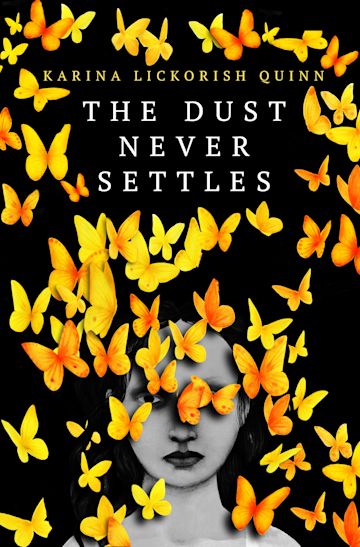
Anaïs Echeverría has lived in London for many years, and somehow finds herself reluctantly engaged to her long-term English boyfriend. She is also newly pregnant, with a child who was unplanned, and she is unsure she wants. When her ancestral home in Lima needs to be sold, she returns to Peru to help organise the sale, and to face the realities of her ancestry.
La Casa Echeverria is an enormous, crumbling yellow painted mansion, set amongst considerable land at the top of a hill in Lima and dominating the entire area. A landmark in more ways than one, it is crammed with the belongings of all of the people who had lived and loved there over the years.
Members of Anaïs’ sprawling family have a developer lined up to buy the place, for the valuable land, but as soon as she returns to the house, she knows cannot not sell it, as it is full of the ghosts of her ancestors, their servants, and the Indigenous peoples who lived in the land long before colonial times.
As she spends time there, pondering her pregnancy, Anaïs connects more and more with these ghosts, chief among them being that of Julia Yupanqui, a maid who fell from a second-storey window in 1986, at the age of 17 and who is now venerated as a folk-saint. It is through Santa Julia’s eyes that the reader sees the history of Lima, and Anaïs’ as she recalls her own family history.
This is a fine story of discovery and embracing the past, with all of its messy beauty, ugliness, love and destruction. This is a debut novel, and in many ways, it reminded me of Isabel Allende’s magnificent debut The House of the Spirits with its focus on family, a great house and confronting history.
Reviewed by Melinda Woledge



0 Comments