




At the edge of the Wimmera – the desert-like region in western Victoria – is the fictional town of Gatyekarr, or ‘Gatchie’ to the locals. On a farm outside town lives Beth, a regenerative farmer and seed collector, trying to replenish the land her father had exploited.
The Gatchie pub is run by Nate, rebuilding his life after the death of his young daughter. Gatyekarr is preparing for its sesquicentenary, with the hangover of the squattocracy directing the celebrations. This comfortable set-up is disrupted when a pre-teenage girl walks out of the desert to Beth’s farm. She can’t – or won’t – speak. Who is she, where has she come from, and what does her presence mean to Gatyekarr?
The girl is thought to be an omen, or a runaway from a cult, or the descendant of a survivor of the Indigenous massacre in the 19th century. Beth discovers evidence of abuse.
The narration is mostly shared by Beth and Nate, however, there are also parts seemingly narrated by the land itself, along with a reverse chronology tracking the girl’s journey out of the desert. There are flaws in the book: a pushy psychologist interviews the girl, but no medical attention is ever sought for her.
.There is a poetic sensibility to the writing style, and Beth’s narration, in particular, is especially so.
The Indigenous connection to Country is at the heart of The Desert Knows Her Name and is handled well. Wotjobaluk Elder, Aunty Sal, and her granddaughter, Mia, are elemental in the girl’s healing. This novel speaks of loss, grief and healing – both of the land and its inhabitants.
Reviewed by Bob Moore
ABOUT THE AUTHOR
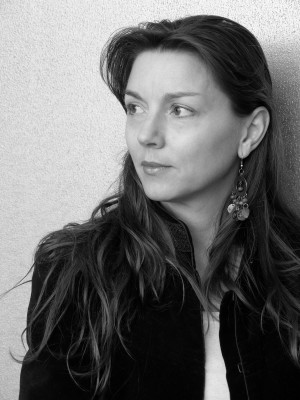 Lia Hills is an award-winning poet, novelist and translator, born and raised in Aotearoa New Zealand. Her work has been published, translated and performed around the world.
Her debut novel, The Beginner’s Guide to Living, was shortlisted for the Victorian, Queensland and Western Australian Premiers’ Literary Awards, and the NZ Post Book Awards.
Upon the release of her first poetry collection, the possibility of flight (IP, 2008), both the collection and individual poems garnered awards. Her work as poet also includes the widely-praised Moving Galleries, a poetry/art project on Melbourne’s train network.
The Crying Place was longlisted for the Miles Franklin Literary Award 2018 and named Book of the Month by Australian Independent Booksellers.
In 2019, Lia received a Creative Victoria Creators Fund grant to work on her novel, The Desert Knows Her Name.
Lia is the curator of Writing ngurrak barring, a cultural walk being created across the Dandenong Ranges, which incorporates a strong focus on First Nations stories and knowledges.
Lia lives with her family in the hills outside Naarm/Melbourne on the unceded lands of the Wurundjeri people.



0 Comments