




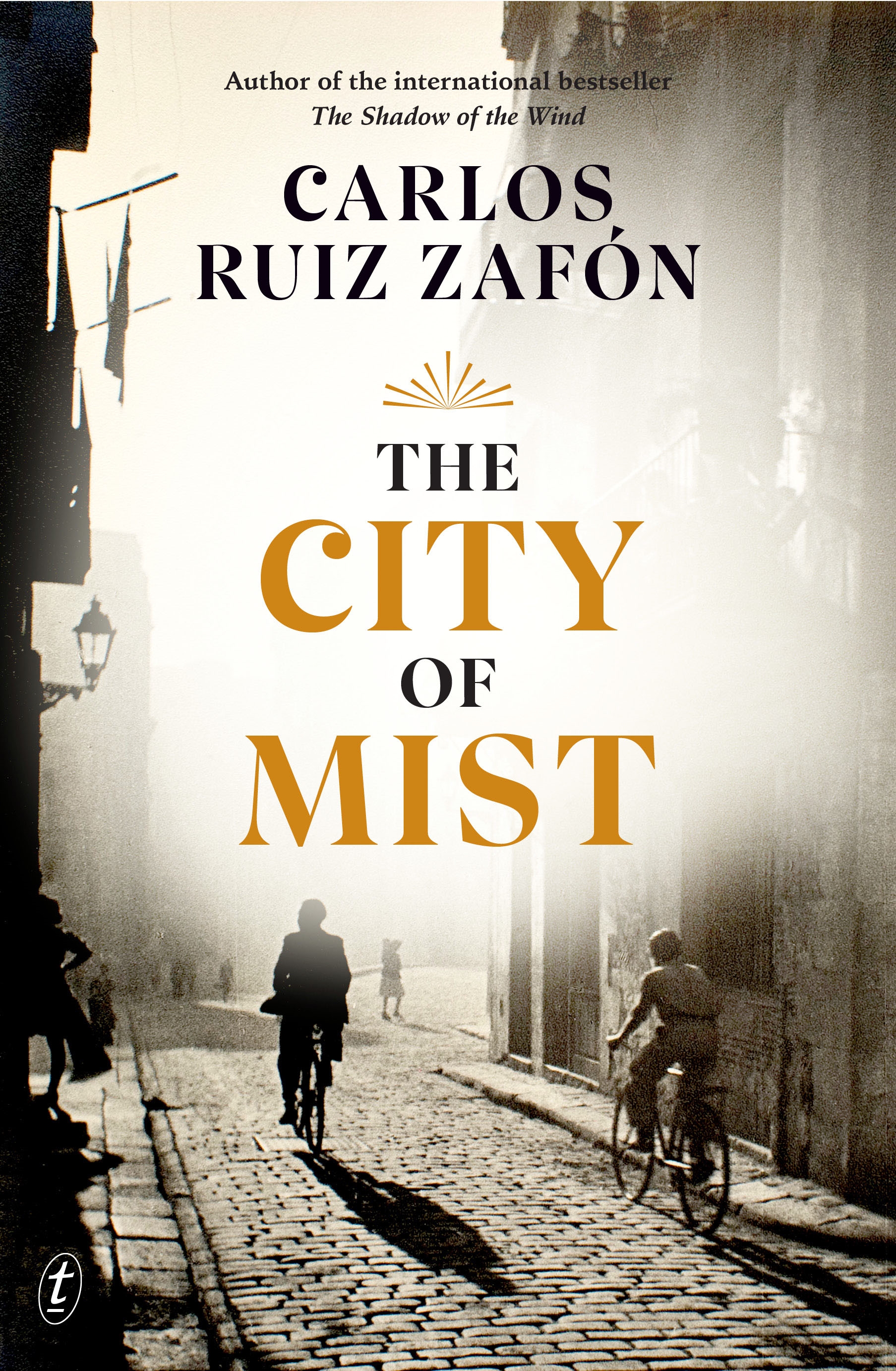
Zafón will forever be associated with The Shadow of the Wind (TSOTW), its Cemetery of Forgotten Books and his beloved Barcelona. This collection of eleven stories, plus an excerpt from the above-mentioned novel, was published after his death. Those who have read TSOTW will find familiar characters and locations inside.
The collection’s title has no story under its name, but it’s not difficult to see that the city he refers to is Barcelona. Most of the stories are located there and the mist gives a sense of the gothic sensibility that pervades his writing.
The collection begins with ‘Blanca and the Departure’, where an eight-year-old David Martín (the journalist-narrator of TSOTW) meets a girl called Blanca and learns the power of storytelling. The girl’s name is thematically significant: Zafón’s female characters are either beautiful, mysterious and dressed in white – signifying their innocence and purity – or like poor Laia in ‘A Young Lady From Barcelona’, still beautiful, but used and abused by ruthless males because of it.
The origins of the plans for the labyrinth in TSOTW is detailed in ‘Rose of Fire’, beginning with the plague of 1454 and the later Spanish Inquisition. Within this story is the eternal battle between good and evil, and this conflict is a theme to which Zafón returns in the following story, ‘The Prince of Parnassus’, where the Cemetery of Forgotten Books emerges. ‘Gaudi in Manhattan’ follows a budding architect trailing Barcelona’s famous son to NYC to meet a client who will finance the completion of Sagrada Familia. The cost appears to be a Mephistophelean bargain.
Zafón’s stories are infused with a melancholic world-weariness which, despite the inherent sadness, surprisingly uplifts the soul.
Reviewed by Bob Moore



0 Comments