




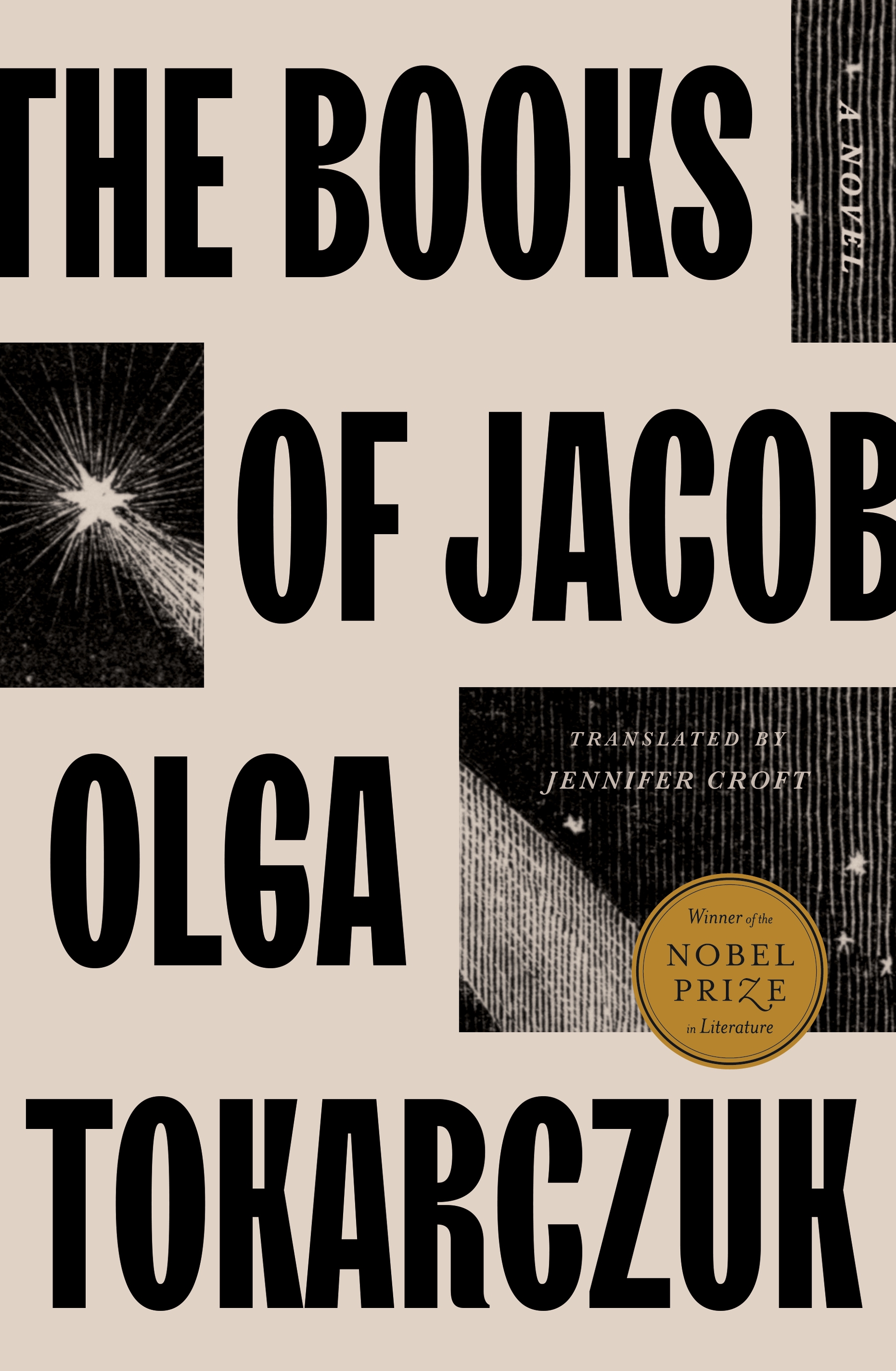
There’s no getting around it: this is a big book. Big by weight, but also laden with ideas on every one of its many pages. It’s the story of a charismatic historical figure, Jacob Frank, the self-proclaimed Messiah to whom people in Eastern Europe flocked in the 1700s. Jacob took a deep dive into Kabbalistic mysticism and formed his own religion, re-interpreting his preferred parts of Judaism and Catholicism (and using Islam when convenient), drawing the ire of all. After disputing Talmudic laws, he subverted them, and focused on sex and, eventually, money.
Jacob is drawn as a handsome, rebellious, mischievous, border-hopping, very unchaste, rule-breaking Pied Piper – a most unlikely Messiah. There are several narrative strands, none of which are from Jacob’s own perspective. Yente, Jacob’s grandmother, crystallising in a cave on the precipice of death, sees everything through closed eyes. Nahmad, one of Jacob’s followers, provides testimony akin to synoptic gospels. Epistolary elements emerge between clerics, holy men and the nobility. Life and its environment in 18th century Europe has been forensically researched, adding rich layers to the story’s background.
Jacob’s new religion follows a familiar arc: visions and miracles, justifying prophesies by adapting circumstances to suit their purpose, predatory sexual behaviour, accusations of heresy, persecution, betrayal, implosion and dissolution. Through it all, the new Messiah seems aloof, sometimes bemused by the chain of events. It might take some time to read; it will take much longer to digest, but every second invested The Books of Jacob, an epic novel, will be worthwhile.
Reviewed by Bob Moore
ABOUT THE AUTHOR
 Olga Tokarczuk is the recipient of the 2018 Nobel Prize in Literature. She is one of Poland’s most celebrated authors. She is the author of eight novels and three short story collections and has twice won the most prestigious Polish literary prize, the Nike Award, for Flights (Bieguni) in 2008 and for Books of Jacob (Ksiegi Jakubowe) in 2015.
Her most famous novels include Primeval (Prawiek i Inne Czazy) published in 1996, House of Day, House of Night (Dom Dzienny, Dom Nocny) published in 1998, Flights published in 2007, which also won the 2018 Man Booker International Prize and was shortlisted for the National Book Awards in Translated Literature 2018 and Drive your Plow over the Bones of the Dead (Prowadz Swoj PlugPrzez Kosci Umarlych) which was published in 2009 and shortlisted for the 2019 Man Booker International Award, longlisted for the National Book Awards in Translated Literature, the Dublin Literary Award and the Warwick Prize. Her work is translated into more than fifty languages.
Olga Tokarczuk lives in Wroclaw in Poland where she is setting up a Foundation which will offer scholarships for writers and translators and educational programmes on literature.



0 Comments