




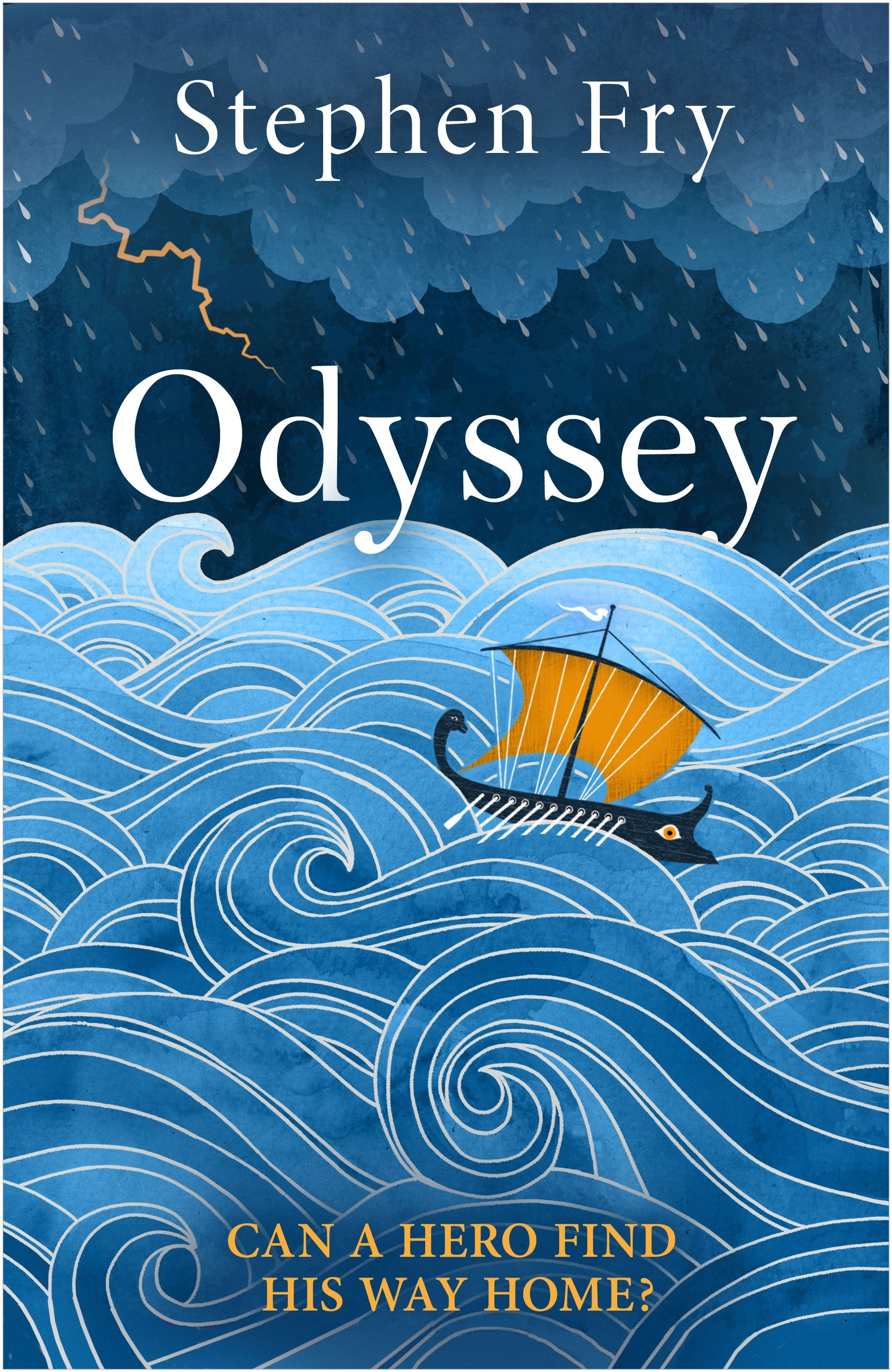
This fourth volume in Stephen Fry’s retelling of the Greek myths follows the Greek heroes – Odysseus, Agamemnon, Ajax and Aneas – as they return from Troy. As Cavafy says in his poem Ithaca – quoted in full by Fry – the journey itself is often more interesting and enriching than arriving at the final destination. Fry brings these travellers adventures to life in a vital modern voice.
This being Stephen Fry there is a wealth of detail to explore in the footnotes and appendices, which often cross-reference stories told in his earlier volumes. However, Odyssey very much stands alone.
There is humour in the telling but Odysseus’s encounters with the Cyclopes and Laestrygonians, are disturbingly violent. Fleets of ships are sunk, goddesses hold men in thrall for years and sailors are eaten alive or have their brains dashed out – all part of a world in which the gods often behave in spiteful or vindictive ways.
Odysseus’ homeward journey takes so long that his faithful wife, Penelope, beset by suitors, has all but given up hope of ever seeing him again. His eventual arrival in Ithaca and the slaying of the suitors with the aid of his son Telemachus is pure sword-and-sandal fare.
Agamemnon’s bloody welcome home at the hands of Clytemnestra and Aegisthus is equally brutal as is Orestes’ revenge at the prompting of Apollo’s oracle.
The role of the gods is pervasive, but Fry suggests that after the Trojan War there is a shift towards ‘a new way of living that will never allow the gods to pull us into such a terrible conflict again’. Like the Trojan heroes we arrive at the end of our journey richer for all that we have learned along the way.
Reviewed by Peter Gray



0 Comments