



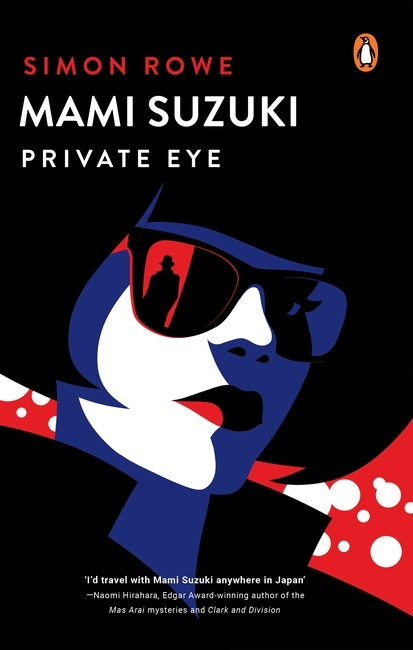
For Mami Suzuki, being a private eye is a sideline. Her nine-to-five job is on the front desk of the Orient Hotel in Kobe, on Japan’s largest island. But that work doesn’t pay the bills of a single mother with a four-year-old daughter and a live-in mother to care for. Two years ago, she received her private detective licence and word of mouth has secured her clientele. In this charming novel, there are four stories, with characters from one story referring friends to Ms Suzuki for the following one.
The president of Tokai Pearls is sure that someone is stealing from his business. Mami Suzuki is hired to determine if pearls are being stolen, and who might be responsible. Pearls are indeed missing, but the issue is far from black and white. When a sushi chef disappears from his family home, Suzuki is requested to find him. She’s successful, but, again, the situation is complicated. Suzuki is then hired to determine if a man’s death is suspicious, and, in the final story, a young woman is pregnant and the man she names as the father has vanished … but those involved are reticent to cooperate. These aren’t simple puzzles, and Mami Suzuki has a knack for seeing the bigger picture.
Rowe’s writing is strong, with good pacing and excellent character development. The books serve as a tourism taster for Japan, with Japanese words infused into the narrative and insights into cultural and culinary traditions. Mami’s friend Teizo is a fisherman who gives her advice. There is the seed of a love affair between them … hopefully to be developed in the next book in the series.
Reviewed by Bob Moore

ABOUT THE AUTHOR
Simon Rowe grew up in Waipawa, New Zealand, and big city Australia when orange Fanta came in glass bottles and AM radio was king.
He has lived in Japan for more than twenty-seven years, winning numerous awards for his short fiction and screenplays, including Pearl City: Stories from Japan and Elsewhere (2021 Best Indie Book Award) and Good Night Papa (2013 Best Asian Screenplay Contest).
His stories about Japanese life and culture have appeared in The Paris Review, the New York Times, TIME (Asia), the South China Morning Post, The Straits Times, The Australian, and the Australian Financial Review.



0 Comments