




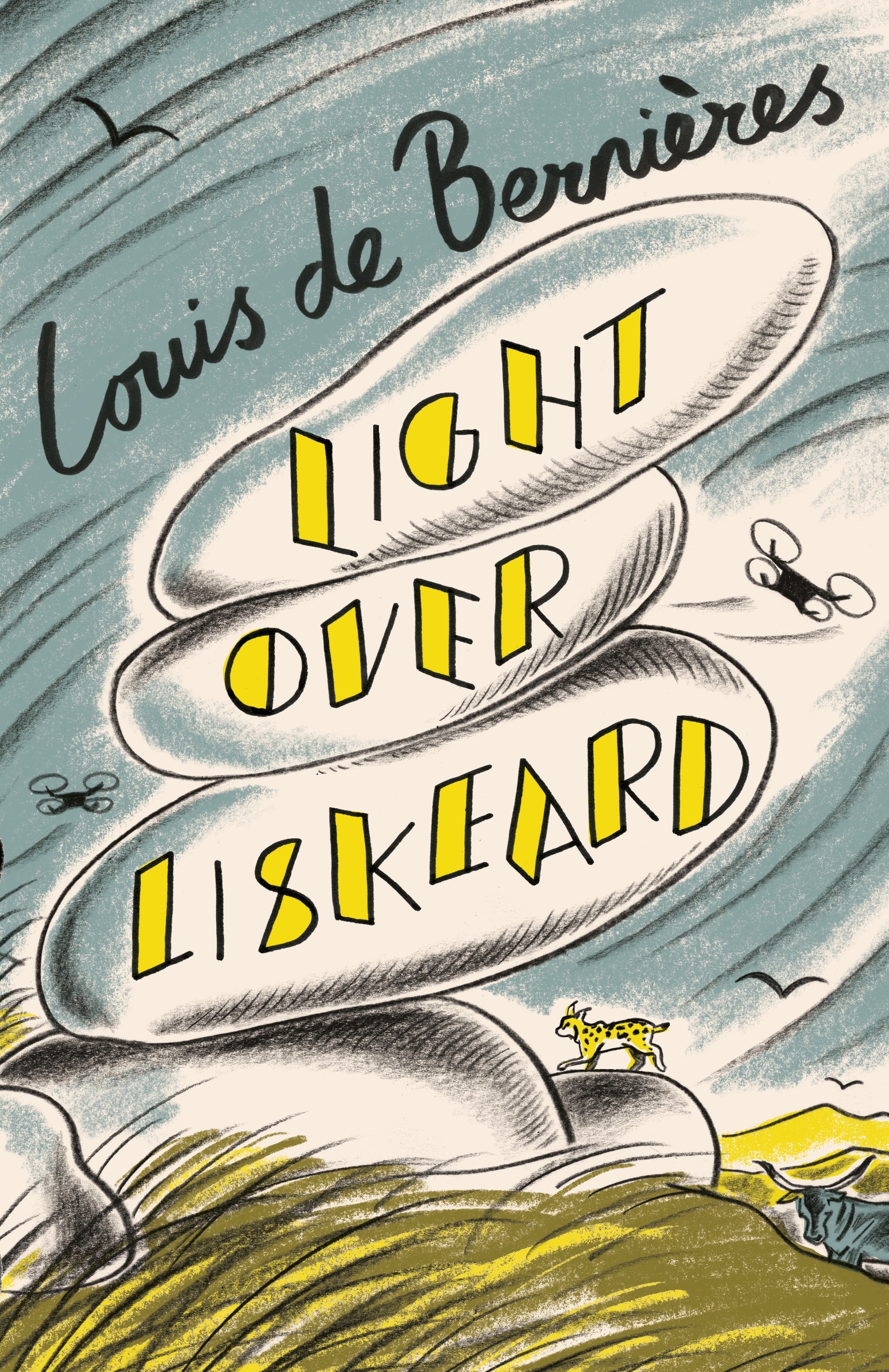
His name is Arthur, but no one calls him that. He’s Q, or QC, which stands for quantum cryptographer, his profession. He’s a mathematical genius, capable of doing complex mental calculations. He’s one of few with an understanding of the type of quantum technology needed to prevent and/or repair the damage done by hackers, and it’s made him a lot of money.
This is England’s future, where computerisation and AI have overtaken human activity. With bots doing the physical work, the populace has devolved into inactivity and cosplay, dressing and speaking as, say Arthurian knights, (or Roman senators in Q’s case). Civilisation is dependent on computers and vulnerable to hacking. Q senses that disaster is imminent. He purchases a farmhouse in Cornwall to prepare for a self-sufficient future … for which he’s ill-equipped. His two kids, Morgan and Charlie, visit. His wife, Penelope, takes a lover and stays in London.
Q’s neighbour, Theo, is a pragmatist, teaching Q how to live in the country. Theo’s daughter, Eva, runs to the peak of Bodmin Moor each morning. To Q’s surprise, she’s attracted to him. So is the farmhouse’s ghost, Maidie. Q can’t tell if Eva and Maidie are the same ‘person’.
The narrative in Light Over Liskeard examines existence and what it means to be human. It also looks both forwards and backwards. Bots are ubiquitous, but there are also reprised animals, such as aurochs and bison roaming the moors. The characterisations are unique and memorable. The plotting is superb. Humour softens the underlying warnings. In this brilliantly rendered dystopia, there will be laughter.
Reviewed by Bob Moore
ABOUT THE AUTHOR
Louis de Bernières was born in 1954, into a military family, and flown out to Jordan in a bomber. At the age of eight he was sent to Grenham House in Kent, a prep school run by two headmasters, one of them a paedophile and the other a sadist. He became fluent in Latin. Then he went to Bradfield College in Berkshire where he spent a lot of time fishing, and working for a local farmer when he was supposed to be doing sports. He then spent four months failing to become an army officer at Sandhurst, when what he really wanted to do was grow his hair long and play the guitar. In disgrace, he fled to Colombia where he worked as a tutor on a ranch belonging to an Englishman who also turned out to be a paedophile. He learned to ride western style, use a lasso, and round up cattle.
He came home and studied philosophy at Manchester University, financing it by working as a landscape gardener. Afterwards he worked variously as hospital porter, landscape gardener, mechanic in a bent Morris Minor garage in East London, philosophy tutor, carpenter, motorcycle messenger, and English and Drama teacher in Ipswich. He trained to be a teacher in Leicester, and won a masters with distinction at the Institute of Education in London. He worked with truants in Battersea until his third novel was published and he was earning the same by writing as he had been as a teacher.
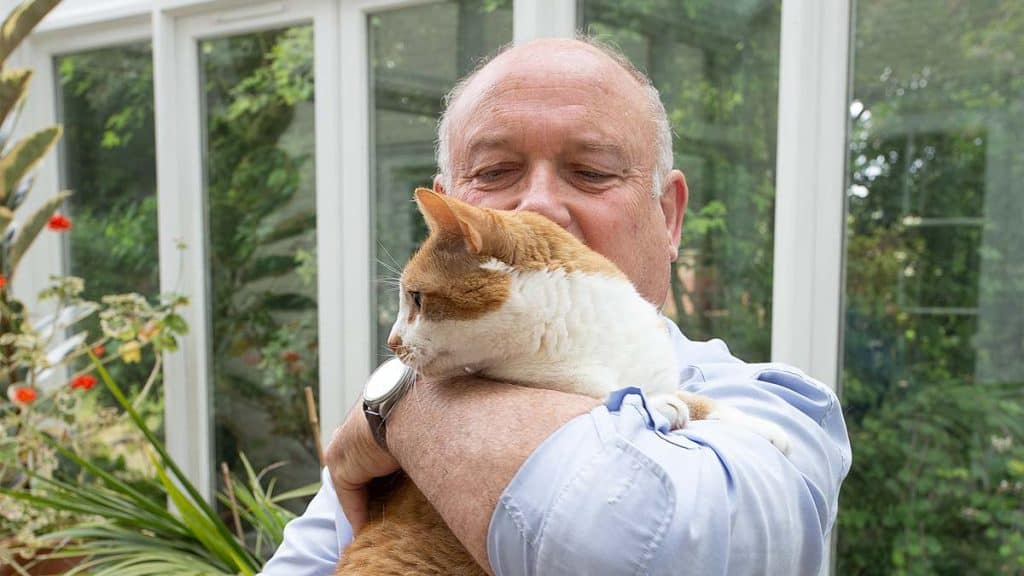
He lives in Norfolk with his two children Robin and Sophie, and four cats, only one of whom was acquired on purpose. He accumulates clutter and has one craze after another, like Mr.Toad. His recurring crazes are writing, music, golf, cooking, falling in love, fishing, car mechanics, and gardening. His craze at time of writing is restoring antique rifles. He has been made patron of several charities, all of which have collapsed very soon afterwards. He has campaigned for the right of children to have proper relationships with both parents after separation. He has travelled all over the world at other peoples’ expense. For ten years he was with the Antonius Players, performing music and poetry, and writes and performs his own songs.
He has written every book he ever intended to write when he started out in the ’90s, but probably has a few more left in him. He intends to write more poetry and become more grumpy, reactionary and unreasonable as he gets older. He hopes to meet his end by being shot through the heart by a jealous lover at the age of 96.



0 Comments