


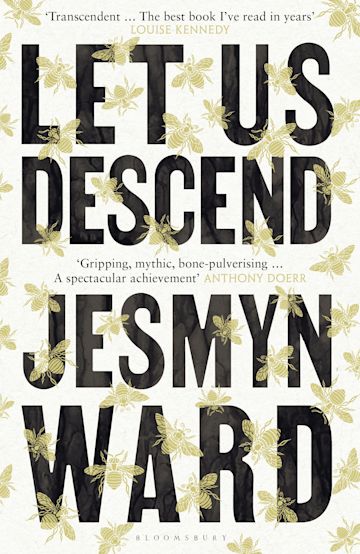
This is the killer first line in this monumentally brilliant Let Us Descend: ‘The first weapon I ever held was my mother’s hand’. Not only do its barbs hook the reader, but it speaks to the narrator/protagonist’s love of family and foreshadows her willingness to fight. That’s quite an achievement in the first 10 words.
Annis is born into slavery in the Carolinas, USA. She is taught by her mother, Sasha, how to fight … they both need to. Her mother was raped by the plantation boss, resulting in Annis’s birth. Annis refers to him as ‘my sire’, rather than father. Evoking both her position as nothing more than livestock, and also ensuring her life is not defined by him. Her mother is sold; Annis is also, but doesn’t know if she follows the same route as her mother. The march south to auction is arduous, heartbreaking and masterfully written. Dante’s Inferno is referenced and perfectly describes Annis’s hell on earth.
Annis bonds with her surroundings. Such is the propinquity between Annis and her environment that this closeness manifests itself in the narrative. Descriptive phrases emerge from the earth she walks on. Such as when she refers to her heritage and the ‘middle mud’ of her skin. This closeness is further established with air, earth and water being represented in spirit form. The spirit of the air takes her grandmother’s name, Aza, and tries to keep Annis safe. The spirits of earth and water have a dark malevolence. They speak beguilingly to her, suggesting she surrender herself to them.
Annis will fight. An awl – made from elephant tusk and passed down from her grandmother – which she keeps in her hair plays a significant role in this fight … but not how one might suspect. Bees are her friends. They’re guides and a consistent motif.
Readers might believe that there have been enough slave narratives, however this comes at a time when some ultra-conservative American politicians seek to remove Black history from US classrooms. A novel as powerful as this, written with such mastery and descriptive control, is the perfect antidote to such calculated antipathy.
Reviewed by Bob Moore
ABOUT THE AUTHOR
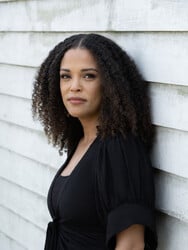
Photograph © Beowulf Sheehan
Jesmyn Ward received her MFA from the University of Michigan and has received the MacArthur Genius Grant, a Stegner Fellowship, a John and Renee Grisham Writers Residency, the Strauss Living Prize, and the 2022 Library of Congress Prize for American Fiction.
She is the historic winner – first woman and first Black American – of two National Book Awards for Fiction for Sing, Unburied, Sing (2017) and Salvage the Bones (2011). She is also the author of the novel Where the Line Bleeds. Her memoir Men We Reaped was a finalist for the National Book Critics Circle Award. The book also won the Chicago Tribune Heartland Prize and the Media for a Just Society Award.
She is currently a professor of creative writing at Tulane University and lives in Mississippi.


0 Comments