



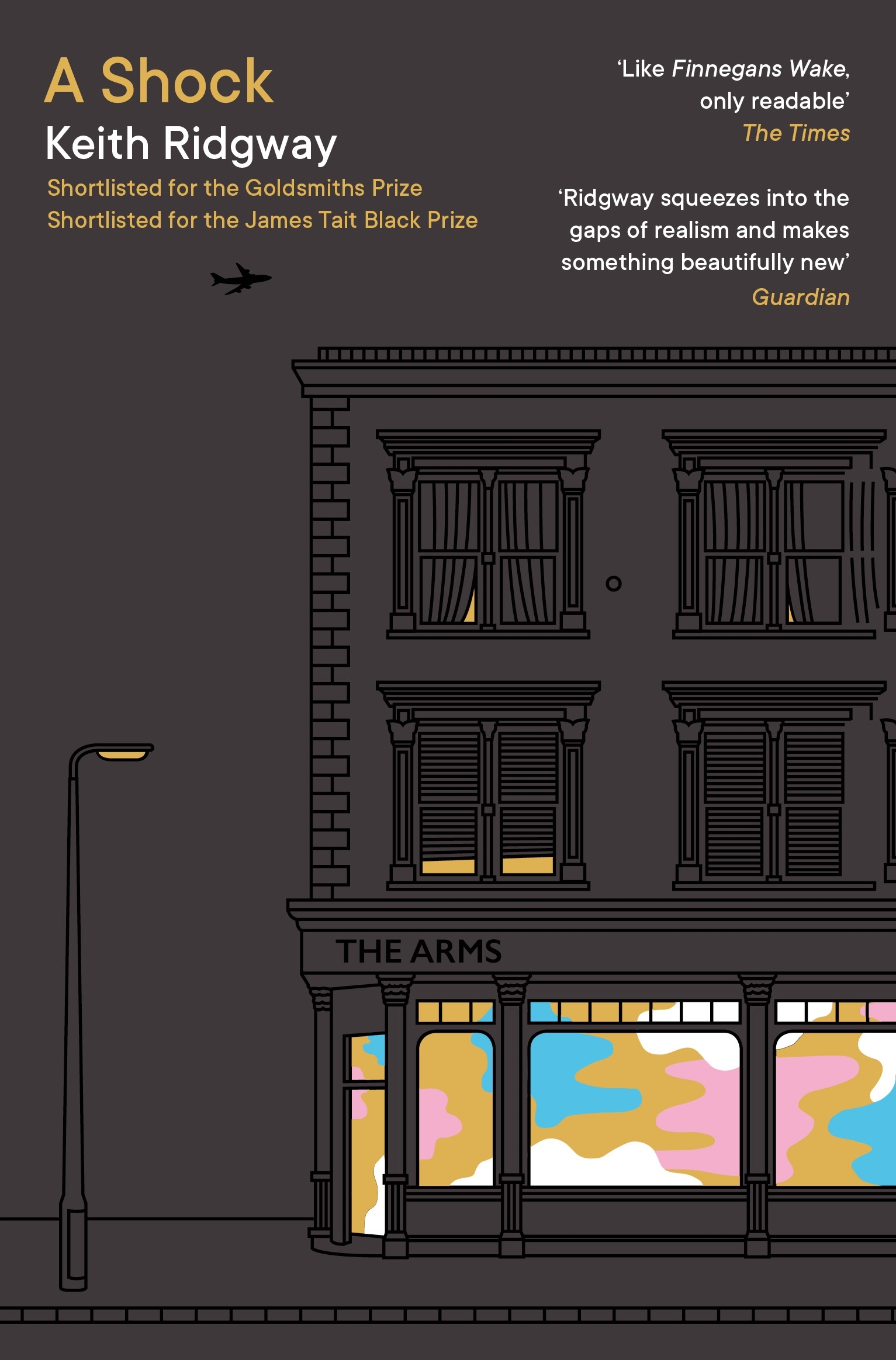
The last lines of this exceptional novel (don’t worry, no spoilers) give the reader the best insight into the narrative’s circularity and the exquisite ambiguity of knowing/ not knowing: ‘Perhaps it should have started this way. Perhaps it does.’
The book is written in nine sections, each following a different character and their interactions with others, through London’s suburbs. The same party begins and ends the narrative, and is told from different perspectives. The first section is from the perspective of the elderly neighbour, with the final one from a young woman at the party. In between, friends meet at The Arms, the local pub that serves as a convergence for characters. They lie to others and themselves – none more so than Anna and her friend with the slippery name: Stoker/Yan/Yves/Michael.
Ridgway’s control of voice is without parallel. The elderly woman shows signs of dementia, but we’re still able to follow her narrative. Similarly, Ridgway also has us within the mind of a young man in the grips of drug-induced paranoia, but it is the section following David as he moves into a (jinxed?) flat that is the most accomplished and sinister. Here, we seem to be within the walls of the flat and the invisible narrator has an arm around us, teaching us the advantages and ethical limitations of voyeurism: look at him do this, but look away now because, ‘This is private’.
This is an extraordinary novel. Ridgway is a singularly prodigious talent.
Reviewed by Bob Moore
ABOUT THE AUTHOR
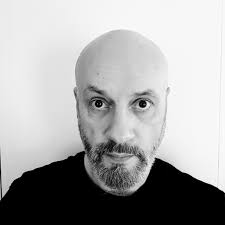 Keith Ridgway is from Dublin. He is the author most recently of A Shock (Picador, New Directions, 2021), which was the winner of the James Tait Black Memorial Prize and shortlisted for The Goldsmiths Prize.
He is also the author of the novels Hawthorn & Child( 2012), Animals (2007), The Parts (2003), and The Long Falling (1998), as well as short stories and novellas. His fiction has appeared in The New Yorker, Granta, Zoetrope, Stinging Fly, and others.
He has been awarded the Prix Femina Étranger in France and The Rooney Prize for Irish Literature. He lives in south London.


0 Comments