


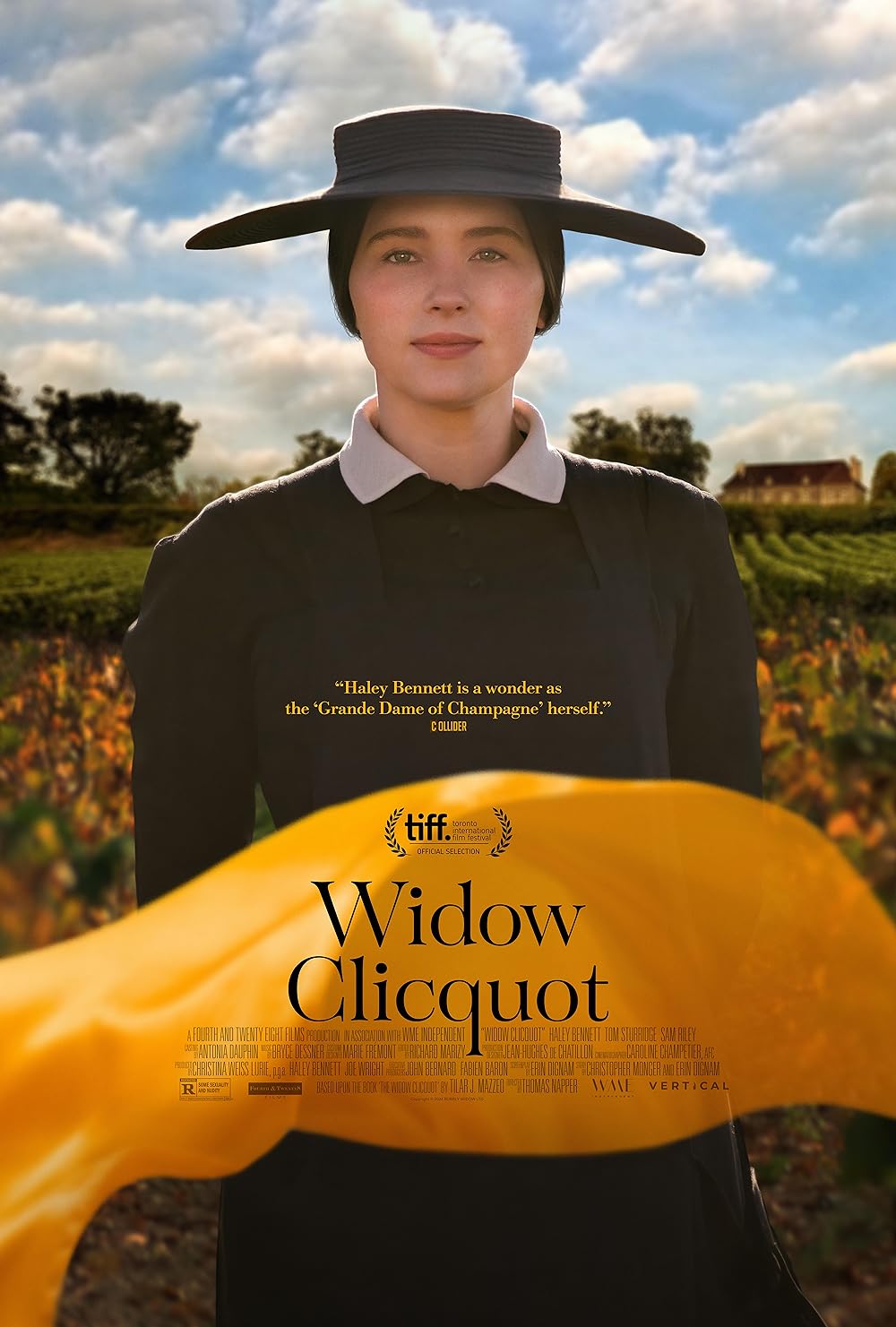
Good Reading’s film critic reviews Widow Clicquot, based on the book, The Widow Clicquot: The Story of a Champagne Empire and the Woman Who Ruled It by Tilar J Mazzeo.
Widow Clicquot
Classification: M (mental health themes, sex scenes, drug use) running time: 1 hour 39 minutes; director: Thomas Napper; Language: English; cast includes: Haley Bennett; genre: biographical drama.
‘Veuve’ is French for widow. Veuve Clicquot is the Champagne. Widow Clicquot is the woman who took over her husband’s business after his untimely death and became a successful entrepreneur.
In 1798 Barbe-Nicole Ponsardin entered into an arranged marriage with François Clicquot. He died tragically in 1805. Barbe-Nicole was 27 years old with a child to support. She inherited his vineyard and under French law could, as a widow, take control. Her father-in-law urged her to sell as Moët, another vineyard owner in the Champagne region of France, had made a generous offer. She refused.
She steered the business through periods of political upheaval and financial heartaches.
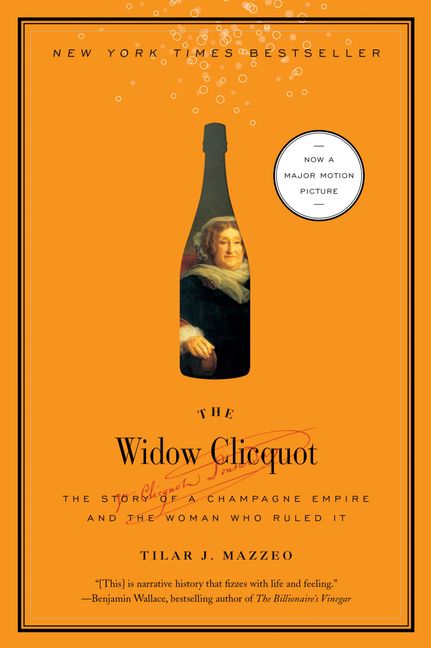 Widow Clicquot, the film, is based on a book by Tilar J Mazzeo, an American academic. The title: The Widow Clicquot, The Story of a Champagne Empire and the Woman Who Ruled It.
The director of the movie is Thomas Napper. It is handsomely photographed by Caroline Champetier and Haley Bennett is impressive as Madame Clicquot.
In the 1800s, Champagne, the drink, was cloudy and very much sweeter – even more than our dessert wines nowadays. It was far from being highly valued by the wealthy. Barbe-Nicole set out to change that.
She tenaciously experiments and eventually comes up with the idea of what is now known as riddling. She introduced racks that held the bottles, their necks pointing downwards, with temporary caps that stopped the wine escaping. The unwanted yeast collected at the neck and was later removed. Extra wine was added and the cap replaced with a cork. This made the Champagne clear and sparkling. A huge sales advantage.
Riddling remained secret for years as Barbe-Nicole introduced a profit-sharing scheme with her employees. It was in their best interests to remain tight-lipped. Moët didn’t duplicate the technique for 15 years.
While Madame Clicquot was intent on bottling and selling the new, improved and now popular wine, the world was in uproar. Revolution was followed by the rise of Napoleon and trade embargoes. She was stopped from selling to her largest market: the people with wealth in Russia. A few times she was close to bankruptcy.
She took risks violating the shipping embargo and hurriedly hid the wine to prevent French and then German troops drinking her dry. When the Russians arrived, she judiciously gave bottles to the officers. The occupiers of her land during war would be her customers during peace.
The film is lavishly gloomy as many scenes are candle-lit. Fortunately, not one was carelessly knocked over causing a fire. Surprisingly, it is in English. It took a while to get used to English being spoken by French characters.
It’s a gorgeous period-piece and well-acted but the pace was too slow for me. I love to drink Champagne but finding out what goes into the laborious process of successfully producing a drinkable drop was not exactly riveting.
There’s a lot of shifting back and forth in time. Here’s a tip given by a fellow film fan: when Barbe-Nicole is wearing black, the scene is after her husband’s death; when she wears more colourful clothes, it’s before.
***
Reviewed by Clive Hodges