


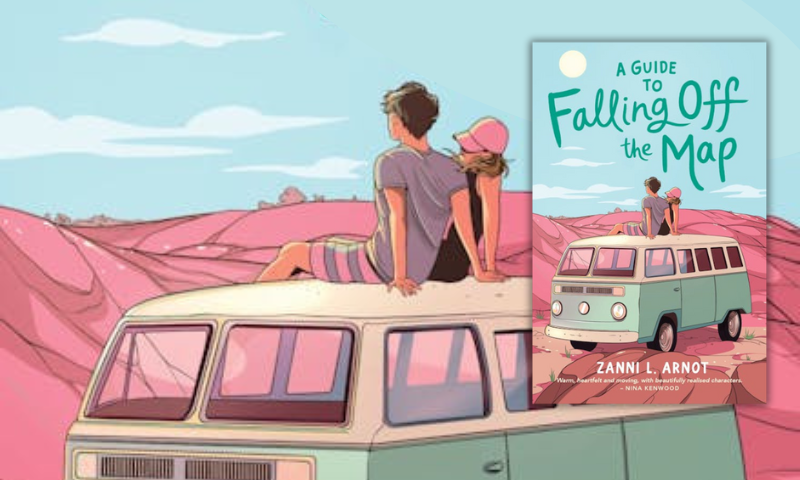
ZANNI L ARNOT’s A Guide to Falling Off the Map is a funny, tender, messy, and authentic story about two teens who fall in love on the precipice of things falling apart. Read on for a Q&A with the author.
This is your first Young Adult novel after writing over 40 books for younger readers. What motivated your foray into YA?
The idea itself. When I was running in the Bellingen hinterland (featured in the story), the characters formed spontaneously. I could sense their backstories and personalities almost immediately. I knew they weren’t middle grade characters. These two could only belong in a young adult novel. I’d had no plans to write for this age group, but the idea and the characters were calling so loudly, I strapped in and before I knew it, found myself writing YA.
What sparked the idea for this story?
I’d had the title for a while. I’d thought it was middle grade, but the story never went very far. Then these two, Vinnie and Roo, stepped into my head, and I knew at once this was the title for them. Many of my ideas come about on trail runs, and this story was the best example of this. As I ran, the characters formed, their setting formed (the road trip we were currently on as a family), and their problems became self-evident. Most importantly, I could sense who these two were to each other: childhood best friends, who couldn’t be more different from each other, yet meant the world to each other.
The journey across inland Australia serves as a powerful backdrop. What drew you to certain locations and was this a route you’ve taken yourself?
Yes, this was almost the exact route we were doing when I got inspiration for the story, although we’d come from Alstonville, not Murwillumbah, and our Woody Head trips were separate holidays.
All these parks and locations are very special to me. Particularly the Lennox Head headland, which I have run countless times.
Vinnie and Roo are both struggling with their own issues. Did any of the challenges they face stem from your own life or experiences?
Yes, in kind. I’d known people with MS over the years, and I’ve lost people to suicide. I studied psychology shortly before my kids were born, and trained as a suicide counsellor, later volunteering as a telephone counsellor for LifeLine. Although Vinnie and Roo’s story is unique to them, my experiences definitely influenced their back story.
On top of that, I had to do a lot of research, and had the help of several sensitivity readers along the way. I wanted to make sure I was treating the issues with as much care as I could. Every person will have a different experience, for sure, and Vinnie and Roo’s is their own experience. But when dealing with sensitive topics like these, it’s worth treading carefully.
Vinnie is dealing with overwhelming grief. Why was it important to you to not shy away from exploring these more mature themes?
I think books are a really important, and hopefully safe, way for young people to negotiate difficult experiences, like grief. Grief can be lonely. But knowing that someone (even fictional) understands what you’re going through is comforting.
I’ve tried as much as possible to bring in the nuance around these issues, and hope I’ve done them justice.
What message or experience do you hope readers carry forward after finishing your novel?
A feeling of hope. A feeling of comfort. An appreciation for Australian national parks. An understanding that we can go through difficult things, but with the right support, we can be okay. I hope that the characters will live on for the readers as they do for me. I adore these two. I could spend a lot of time with them.
Are you planning future YA novels or any adult fiction?
Definitely! My next YA is coming out next September. Stay tuned! And I am currently writing a third. I’d love to write an adult novel too someday. I have some ideas brewing …
ABOUT THE BOOK
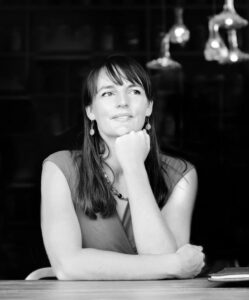 Zanni L. Arnot has published over forty trade books for kids under the moniker Zanni Louise, including bestselling board books, picture books, chapter books, and middle grade. A Guide to Falling off the Map is her first young adult novel. Zanni tours the world, visiting kids in schools and running writing retreats for grownups. She’s also a proud ambassador for Room to Read, an organisation that gives kids access to books. In her free time, you’ll likely find Zanni trail running in forests. Zanni lives with her family of four on the east coast of Australia.

0 Comments