


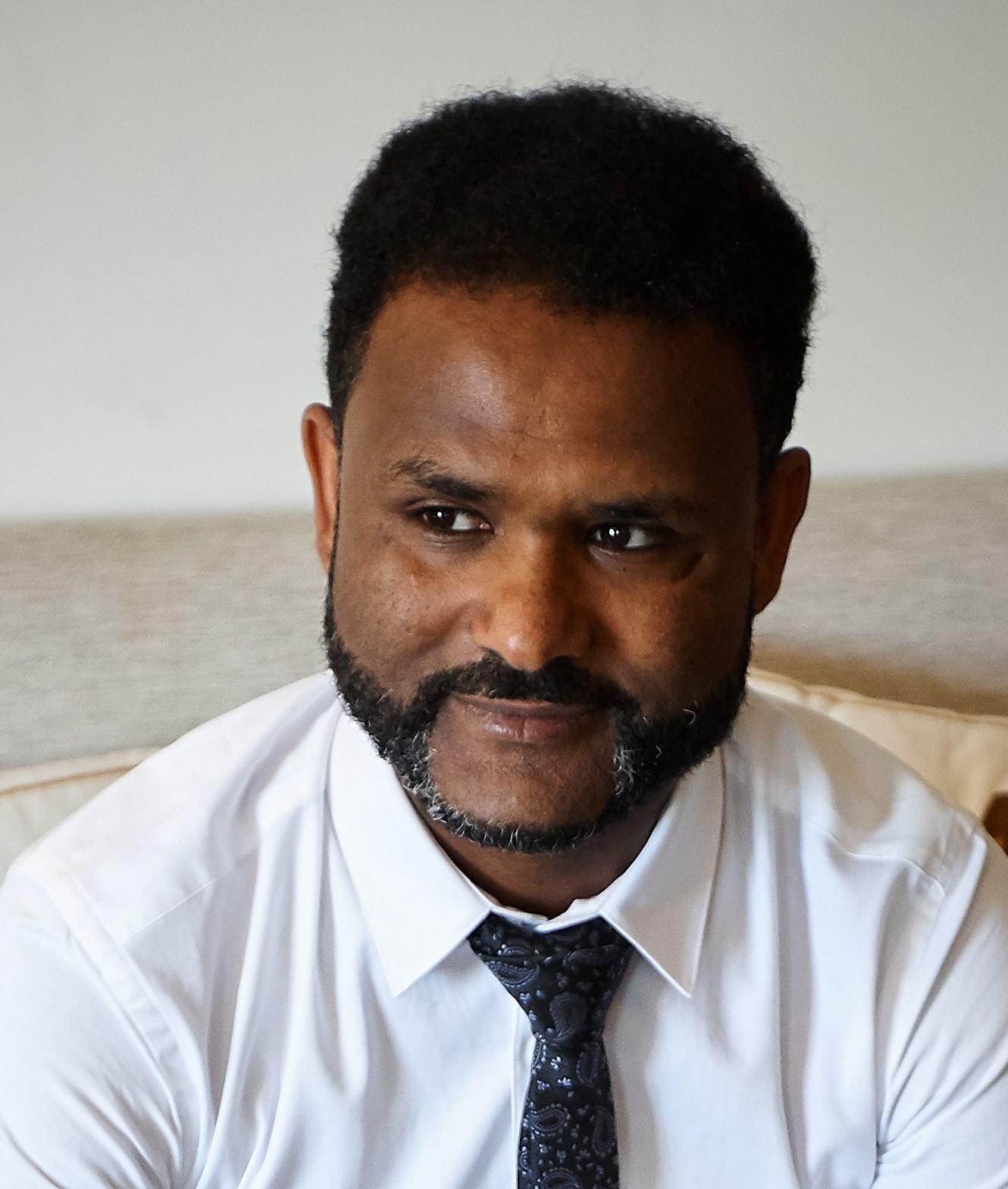
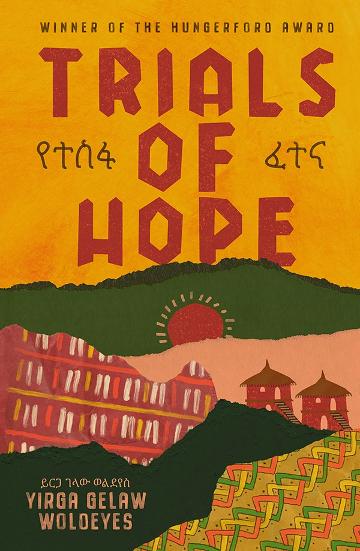
YIRGA GELAW WOLDEYES chats with Good Reading about his memoir Trials of Hope, which explores Ethiopian culture, memory, and resilience. Read on for a Q&A with the author.
ABOUT THE BOOK
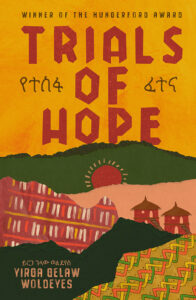 In this profound, ground-breaking narrative, Yirga Gelaw Woldeyes weaves together stories of heritage and heartache.
His unique memoir celebrates the beauty of Ethiopian culture while mourning its erosion – first under colonial forces, and later through internal conflict. Framing his work via the Ethiopian belief in the four elemental stages of human experience – water, fire, soil and wind – this is an essential exploration of the human condition, connecting readers to a nation of people whose sagacity and spirit have endured through generations.
**********
MEET YIRGA GELAW WOLDEYES
What is your book Trials of Hope / የተስፋ ፈተና about?
Trials of Hope / የተስፋ ፈተና is a memoir that charts my journey from shepherd boy in rural Ethiopia to human rights academic in Australia. It follows the transformation of my life alongside the transformation of my home country, using a blend of prose and Amharic poetry with English translations.
It also reflects on how refugees and migrants like myself navigate the complex terrains of culture, race, identity and belonging in the world.
What aspects of traditional storytelling in Ethiopia are present in your book?
Multiple traditional styles are used. For instance, I draw on the practice of semina worq – Wax and Gold – a traditional way of telling stories and poems with dual meanings. The first meaning, the wax, is the obvious surface reading. It is shiny and beautiful; it rhymes and has musical tones.
Beneath the wax is the gold – the hidden, deeper meaning – which carries a profound truth or a message of justice. It can be a useful way to make political statements in repressive climates, where the wax protects the speaker from what they are really saying in the gold. Another style is Teret Teret, where allegorical, mystical, spiritual and philosophical concepts are imparted to children through fable-like stories, often featuring animals.
Notably, my memoir is also deeply grounded in place-based storytelling, where people, communities and their traditions are rooted in the very places they call home.
Your book really shows the duality of your existence – existing in two cultures and two languages: is that why you chose to use both poetry and prose for your memoir? How did the translation process work for your poems in Amharic and in English?
While my existence has a duality, I don’t always perceive this dualism as opposite or separate identities. For me, identity is a process of becoming; we choose and learn to have an identity. However, when the meaning of an identity is fixed by powerful others and imposed on our lives, we are forced to respond to this imposed meaning. There is no inherent antagonism in being Ethiopian and Australian, but challenges emerge when
I am made to face the imposed meaning of what it is to be a black man in this country. A non-dualistic becoming is what I aspire for, one that absorbs meaning not from the borders but the hearts of each culture. The book shows at what cost some of us try to achieve this.
Although two languages or cultures appear on the surface, the story belongs to one person who is one and many at the same time. The translation is not a technical or direct transfer of the Amharic into English. It is the birth of the same poem in two poetic traditions. What defines them is not duality, but harmony. My hope is that the two languages side by side are not seen as examples of difference but as possibilities of unity.
How does your career as an associate professor and human rights director dovetail with this story?
My academic and creative works are driven by the same imperatives: a celebration of culture, an elevation of justice, and to lay bare the contradictions in the world. For instance, a lot of my research looks at education in Africa. We universally think of education as a good thing, as a human right. But whose education is seen as good? What education is offered to us as a right?
Ethiopia has an ancient education system rich with indigenous literature, philosophy, science and mathematics. But this is not the education that is valued or held up as a solution to our problems. Often, human rights organisations and aid bodies only fund western education programs using English, following on from that colonial attitude that Africa is a ‘Dark Continent’ that requires western intervention. I hope that my memoir, and my academic work, can challenge these ideas.
One way of enlivening human rights is to centre what vulnerable people, particularly in Africa, see as essential to a good life. We need to let them tell their stories.
What would present-day Yirga say to the shepherd boy you were then?
I would tell him how much I miss him. I would tell him how much I miss the freedom he had. As a child who grew up in the far-out rural area of the only country in Africa never to be colonised, I got to grow up in a world unaffected by colonialism. My identity was forged in a truly indigenous African context, untouched by racism.
For most of my life, I didn’t know I was a ‘black man’, or what that meant to the world. For most Africans and First Nations peoples, this is a rare thing. I would also share with that shepherd boy the heartaches I feel when I see how people in both Africa and the west see him today. They portray people like him as primitive, his people’s wisdom as backward.
I would tell him I wrote this book to show the world how very wrong they are, how his life is truly rich, how any injustices wrought upon people like him must be fought.
You are married to the writer Rebecca Higgie, who has a new novel coming out this year. She won the Fogarty Award; you won the Hungerford Award. What does a typical day in your amazingly creative household look like?
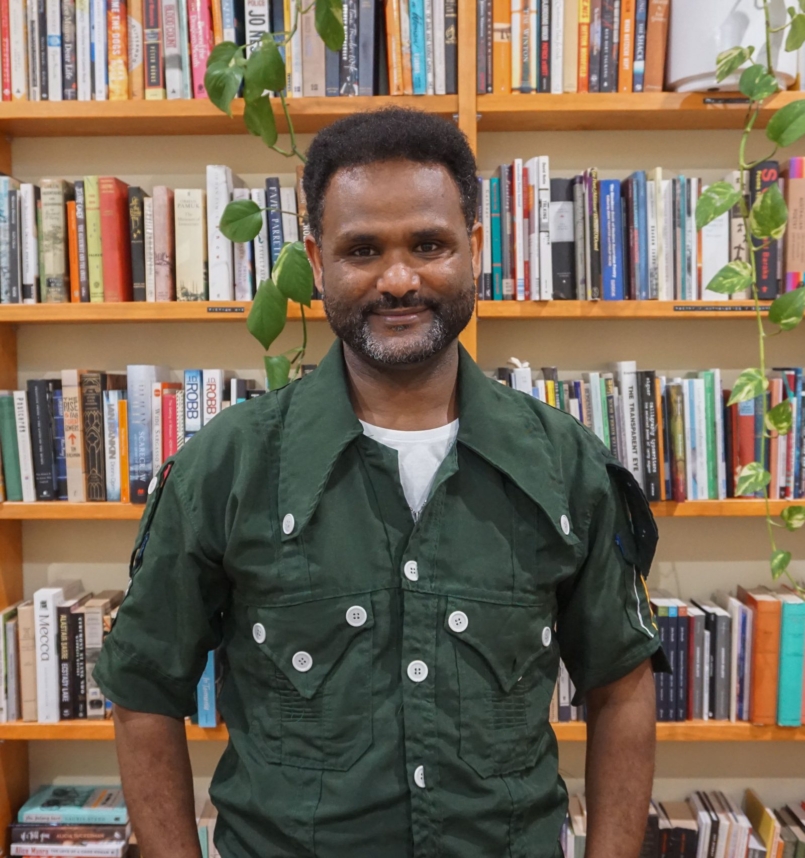 A typical day revolves around our seven-year-old son, who is the centre of our world. In order to write, we exchange the duty of taking care of him. We understand that while we are both justice and research-driven writers, we have very different writing practices. Eribqa (Bec’s Amharic name) is an exceptionally effective writer with imaginations broad and deep, but she needs absolute silence when she writes.
Me on the other hand, I don’t mind chaos and noise. I invent better when I am closer to nature, under a tree in the sun, while Eribqa is more inventive when she is tucked away in her office with her earplugs in. We give each other space to research and write in the ways that work best for us, and then we come together, discussing and sharing our work.
Our writing is always enriched by our many conversations.
Can you tell us about another Ethiopian author / book that you would recommend to read? (It would need to be available in English.) Or are there many books in Australia by Ethiopian writers? Can you recommend any of these?
Unfortunately, there aren’t many. When I tried looking for Amharic books or books written by Ethiopian Australians in the WA local public library system, I found nothing. One of the motivations in writing this book was to offer an Ethiopian story in both Amharic and English to the Australian literary scene. I wanted to give the Ethiopian diaspora something in their language, while also reaching out and speaking to the predominantly English-speaking audiences in Australia.
I hope my book can open a door to more Ethiopian Australians telling their stories.
Which Australian books have become your favourite since living here?
I am moved by the work of First Nations writers, like Kim Scott and Elfie Shiosaki, and am inspired by the growing number of books (including children’s books) that feature English alongside Indigenous languages like Noongar. I, of course, love my wife’s books. I list her upcoming book The Book of the After, which tackles climate crisis and politics, as one of my favourites. But I also have to note that, as an immigrant who sometimes feels tired operating entirely in English, I don’t read as much Australian fiction as I would like.
It is not common to find African voices and experiences truly represented in the literary field. Many migrants like myself seek to engage with literature in our languages, as that is what truly speaks to us. Yet, the opportunity to find good literature in our languages is slim. Institutions rarely fund creative works in non-European languages, and writers can hardly sustain themselves by writing in local languages. This is part of the process of linguicide (the killing of languages) I am concerned about in my work.
The more translations and dual-language works published in Australia, the more we will open the literary scene up to the diverse communities that call this country home.
ABOUT THE AUTHOR
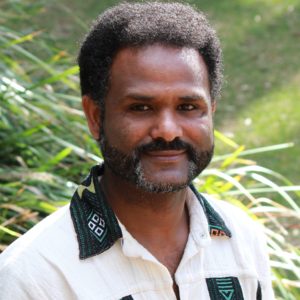 Yirga is a writer, researcher and poet from Lalibela, Ethiopia. He currently lives in Perth, Western Australia, where he is the Director of the Centre for Human Rights Education at Curtin University.
His academic and creative work revolves around African traditions, Ethiopian philosophy, epistemic justice, issues of looted manuscript repatriation, and the politics of language and belonging. His Amharic poetry was compiled and published in a solo collection titled የተራሮች ጩኸት (Yeteraroch Chuhet, The Cry of Mountains), and has been performed widely on stage and radio in Ethiopia.
His English creative work has appeared in Westerly, Stories of Perth and Ways of Being Here. He was the winner of the 2024 City of Fremantle Hungerford Award.
Read more about Yirga’s book HERE.

0 Comments