
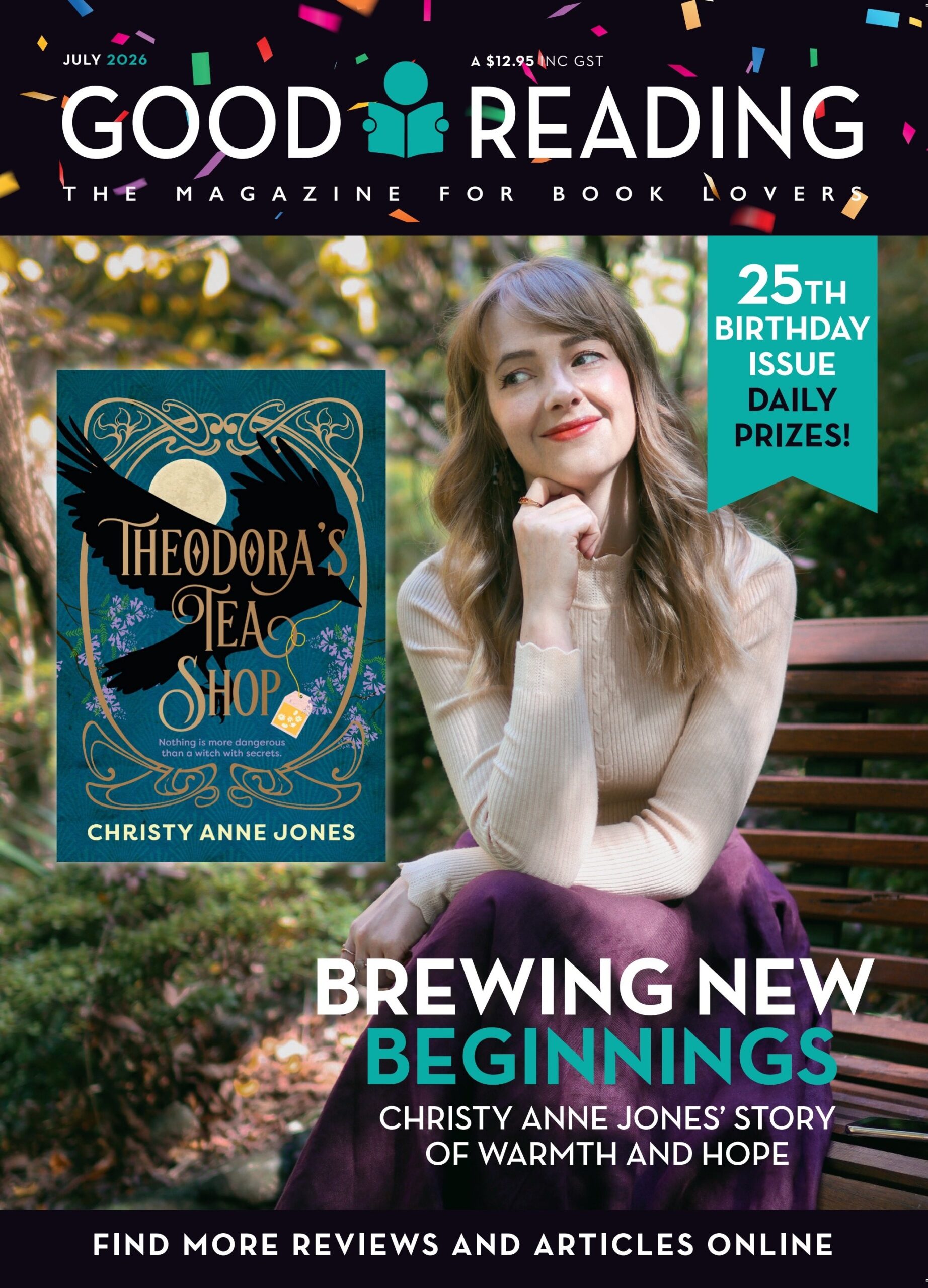


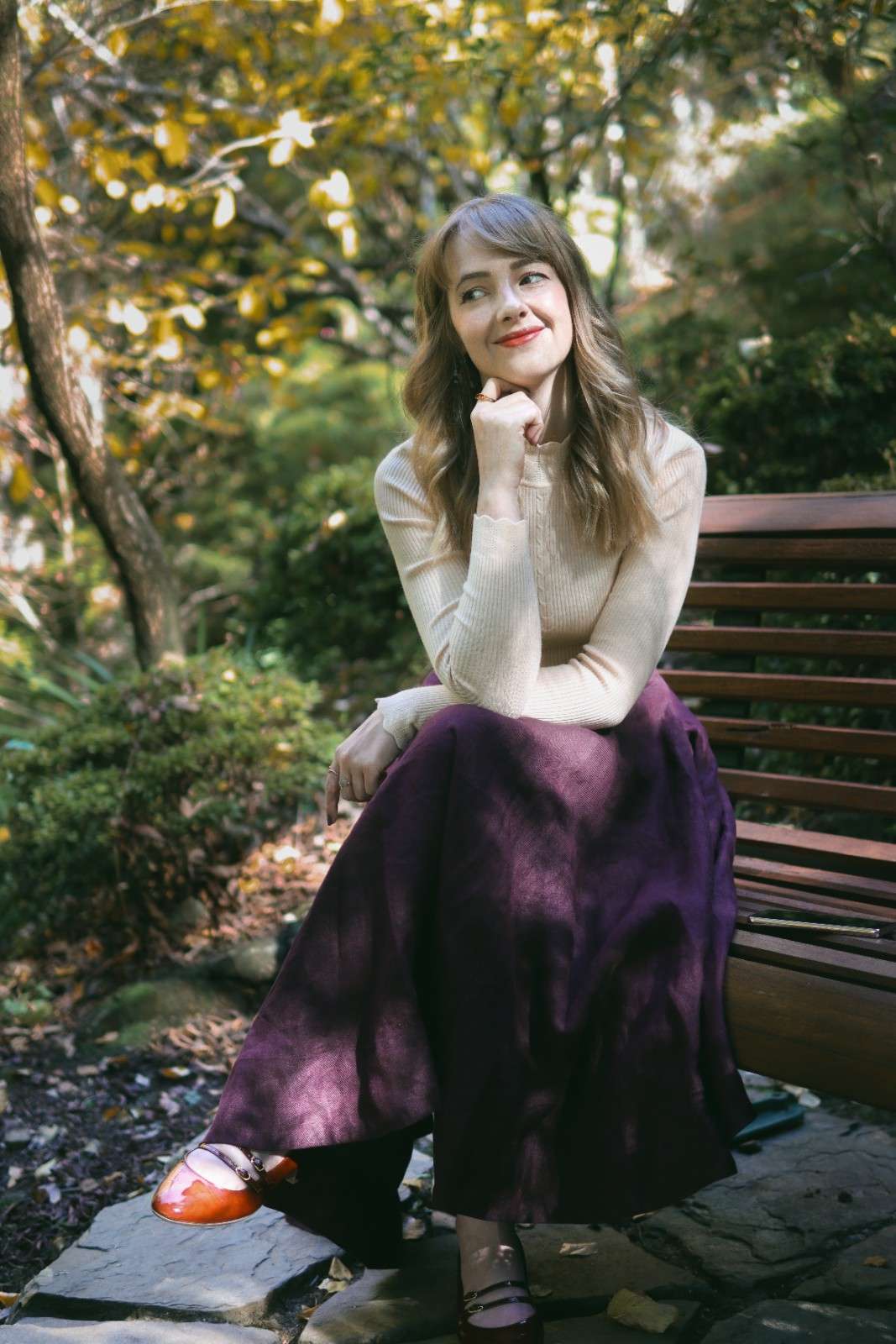
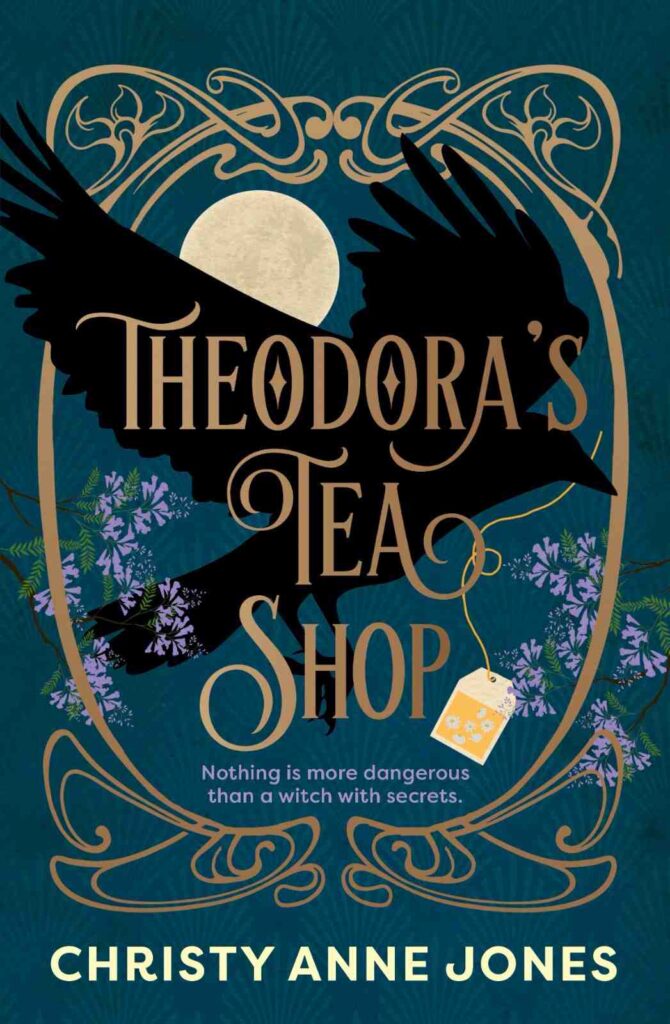
CHRISTY ANNE JONES is a speculative fiction writer, illustrator, reviewer and author of an illustrated memoir. Theodora’s Tea Shop is her debut novel and is a 1920s-inspired fantasy filled with magic and friendship.
AKINA HANSEN reports.
As a child, Christy Anne Jones often found herself longing for adventure.
‘I grew up in country South Australia, mostly in small rural towns too far away for the buses to go. I was bored and alone a lot as a kid. I wanted to escape the dairy cows and drought.’
 For many, like Christy, the fantasy genre offers its readers the chance to discover new worlds, places and people without real-world limitations. Christy still recalls how she discovered her own love for the genre.
‘I remember having trouble learning to read. I have all the markers of dyslexia without ever having been tested for it, but when I was six or seven, I discovered books about magic schools and wizards, and irrevocably latched onto the fantasy genre. Almost overnight, I became a voracious reader. I brute-forced through any difficulty I had simply because I’d fallen so deeply in love with magic.’
Ever since, Christy has wanted to be the one to write those stories. During her teenage years, she began diligently putting pen to paper with the goal to one day have her own stories published.
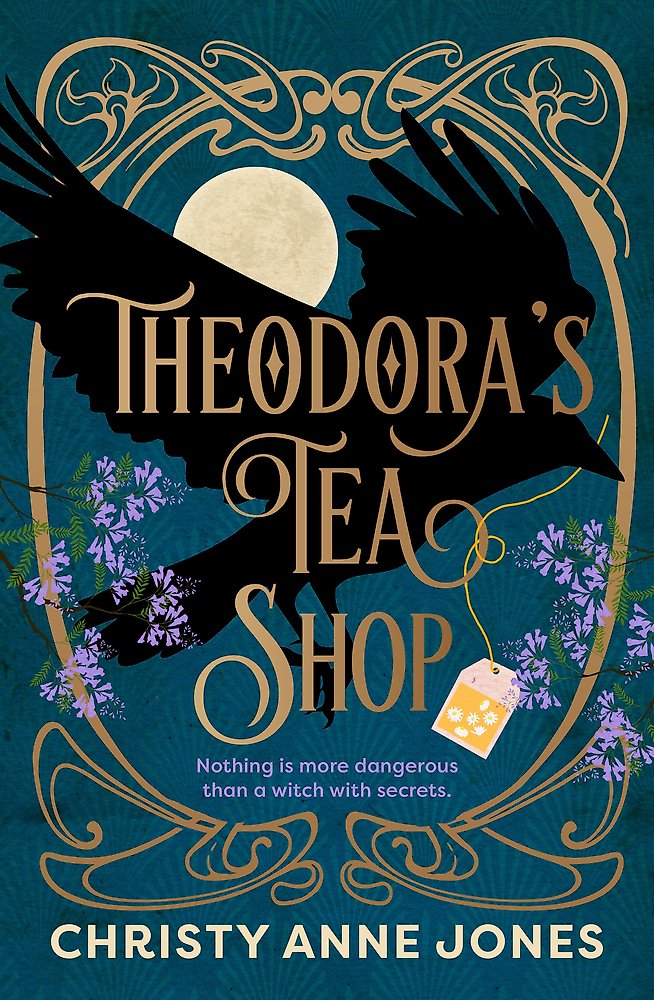
Now, her dream has become a reality with the release of her debut novel, Theodora’s Tea Shop, an atmospheric, 1920s-inspired fantasy about magic, friendship and tea. But the journey to publication wasn’t without its challenges.
Like most creative pursuits, writing requires time to hone the craft – and, crucially, financial support to keep the dream alive. At age 21, Christy made the bold decision to move to Japan. She hadn’t secured work and had only a small amount saved, but it was here that her writing career unexpectedly began to take shape.
 ‘I started travel writing in a moment of desperation after my “paid” internship with an artist in Tokyo ended up being not paid at all. We needed the money. I pitched an article about health food stores to an online magazine. I spent two days walking all over Tokyo, unable to justify the cost of the train, taking pictures, comparing the prices of coconut oil. That was my first ever paid piece of writing.
‘I was sick a lot in Japan – low iron, bad immune system, my tonsils had to be removed after we came home. It was difficult to thrive there, financially, socially, etc. But I loved teaching small children. I loved being paid to travel to onsen towns and take pictures of castles. If anything, it further instilled in me a sense that even when things are tough, the world is so, so interesting and beautiful.’
This experience resulted in A Year in Tokyo, an illustrated travel guide and memoir. Yet, behind the scenes, she was still working towards becoming a novelist.
‘I couldn’t tell you how many rejections I’ve received. Novels, short stories, pitches, fellowships – hundreds and hundreds of unfortunate emails over the course of a decade. Pitching to literary agents and going on to submit to publishers have, respectively, been the hardest things I’ve done in my career. Before we submitted Theodora’s Tea Shop to publishers, I’d already spent about half my 20s on it. That is a very long time to sit with one world and one set of characters; I couldn’t bear the thought that maybe, like the novel before it, this one would fail too. However, this is a very normal part of being a creative. Rejection is constant, unfortunately.’
It was during September 2020 that she began writing what would become Theodora’s Tea Shop. She had just put to rest her previous attempt at a novel when the seeds of a new idea began to form.
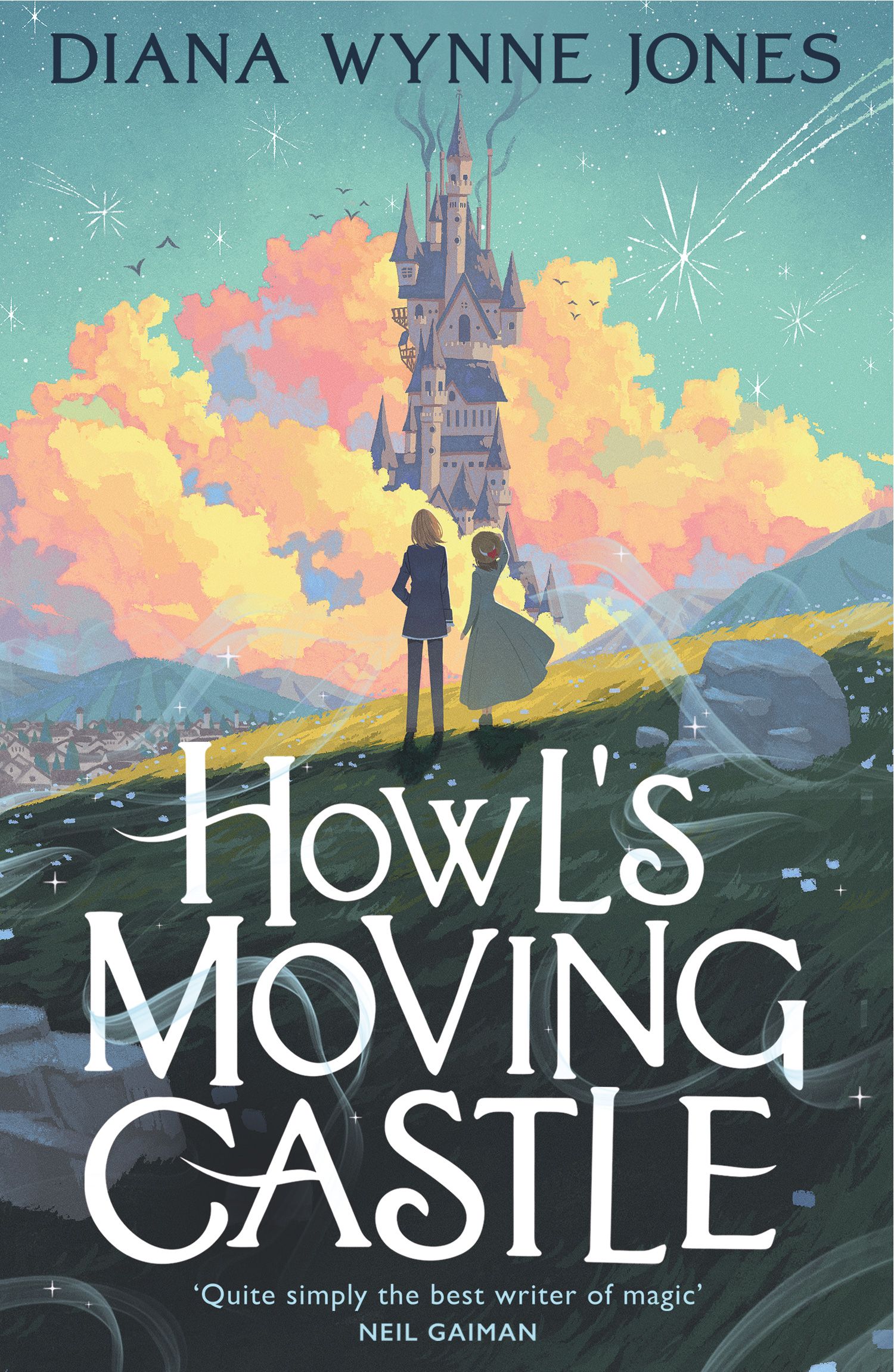 ‘I love Howl’s Moving Castle, both the Diana Wynne Jones novel and Hayao Miyazaki film, and was a bit melancholy listening to it at my desk. I especially love Howl. He’s charming, flamboyant and confident. At the beginning, he seems so enigmatic and powerful. However, deep down, he’s just a mess. I thought, what if I wrote about a witch who was like that? What if I wrote something kind of like Howl’s Moving Castle, but instead of a romance, it’s about two women becoming friends? The story, plot-wise and theme-wise, is of course very different to Howl, but that was the jumping off point for Dot and Theodora’s friendship.’
However, the inspiration for the protagonist of Theodora’s Tea Shop – Dorothy ‘Dot’ Louise Walcott – was influenced by someone a little closer to home. Dot, a shy, chronically ill and intelligent young woman who dreams of learning magic, was inspired by Christy’s own teenage battle with glandular fever, which later developed into chronic fatigue syndrome.
‘By the time I was healing from that, I had developed my chronic iron deficiency problem, which I still have today,’ Christy says. ‘Thankfully, because of iron infusions, I’m fine – but when my ferritin is low, the Earth often feels like it’s spinning and I’m very prone to feeling faint, exhausted, and as if physical tasks are difficult. For Dot, really what I wanted was to create a character who felt real, and one who doesn’t need to solve or fix her chronic illness in order to be loved by the people around her.’
Dot lives in a country where the use of magic is forbidden, except for a privileged few, with Christy drawing inspiration from both post-World War II Japanese history and the American Prohibition era.
‘After World War II, Japan became constitutionally barred from having a military,’ Christy explains. ‘They still are today, and I’ve always found this very interesting.’
The worldbuilding is equally rich in detail. When Dot travels to the city of Alliaster to learn magic from the elusive witch Theodora – who operates a covert magical empire from a quaint tea shop – readers are shown a world shaped by Christy’s own travels.
‘The flora, fauna and climate in the city of Alliaster were heavily inspired by my time in Japan: the hydrangea season, the bright yellow ginkgo leaves, the huge crows in Yoyogi Park, always laughing,’ Christy says.
 ‘There’s a market in the book which is not subtle at all in its resemblance to the Central Markets in Adelaide – one of my favourite places on this Earth. In the same way I love to travel, I also adore worldbuilding. It’s fun to spend your time somewhere intriguing and totally new.’
For Christy, the fantasy genre allows her to draw from small and big personal memories and playfully bring them to life.
‘I think part of what draws me to fantasy as an author is that I get to collect and explore the most beautiful and weird and interesting things I’ve experienced in my life,’ she says. ‘Little details turn up in the work: titbits about angler fish, the jetty from my childhood beach, the time I almost drowned when I was eight, the awe I had at 19 exploring a foreign country for the first time, my sense of wonder and magic I felt in a haunted graveyard in Edinburgh after getting scratched by a ghost; I don’t know how, but this did happen. All of it can go into the story. I’m not limited to a time and place and context and, although I do a lot of research and put a lot of work into the world logic, I love that freedom.’
Ultimately, that freedom has led to a debut novel that is about acceptance and finding where you belong.
‘I wanted Theodora’s Tea Shop to be a fun book in an immersive world,’ Christy says. ‘It’s full of spirits and daemons, set in a vibrant city with lots of magic and tea and twists and turns. Beyond that, the novel is (I hope) quite an affirming story. It’s about messy people who make mistakes and are still loved anyway. It’s a found family story about learning to love oneself and surround oneself with the right kinds of people – the kinds of people we don’t have to change for.’
**********
ABOUT THE AUTHOR
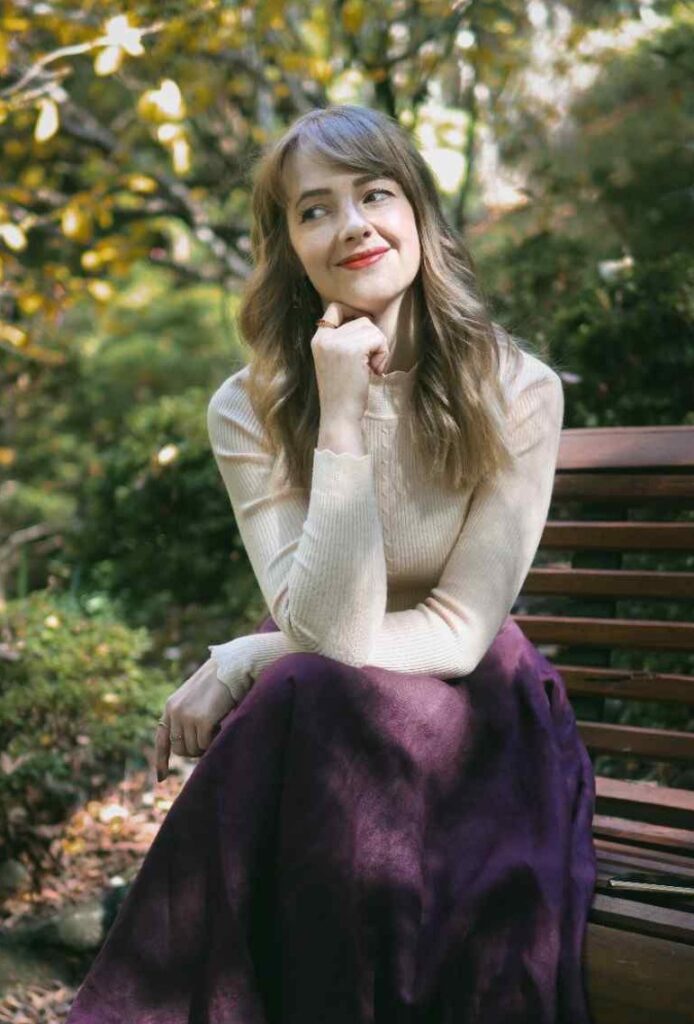 Christy Anne Jones is a speculative fiction writer, illustrator, reviewer and maker of things. Her first book, an illustrated memoir, follows her time as an English teacher and travel writer living in Tokyo. Her heart, however, has always been with stories of magic. She has been writing since she was old enough to hold a pen. Her short stories and nonfiction have been published in Australia and Japan. She lives in leafy Adelaide, on Kaurna Land, with her partner and puppy.
Visit Christy Anne Jones’ website
Follow Christy Anne Jones on Instagram
Read more about her book on the publisher’s website
0 Comments