



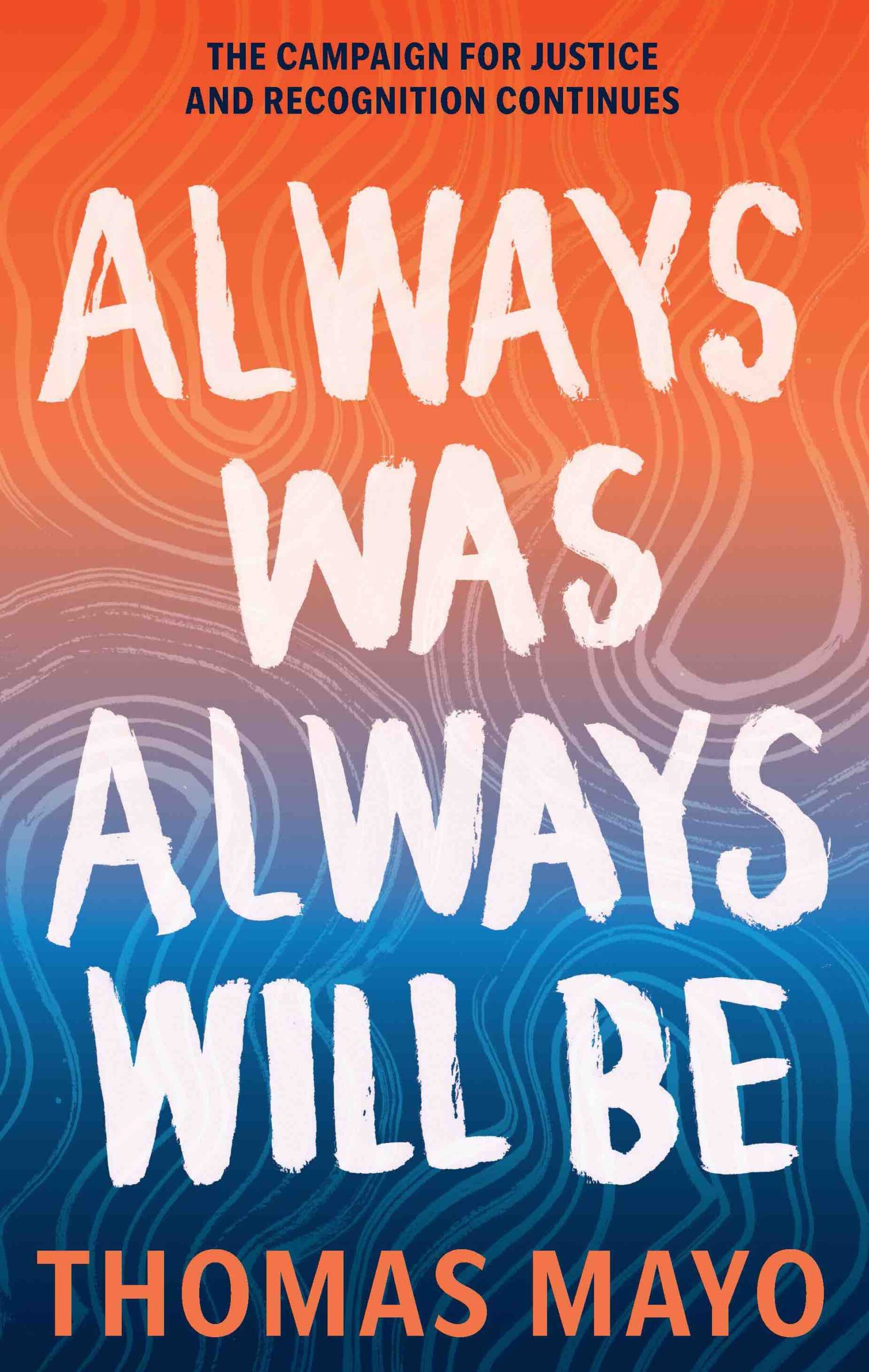
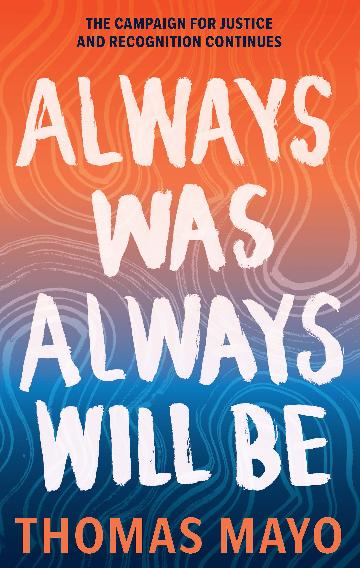
In Always Was, Always Will Be, bestselling author Thomas Mayo investigates ‘what’s next?’ for reconciliation and justice in Australia after the failed October 2023 Voice to Parliament referendum.
Since the referendum, supporters and volunteers have been asking for guidance as to how to continue to support Indigenous recognition. Mayo, a leader of the Yes 23 campaign and co-author of the bestselling The Voice to Parliament Handbook, has penned a new book to answer that question.
Always Was, Always Will Be is essential reading for those people who want to keep the positive momentum going and the number of allies growing. It’s for Indigenous and non-Indigenous people who are ready to do everything they can to close the gap.
On writing the book Mayo said: ‘The book starts with the ingredients for hope, it will cover the lessons from the past, and ultimately, Always Was, Always Will Beis about the future we want to see – one where there is justice for Aboriginal and Torres Strait Islander People.’
For the thousands of people who have been feeling sad, empty and powerless since last October, Always Was, Always Will Be aims to be a positive rallying cry. This book will map the path toward next steps on how to create a fairer Australia.
Always Was, Always Will Be: The Campaign for Justice and Recognition Continues is for those who want to know ‘what’s next?’ after the October 2023 Voice to Parliament referendum, from one of the most respected Indigenous voices in the country.
Read on for an extract …
**********
Whether Yes or No, what’s next?
In late December 2023, for the first time that year, I was with my family on the saltwater in my small dinghy We were making numus from the fish we’d caught over the side. We were floating on Tiwi Country, on the border of Larrakia land.
On a build-up day like this, there’s barely a whisper of wind. In the languages of the Torres Strait Islands, we call the sea’s surface ‘muthuru’ when it lies still as it did that day, reflecting the sky like a mirror. While the scene is beautiful, in reality it is oppressively hot. Clouds give no relief from the heat of the sun, nor does the small canvas canopy on the boat. The humidity makes the air feel like hot soup.
Yet for all the uncomfortable heat, this is where I had longed to be as I travelled the country, working on the protracted and intense Voice to Parliament referendum campaign. Earlier that morning, my heart had swelled with pride as I watched my ten-year-old daughter Ruby hauling in a bunch of golden snappers. She’s hardworking, a busy bee who grew so tall and lanky over the months when I was away. I noticed the chagrin of her twelve-year-old brother Will, who for all his bravado before the trip, had barely caught a fish.
A proper little Torres Strait Islander girl, Ruby shares my taste. She loves all things spicy and savoury and anything from the sea, and enjoys cooking, as I do. I asked her as I wrote this, ‘What was your favourite part of fishing the other day?’
The first thing she said was, ‘When we made the numus.’
Numus is raw fish and onion sliced thinly, with chopped birds-eye chillies and a dash of soya sauce. In a container in the esky, it cooks in the acidity of the other two ingredients – lemon juice and vinegar. In that fishing spot we always catch the best fish for the dish, a firm, white-fleshed fish called trevally. The numus is never better than when it is made fresh and eaten icy cold in the sweaty heat, accompanied by the scent of the salt air, and with family.
When I was a boy, I loved going to that same fishing spot with my father. It’s a special place to me because, in a dinghy at sea, fishing and hunting, my father treated me differently from how he did at home. On land, he was much harsher.
My dad, Celestino Mayor, was part of a generation of Torres Strait Islander men who left their island home for the mainland to work – the first who could freely do so without interference from a white
‘Protector’ who could control every aspect of their lives. Dad was seventeen when he left Waiben on Kaurareg Country, otherwise known as Thursday Island.
Those Island men were famously hardworking. On 8 May 1968, a crew made up largely of Torres Strait Islanders broke the world record for laying the greatest length of railway track in one day.1 Talk about heat and harsh conditions; they achieved that feat in the Pilbara, between Port Hedland and Mt Newman. Many of those men settled in mainland towns to raise their own families, as did my dad, while still sending money back to family on the islands.
I have strived to give my children the best things that my dad gave me – love, protection and a good example. I have consciously walked where he shone a light, rather than in his shadow. I have learnt from his mistakes and made my own, and I want my kids to learn from both of us, the good and the bad.
What I perceived as my father’s flaws were as much about him preparing me for a world that did not love him. He rarely told me he loved me, believing that he needed to harden me up. He wanted me to be a man among men, no softness allowed, whereas I hold my kids close as often as they will let me; I tell them I love them every day.
Out there, in present-day Australia, sadly it feels as Noel Pearson described it in his 2022 Boyer Lectures:
We are a much unloved people. We are perhaps the ethnic group Australians feel least connected to.
We are not popular and we are not personally known to many Australians. Few have met us and a small minority count us as friends. And despite never having met any of us and knowing very little about us other than what is in the media and what WEH Stanner, whose 1968 Boyer Lectures looms large over my lectures, called ‘folklore’ about us – Australians hold and express strong views about us, the great proportion of which is negative and unfriendly.
It has ever been thus. Worse in the past but still true today.
Pearson is observing the majority of Australians’ unfamiliarity with the First Peoples. When we do not know someone, we are easily misled to think the worst of them. Indeed, being much unloved is a hindrance to progress.
My approach to fatherhood has been to try to instil confidence and self-belief in my children – I want them to love themselves even if their country does not love them. I have tried this at every opportunity. Compared to my father’s generation, and my generation, I want the next generation to live with less fear.
Perhaps it is this sentiment that has compelled me to write this book. I want you, who have a mind open enough to read it, to have the tools that you need – some lessons from the past and a guide for the future – so we can avoid a repeat of an outcome as sad as the referendum defeat. Together, we must bring on the next opportunity to take a major step toward justice for First Nations people.
Ultimately, we all should want to leave the next generation a little wiser, with a more peaceful, fairer world. This is the vision we fought for in 2023, and we will not lose sight of it. To achieve our goals for the future, we must take action.
Southerners rarely agree, but the Top End build-up is the best time of year in Darwin. The heat and humidity may be oppressive, as it was that day fishing, but there’s the ice-cold numus to give us some relief and, like when we arrived back at the ramp at high tide, there is the wonderful tropical rain.
Since the referendum, I have enjoyed the mornings with our house open when it is cool, drinking a coffee while our kids get ready for school. Afterwards, I shut the louvres and turn on the aircon, waiting for the afternoon deluge. There’s nothing better than sitting on the verandah reading a book as the heavens open, the lights flickering from the power of the storm. It has been nice to stay home and rest.
Now, however, it is early in the year after we lost the referendum. It is time for me to start writing again. Many of the 60,000 volunteers and the six million Australians who voted ‘Yes’ want to know what to do next. Some who voted ‘No’ still want progress.
Today, we may feel we are powerless to make the world what we want it to be – a world that has taken all possible measures to address the climate crisis; where the rich individuals and the grossly profitable companies pay their fair share of tax; where workers have strong enough rights to negotiate good wages, safe conditions and comfortable hours of work; a world where disputes can be resolved without war; a nation where Indigenous Australians can expect the same quality of life as our non-Indigenous friends.
In the wake of the referendum, versions of the same question have been posed by many of us: What should we do next?
Whether you voted ‘Yes’ or ‘No’, this book is for all those good people who have asked this question.
Within these pages are the ingredients for hope: energy, motivation and a belief in what you cannot yet see; you will find a guide to critical thinking, from the depths of the past to the truths and lies of the present; and a map, as practical as any tool I could give you, to see where the hazards are, the obstacles and the barriers and finally, a clear indication of how to reach our common destination: justice and recognition for Aboriginal and Torres Strait Islander people.
The campaign continues.
ABOUT THE AUTHOR
 Thomas Mayo is a Kaurareg Aboriginal and Kalkalgal, Erubamle Torres Strait Islander man.
He is a signatory and advocate of the Uluru Statement from the Heart. He is the author of six books with Hardie Grant Publishing and has many articles and essays published.
0 Comments