


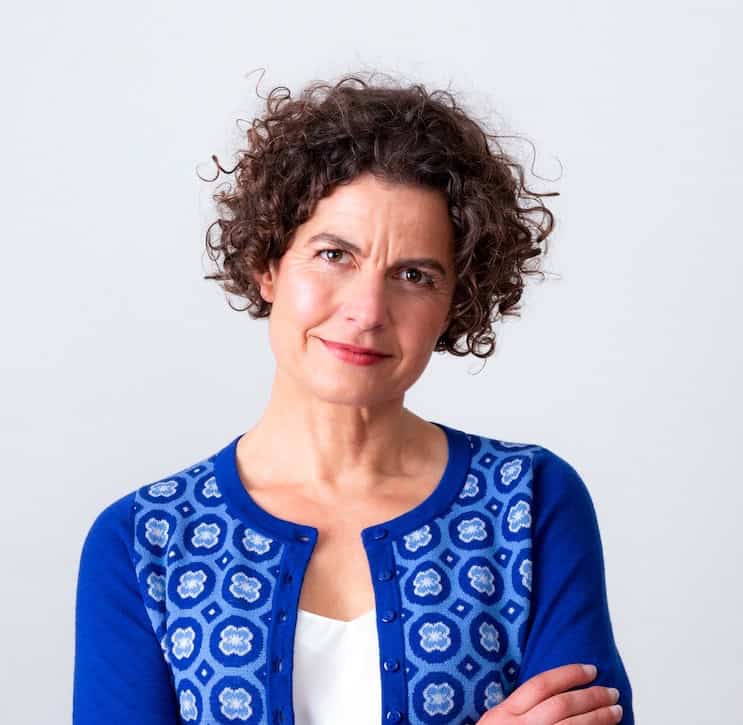
SUSANNAH BEGBIE grew up in rural New South Wales on a sheep farm and is now a GP who has worked all over Australia. In 2006, she began a Graduate Diploma in Professional Writing at Canberra University and was awarded the Editor’s Pick for her short story ‘Fly to Meet You’ in the University’s First Anthology.
We caught up with the author to discuss her debut novel, The Deed, which explores the messy complications that only the best and worst of family can bring.
 ABOUT THE BOOK
 ABOUT THE BOOK
Tom Edwards is dying, and cranky. He’s made his peace with the dying part. But he’d bet his property – the whole ten thousand acres of it – that there’d be no wailing at his funeral. His kids wouldn’t be able to chop down a tree, let alone build a coffin to bury him in.
Then Tom has an idea …
Christine is furious, David ashen-faced, and Sophie distracted. Only Jenny listens carefully as Vince Barton, of Barton & Sons, reads their father’s will. Either they build his coffin – in four days – or they lose their inheritance. All of it.
MEET SUSANNAH BEGBIE
 Your novel is centred around a unique plot that brings four siblings together. What sparked this idea?
Building a loved one’s coffin is more common than you’d think. In Ulverston, Tasmania, there is a ‘Community Coffin Club’ in which people support each other in building hand-made coffins. But writing a will that instructs your family to build your coffin is another thing altogether. It was the combination of bitterness and humour in Tom Edwards’ instruction that fascinated me. Who would do that?
What was your writing process like for The Deed? Did you have a clear idea of the story from the beginning, or did it develop as you wrote?
I had the idea of the farmer dying, the will and coffin clause, and the four siblings. I took it to a plotting workshop, and everyone said it should be a novel.
I had no idea where to start. For the first couple of years I took a pad and pencil and did stream of consciousness writing to start the day. Then I’d pick a word, or an image from this writing, and use it as a starting point. The ideas/characters/plot grew out of this.
Later on it became a highly structured process. Timelines, family trees, house plans, maps, narrative arcs for each character and so on. Even then, there were impossible and inconsistent timeframes, characters with multiple names, characters existing in two or more locations simultaneously – there was no lack of work for my editor!
How did you go about developing Tom, Christine, David, Sophie, and Jenny – in particular, their motivations?
I just wrote. And wrote. And wrote. Until I found each of their voices. Then I could ask, ‘What would you do in this situation? What would you say?’ If you ask the question enough times eventually an idea consistent with that character will surface.
Did you draw on your own personal experiences to help shape any of the characters or scenes in your novel?
Yes. Every character. Every scene.
I grew up on a sheep farm in NSW, and the setting of The Deed is the landscape of my childhood. I am a GP, so my life’s work is listening to the stories of others. And all the characters have something of me in them.
I will say this, though: I haven’t yet come across a farmer who made his kids build a coffin as a joke. I hope I never do!
Your novel looks at the complexities of familial bonds. What compelled you to explore this in your story?
Our families are the people who know us best. They make us laugh the quickest and can hurt us the most. We hold all these threads, tied to events or conversations that took place decades before, and we are ready to pull them taut in an instant, dragging history to the present. A history we share but cannot agree on.
Also, siblings are plain annoying. This gives a novel great humour potential.
The Deed looks at inheritance and the entitlement attached to it. What do you think this says about human nature?
What I think is that death, money, family and inheritance make a supercharged emotional landscape. Inheritance is partly about the money, but for the bereaved, it’s also about finding a place to stand.
When everything shifts, which it does with death, a grieving person must work out where they belong now. And a vital part of that working out is knowing they were valued by the person now departed. Self-worth hangs in the balance when siblings argue over a vase. Maybe inheritance is more about a place of belonging than dollar value.
Maybe, if you happen to have a multi-million-dollar debt, cash has its place.
Humour appears to be a key element in your writing style. How do you balance serious themes like death and loss with humour, and why do you think humour is an effective tool for addressing important issues?
Humour’s the best. I love it. In general practice, as in many frontline jobs, a sense of humour can be the thing that gets you through the working day. Humour allows us to draw close to difficult things, without getting too close. Humour deflects fear. Also, humour’s funny.
What conversation or reflections do you hope your story will spark for readers?
I hope The Deed will allow people to see themselves and their family in new ways. Even if it’s only a little bit. And I hope the conversations will be about redemption as much as dysfunction. Because both are part of the mystery of dying. At a time of grief, we get the chance to treat others with uncommon kindness.
ABOUT SUSANNAH BEGBIE
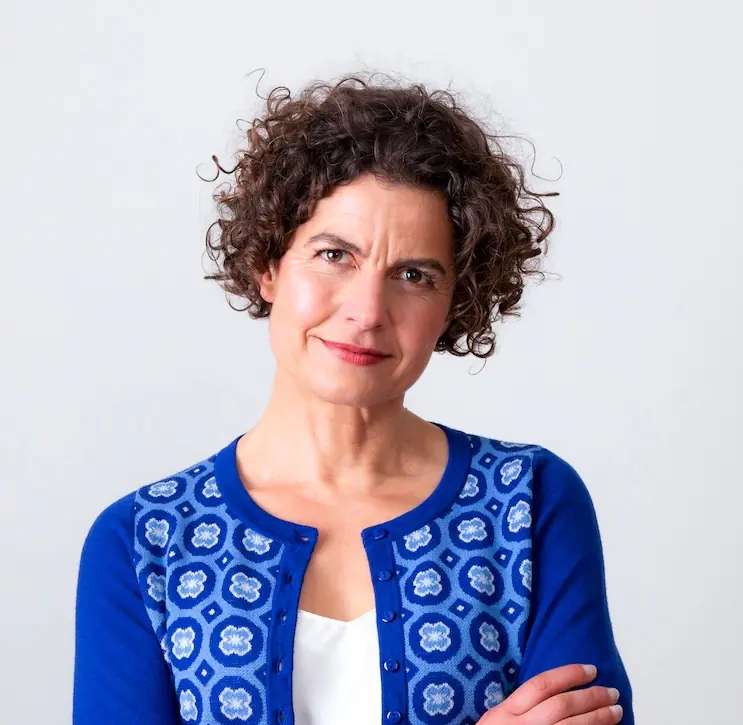 Susannah grew up on a sheep farm in NSW. She moved to Sydney to study medicine and was immediately homesick for a place that smells of dry grass and dust.
She has worked as a GP from Boggabri to Broome, South Coast to Red Centre and a whole lot of places in between.
In 2006, Susannah started a Graduate Diploma in Professional Writing at Canberra University. She may finish it yet.
She was awarded Editor’s Pick for short story ‘Fly to meet you’ in the UCAN First anthology, and best written text for children’s book ‘Don’t You Dare!’ in the Get Real project.
Then she got distracted with a novel idea … ‘When Trees Fall Without Warning’ took 10 years to write. Susannah was awarded the 2022 Richell Prize for emerging writers.

0 Comments