



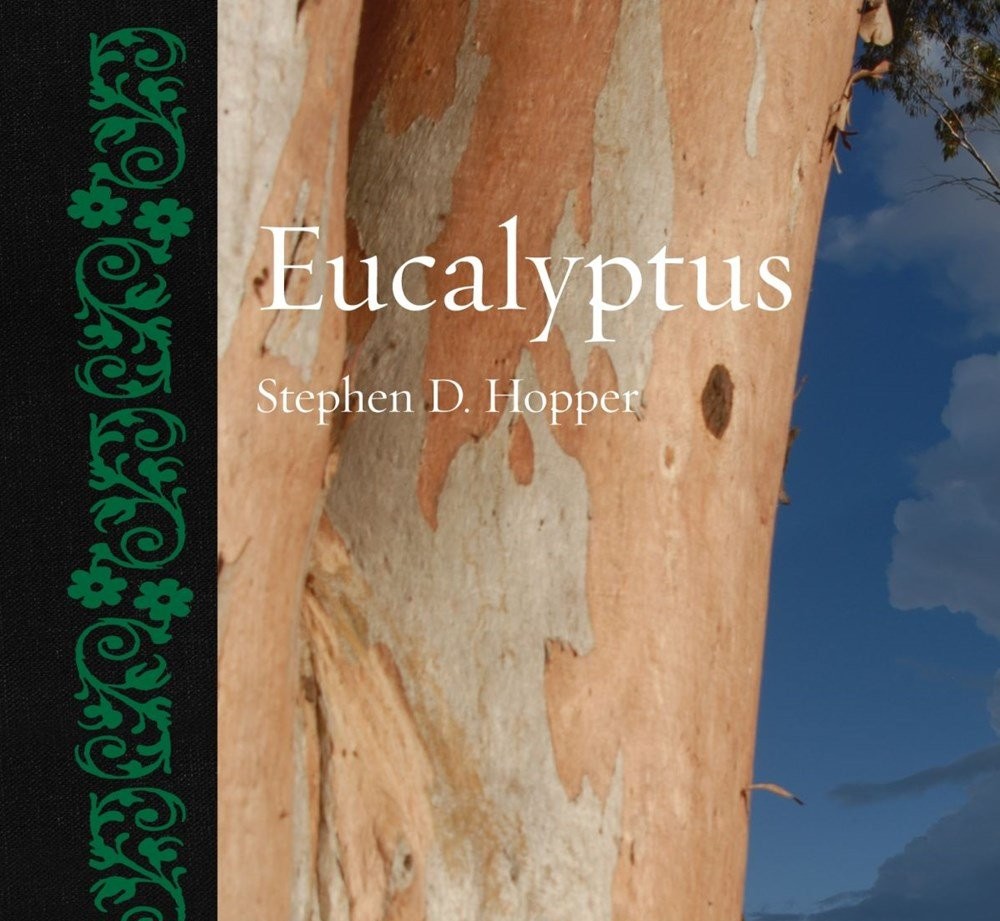
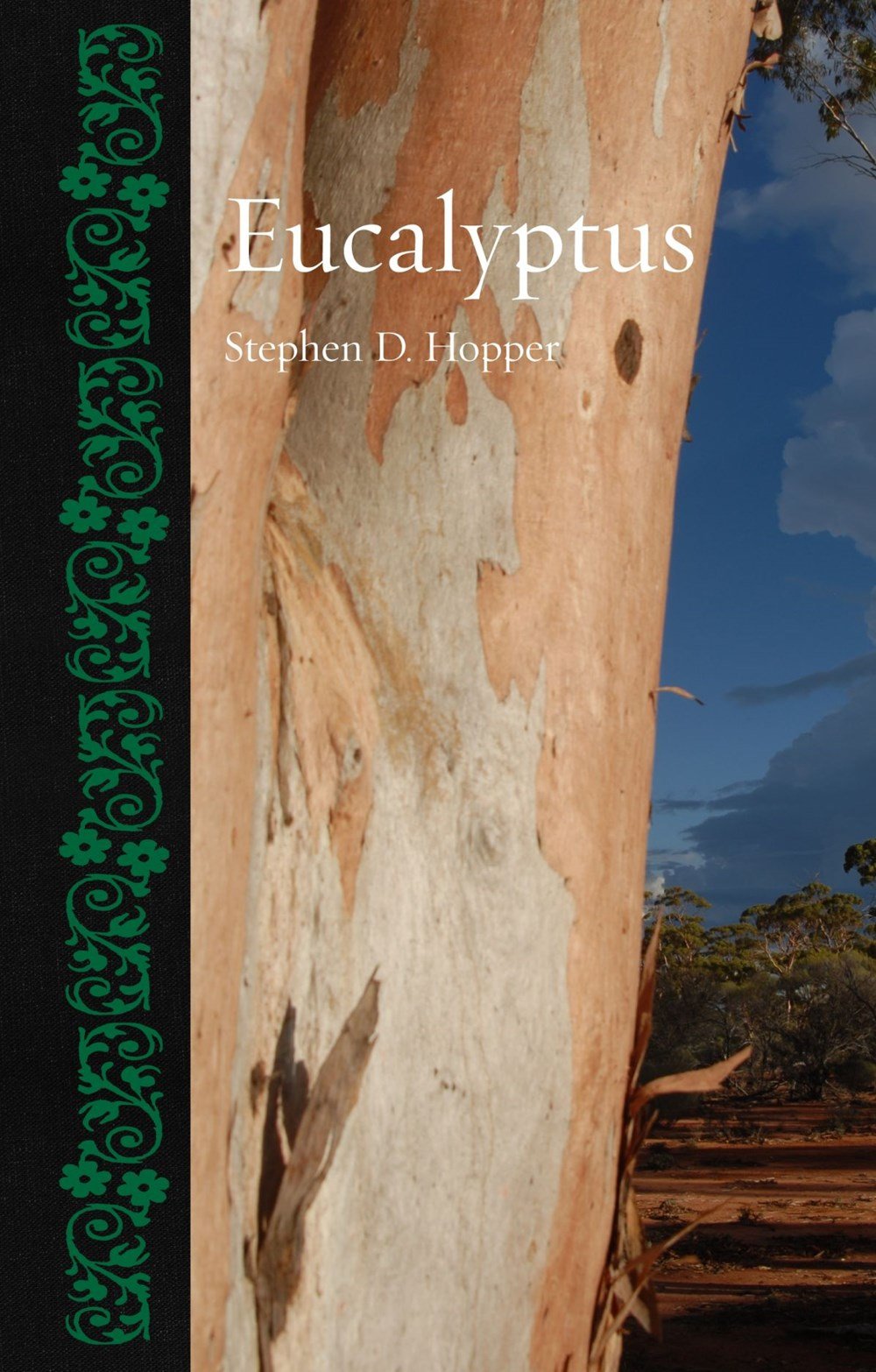
Eucalyptus by STEPHEN D HOPPER explores the rich history and biology of eucalyptus trees. Full of stunning images, this is a book for anyone who loves the beautiful natural world of the Australian outback.
Read on for an extract from the introduction.
ABOUT THE BOOK
 Eucalypts, iconic to Australia, have shaped art, science and landscapes worldwide. With around nine hundred species, from towering giants to compact mallees, these trees inspire awe and curiosity. Their hardwood has driven industries, sparked protests and even toppled governments. Their aromatic leaves hold healing properties yet fuel devastating wildfires.
This book blends Aboriginal knowledge and Western science to uncover the rich natural history, biology and conservation of eucalypts. It explores their evolution, cultural significance and surprising roles in modern life, offering insights into sustainable ways to coexist with these remarkable trees. Featuring stunning photographs from 50 years of fieldwork, this is the first comprehensive review of Aboriginal eucalypt wisdom, paired with cutting-edge scientific discoveries.
***********
EXTRACT
Eucalyptus. The name is thoroughly European, a product of the Enlightenment and the age of global exploration. The plant is Antipodean in origin, predominantly Australian, but today it is also found planted in many other countries across Eurasia, North and South America, and Africa, and on many islands.
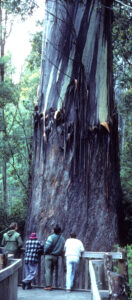 The genus Eucalyptus includes the world’s tallest flowering plants. A few species today soar 90–100 metres (300–330 ft) above the forest floor, but they were perhaps even higher in the past, before logging, burning, and clearing for agriculture eradicated the record.
By 2010, more than 850 species of eucalypt were recognized, now in four genera (758 in Eucalyptus, 57 in Corymbia, 36 in Blakella and 10 in Angophora). Another 50 species have been described since or recognized but not named, making a current total of more than nine hundred eucalypts. The scientific inventory of eucalypts is an ongoing task. All but twelve of the eucalypts are endemic to Australia and found nowhere else. Eucalypt geographical distribution ranges from the continent-wide river red gum (E camaldulensis) to such extremely rare and localized species as Southwest Australia’s rose mallee (E rhodantha). Among even the most famous, such as yorgum (red-flowering gum, Corymbia ficifolia), there are species with globally significant narrow ranges.
Worldwide, eucalypts are both revered and reviled. Celebrated in its main country of origin, Eucalyptus has been dubbed the ‘universal Australian’. In Australia, eucalypts have become the object and back-drop of countless pieces of art and science, novels and verse, films, and photographs. Their hard timber has made fortunes from wild harvest and transformed landscapes beyond recognition in exotic plantations. Their use has inspired new industry, mobilised public protests, and toppled governments. Their aromatic, oil-filled leaves have restored human health and fed the fury of wildfires.
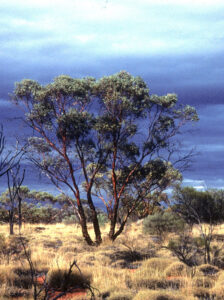
Multi-stemmed mallees (such as jinjulu or kunyalyka, E. glomerosa), Great Victoria Desert
Eucalypts provide habitat, food, and shelter for myriad animals, plants, and fungi, their roots binding the soil, their leaves converting carbon dioxide into oxygen, their canopies moderating climate, and helping to replenish the earth with rainfall. The volatile oils emitted from their pendent leaves during hot summer days create a haze that led to the naming of the Blue Mountains that flank the inland side of the Sydney Basin.
No other continent is so bedecked and dominated by what was a single genus of trees across all but its most arid and inhospitable habitats. The seeming uniformity of grey-green eucalypt canopies are a hallmark of Australia, belying and hiding a riot of diversity that requires a mature and perceptive eye to comprehend fully. What appears at first relatively invariant, boring to some, becomes on closer inspection a cornucopia of diversity, resilience, colour, and wonder.
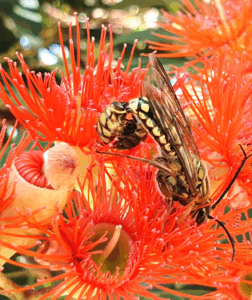
The flowers of eucalypts attract a range of pollinators. Seen here are copulating flower wasps (the male with wings) on yorgum (red-flowering gum, Corymbia ficifolia), which is confined to a tiny area of the south coast of Western Australia.
The name Eucalyptus derives from the ancient Greek for ‘well covered’, alluding to the cap (operculum or calyptra) that covers the floral parts as they develop in the bud. Strictly, in Greek, Eucalyptus should be pronounced ‘eff-cal-ip-toos’, but the initial ‘eu’ has been anglicized to sound as ‘yoo’ in English.
In some ways the protective bud cap symbolises the allure and mystery of eucalypts. It protects, hides and nurtures the transient potential for new life that each bud offers, eventually falling away to reveal the mature glories of the multi-stamened blossoms, inviting pollinators to sup nectar while helping to start the next generation of trees.
Drawing on a plethora of published works, the book offers some novel perspectives on Eucalyptus when compared with previous publications. In it, I explore themes that have emerged as revelatory in my own intellectual development and studies of the genus. I hope the book will stimulate others to wonder about, and care for, one of the most important genera of plants on Earth.
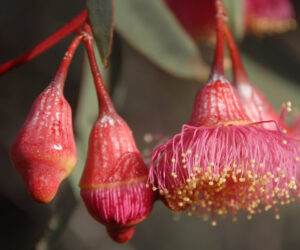
Eucalyptus means ‘well covered’, alluding to the bud cap, which comprises united petals and sepals that protect the developing stamens and style of the young flower (seen here in E. caesia subsp. caesia).
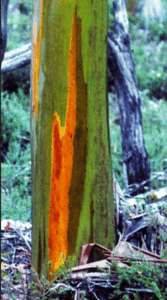
Colourful bark is a feature of many eucalypts. Featured: Eucalyptus subcrenulata (Tasmania)
***********
ABOUT THE AUTHOR

Stephen D Hopper is Professor of Biodiversity at the University of Western Australia, and was Director of Royal Botanic Gardens, Kew, between 2006 and 2012.
His books include Life on the Rocks: The Art of Survival (with Philippa Nikulinsky, 2008).
Read more about Stephen’s book HERE.


0 Comments