


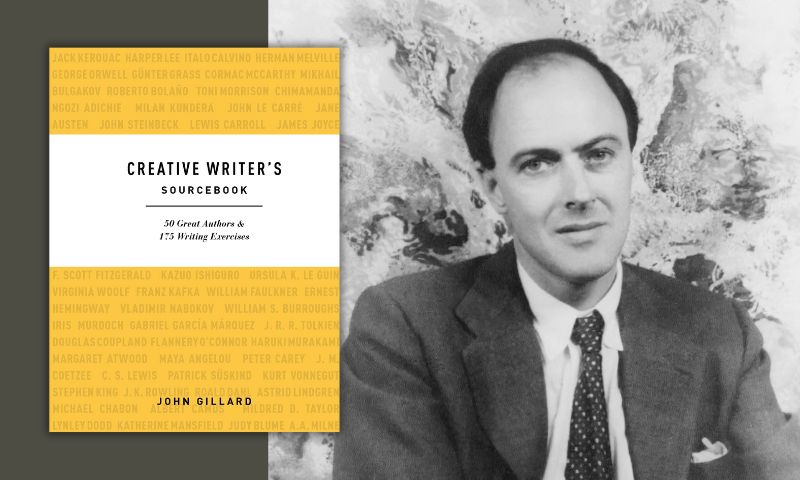
JOHN GILLARD’s Creative Writer’s Sourcebook is a fascinating guide to the style and technique of the world’s great writers.
Read on for an extract…
ABOUT THE BOOK
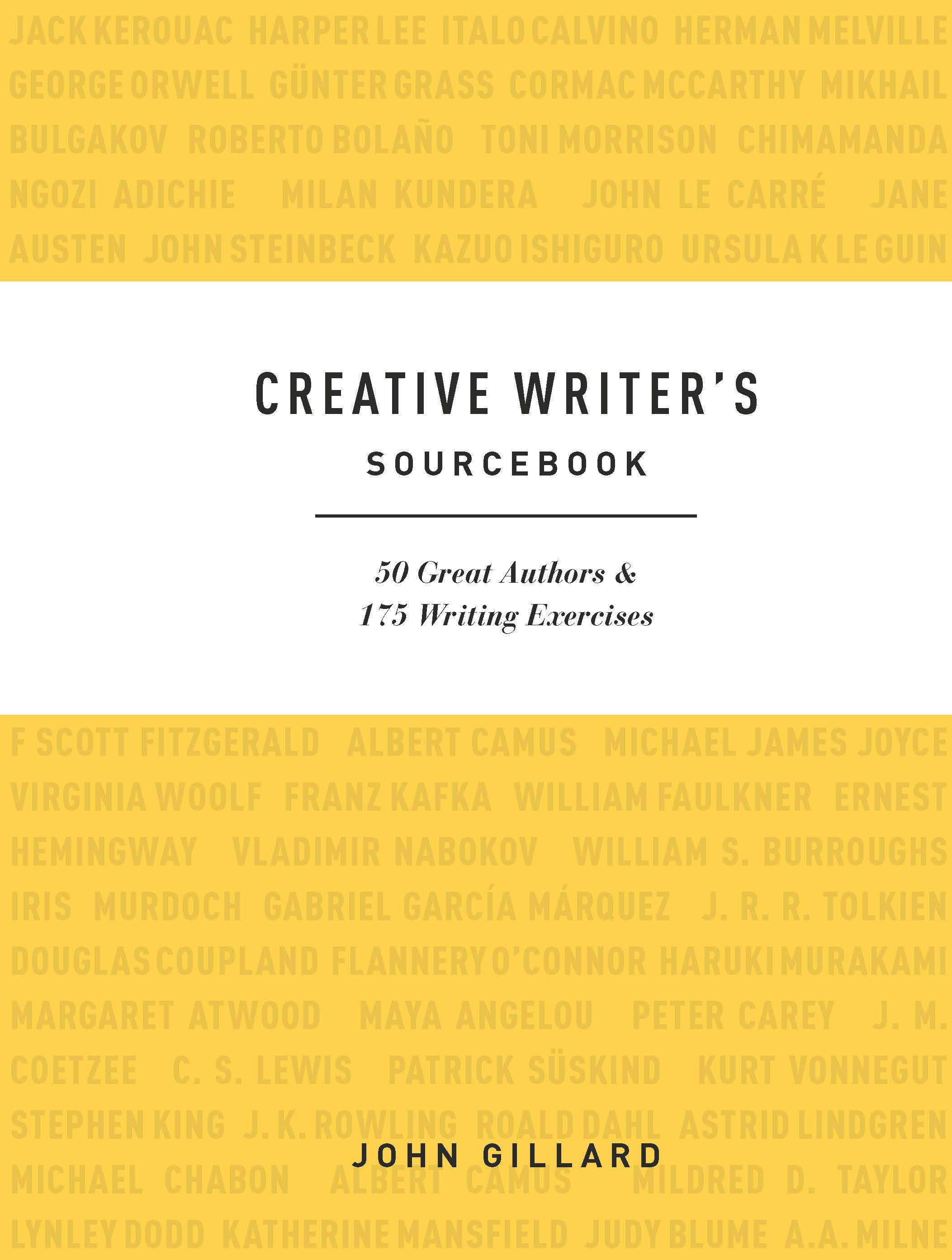 Explore the style and technique of the world’s greatest writers in this compendium to be treasured by literature lovers.
From Katherine Mansfield to Toni Morrison, discover 50 celebrated writers and the literary techniques that set them apart. Each author profile includes details of the writer’s career and key works, followed by an in-depth exploration of their unique style, and several writing exercises based on this. Spanning over 100 years of literature, and several genres, featured writers include:
- Harper Lee – acclaimed American author of southern gothic fiction including To Kill a Mockingbird.
- Lynley Dodd – much-loved New Zealand author of the Hairy Maclary and Friends series for children.
- Gabriel García Márquez – Colombian author of works including One Hundred Years of Solitude, known for his exceptional, genre-defining use of magical realism.
The collection contains 175 writing exercises and prompts based on the techniques and works of the featured writers. They provide instruction on different aspects of writing, from perfecting dialogue and characterisation to experimenting with structure and language. Learn from the greats and expand your writing repertoire as you play with perspective à la Virginia Woolf and craft an opening line worthy of Franz Kafka.
The perfect reference for aspiring fiction writers and literature buffs alike!
EXTRACT
ROALD DAHL
BORN: September 13, 1916
DIED: November 23, 1990
NATIONALITY: British
KEY WORK: Charlie and the Chocolate Factory
In an interview, Felicity Dahl, Roald’s second wife, tells how he used to get grumpy when he was finishing a book. ‘I remember saying, “But you should be pleased when you’re reaching the end.” And he used to say, “You don’t understand—it’s the fear of never writing another one!”‘
‘Books shouldn’t be daunting, they should be funny, exciting, and wonderful.’ —Roald Dahl
‘One of the greatest storytellers for children of the 20th century’ is how Roald Dahl has been described. He was a novelist, poet, and screenwriter, whose books have been adapted as movies and stage plays, which remain popular today.
Another Crash in the Desert
While a Second World War fighter pilot with the RAF, Roald Dahl crashed in the Libyan desert and sustained multiple injuries. After convalescing, he was posted to the British Embassy in Washington, D.C., where he helped promote British interests in the US. There he encountered a similarly employed author, C S Forester, who was writing adventure stories for his Captain Horatio Hornblower series. Forester encouraged Dahl to write about his wartime exploits, and in August 1942 his first published work, Shot Down Over Libya, appeared in The Saturday Evening Post.
A passage from that first piece signposted Dahl’s style: direct, swiftly paced, and unfussy: ‘Shorty carefully extracted a fly from his tea and flicked it across the room. Then he read it [the military order] for a second time. “Hell’s bells, what a piece of cake! Shall I take my flight, sir? We’ll have to start right away!”‘ The piece also indicated what was to become Dahl’s fascination with characters’ names.
The Books Begin
Although The Gremlins, a story based on his experiences as a fighter pilot, was published by Walt Disney and Random House in the US in 1943, it wasn’t until 1961 that his first genuine children’s book appeared. James and the Giant Peach proved to be the start of a long run of highly successful stories that included The Witches, Matilda, Charlie and the Chocolate Factory, and George’s Marvellous Medicine, until his last book, The Minpins, was published in 1991. A number have been filmed and dramatized
Roald Dahl’s writing is unsentimental, darkly comic, and macabre, and the stories often have surprise endings. Characteristically, he often wrote from a child character’s point of view. Adults were mostly ‘bad,’ and depicted as villainous and physically unattractive people who disliked, loathed, or mistreated children. The ‘good’ young overcome adversity in the end. The book critic Amanda Craig stated, ‘He was unequivocal that it is the good, young, and kind who triumph over the old, greedy, and wicked.’
Characters and Their Names
Roald Dahl’s inventiveness with his characters’ names meant they were instantly memorable and endeared themselves (even the vile ones) to young readers. They include Willy Wonka, Bruce Bogtrotter, Augustus Gloop, Miss Agatha Trunchbull, Matilda Wormwood, and Veruca Salt, among many others. The three thoroughly nasty farmers in Fantastic Mr. Fox typify many of the adult characters in Dahl’s stories. Boggis is enormously fat, gluttonous, and dim-witted; Bunce is pot-bellied and dwarf-like; and Bean is lanky, skinny, and addicted to strong cider. A number of illustrators had featured in Dahl’s books, but it was with the publication of The Enormous Crocodile in 1977 that Quentin Blake’s spidery, sketchy pictures made their first appearance. Thereafter, Quentin Blake became synonymous with Dahl’s books, and the pair worked in tandem until the author’s death in 1990. Verse, mostly in rhyming couplets, was never far away from a Dahl book. Not only did he write books of poetry (Revolting Rhymes, 1982, and Dirty Beasts, 1984), he also included lengthy narrative poems in the stories. In Revolting Rhymes, Dahl reinterprets fairy stories, giving them a surprise twist at the end. A rhyming couplet from Little Red Riding Hood and the Wolf demonstrates Dahl’s directness, and his penchant for being outrageous and rude: The small girl smiles. One eyelid flickers. She whips a pistol from her knickers.
ROALD DAHL
EXERCISES
NAMING CHARACTERS Characters’ names are pivotal in Roald Dahl stories. As well as those mentioned above, other Dahl creations include Mike Teavee, the BFG, Lavender, the Twits, Violet Beauregarde, Charlie Bucket, the Oompa-Loompas, and Muggle-Wump.
Exercise: Put an unusual first name (it could be old-fashioned, for example) with a surname that is a condiment or a sauce – for example, Phineas Tomato-Ketchup, or Phyllis ‘Sneezer’ Pepper. Draw up a list of five or more such names. Choose the one that works best, and compose a character sketch in a single paragraph, describing his or her looks, clothing, hair, facial expressions, peculiarities, and habits.
A CONFERENCE SPEECH
Roald Dahl’s story The Witches features a convention of witches, all in disguise, which is held in the ballroom of a hotel. The hero manages to sneak in and hears the chief witch’s speech.
Exercise: Compose a script for a speech to be delivered by an evil wizard to a conference of newly qualified wizards and their assistants. It should contain welcoming remarks (name the wizard), an explanation of what being an evil wizard entails, a chilling anecdote, advice on who to be wary of in one’s wizardly duties, and warnings about less-than-thoroughly-evil behaviour. It should end with the speaker wishing the wizards extremely evil spells.
GOING THE WHOLE HOG
In Matilda, the eponymous heroine says, ‘Never do anything by halves if you want to get away with it. Be outrageous. Go the whole hog.’ It could well be an appropriate motto for Roald Dahl’s writing. He would dream up an idea for a story. Then stretch it. Then go further still.
Exercise: Write a short story (in 250 words) in which a child has to confront two nasty adults who have unpleasant habits. The story could be set, for example, in a school or a hotel, or at a sports event. Let the child be the narrator, and write in the first person. Keep the sentences short and to the point, try to bring in humour, and add a surprise ending.
OUTLANDISH RECIPES
In Revolting Recipes, Roald Dahl demonstrated yet another facet of his imagination: he concocted amazing dishes. In Charlie and the Chocolate Factory, Dahl outlined the recipe for Whipple-Scrumptious Fudgemallow Delight, while in The BFG he tells the reader all about Frobscottle, a fizzy drink in which the bubbles go down rather than up.
Exercise: Dream up a new, amazingly delicious (or disgusting) food or dish, especially suitable for children. Name the food, list the ingredients, and then add brief notes on the preparation and cooking.
ABOUT THE AUTHOR
John Gillard is a writer and illustrator who has written widely on the subject of creative writing, and has helped many people ignite and enhance their writing skills. Some of his titles include Flash Fiction: The Very Short Story Starter, Just Write One Thing Today, and Fiction Writer’s Notebook.
0 Comments