
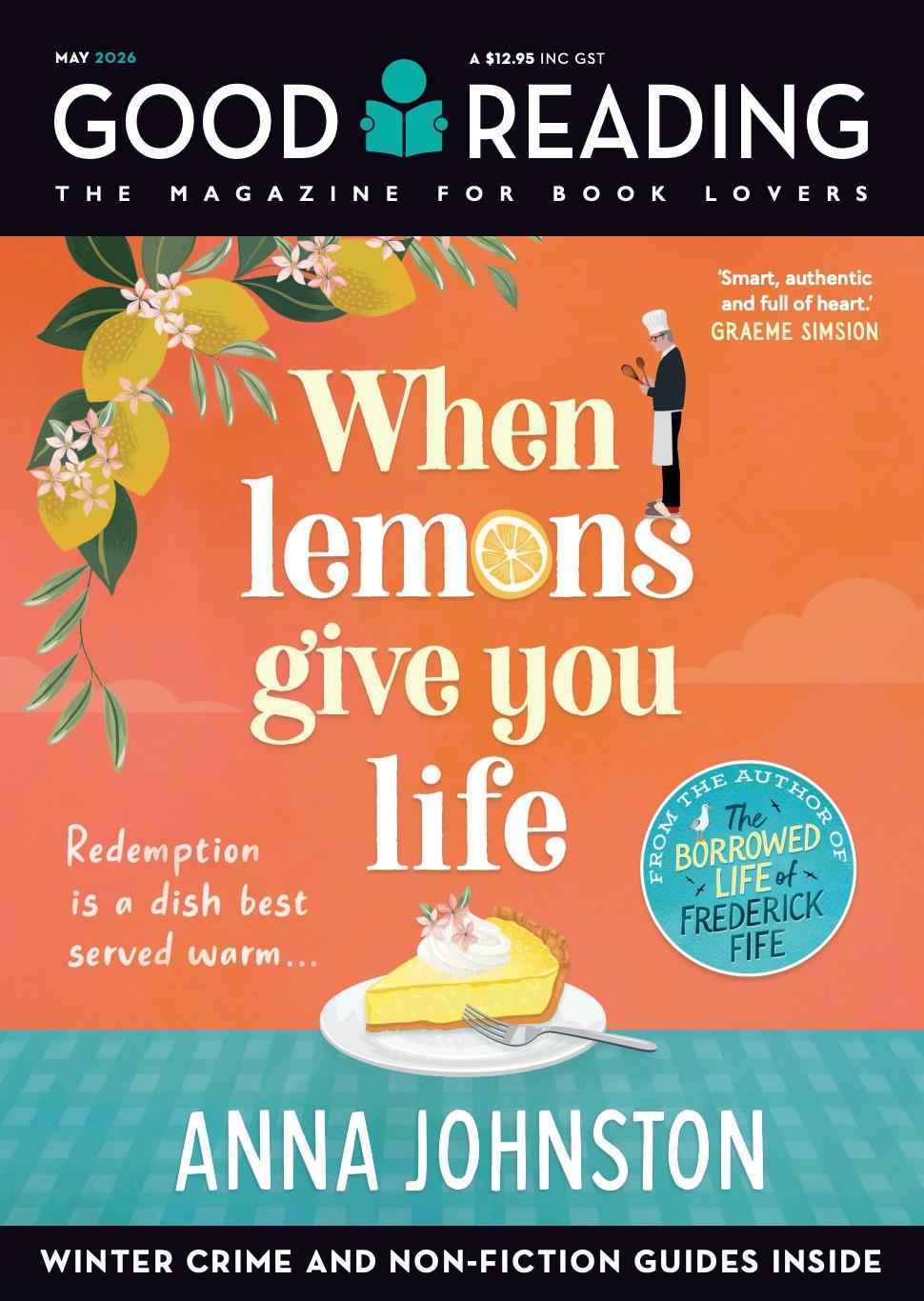


Drawing on the remarkable experiences of the Sharon Kurtzman’s mother and her family during and after the Holocaust, The Lost Baker of Vienna is a powerful tribute to the resilience and resistance of women in a fractured world.
Good Reading caught up with the author.
 What did you grow up and what was it like?
I grew up in suburban New Jersey about 45 minutes outside of New York City, in a home with my mother, father, and older brother. Our home was full of love and we were a family that often said, ‘I love you’. While we were comfortable but not wealthy, there was always an abundance of food. Whenever visitors arrived, my mother’s first questions were ‘Are you hungry?’ and ‘What can I give you to eat?’ In hindsight, I know that stemmed from her childhood years of starvation in the Jewish ghettos and concentration camp during World War II.
My immediate family celebrated most holidays with my aunt’s family, who lived about twenty minutes from us. My mum and her sister were extremely close. From an early age, I sensed my mom and aunt’s closeness stemmed from their shared experiences during the Holocaust. When I was a child, my parents spoke Yiddish in our home, especially when they didn’t want my brother and me to know what they were discussing. But growing up around the language, by the time I was eight, I could fluently understand my parents, only I didn’t tell them.
At one point, my family was at my aunt’s house celebrating another holiday gathered around their dining room table when my uncle told a risqué joke in Yiddish. Everyone laughed, and I joined in. Suddenly, the room went silent except for my laughter. All eyes fell on me as my family realised that I understood the joke. After that Mom and Dad kept their private conversations behind closed doors.
When I was in third grade, my family moved to a new town, and I tried to fit in with my peers and make friends. In the months after our move, I grew to realise that my family was different. At my new school, I was one of only two Jewish children in my grade. Other kids would comment on my mother’s Eastern European accent, though not meanly. I was a quiet, bookish kid, and often retreated into stories that I’d borrowed from our local library. Eventually, I found friends who shared my interests in books and creativity. That year, I started keeping a diary, which was my way of making sense of the world around me. The habit stuck because as an adult, I still keep a journal for the same reason.
What did you do for work prior to being a writer?
I worked in television marketing for nine years before pursuing my lifelong dream of becoming an author. My first job was as an intern during college, working in the contest department in the early years at MTV Networks. After graduation, I worked at King World Entertainment during the year the company launched The Oprah Winfrey Show into national syndication. My entry-level job was in the research department, and it was an exciting time to be at the company. I’m still a big Oprah fan!
From there, I moved to an audience research company, a television syndicator, and a sports entertainment company. I’ve worn many hats in my career, holding positions in promotion, public relations, marketing, and television ad sales. I left my last job after I had my first child.
Has that work contributed your writing style?
My jobs in marketing and public relations taught me to be spare in my writing style. As a result, my first attempts at writing a book were incredibly short, more novella than novel. Over time, I developed my skills in depicting settings and surroundings, while also including sensory details. Having worked in marketing, I’m subconsciously aware of creating stories that will appeal to readers.
While drafting, I try to seal off that part of my brain because I want to stay true to my characters and stories. Over my twenty-five-year writing journey, while I can’t say that I enjoyed writing query letters, I didn’t struggle with them. I attribute that to my marketing and public relations background, which taught me how to boil a story down to its essential parts.
Your book is inspired by people’s experiences in war, particularly your own family. Can you tell us about those experiences that inspired the book?
Though this book is historical fiction, it is also deeply personal because many of my family’s experiences inform those of Chana Rosenzweig and her family. Though Chana is fictional, I poured all of my mother, aunt, and grandmother’s strength into this character. Chana is blond and light-eyed, like my mother, and her path through the war is my family’s path, including the Vilna and Kovno ghettos, Stutthof concentration camp, a displaced persons camp, an escape from that DP camp, and nearly two years spent in Vienna working in a hotel kitchen while struggling to escape Europe.
My grandmother served as the inspiration for Ruth Rosenzweig (Chana’s mother) in her single-minded mission to emigrate so she and her daughters could join her murdered husband’s family in America. Many scenes in The Lost Baker of Vienna are based on my family’s war and postwar stories.
You did a lot of research for this book. Can you give us a few instances of discoveries/stories/events that surprised or shocked you about your family history?
As detailed in my Author’s Note, it was not uncommon for Holocaust survivors to stay silent and avoid talking about what they went through during the war. For years, my mother spoke sparingly about her past. Then, when I was in college, I interviewed my mother about her experiences and it was the first time she opened up to me about her life during and after the war. That conversation with my mother marked the first time I learned about Stutthof, the concentration camp where my family was imprisoned, and although my mother shared some details, much remained unsaid.
My research showed that Stutthof was a work-to-death camp with starving prisoners forced into back-breaking labor day after day. If a prisoner appeared too weak, they were shot, beaten, or sent to the gas chamber. Discovering this, while heartbreaking, also gave me a deeper understanding of my mother’s strength and resilience.
What challenges did you face in writing the book, considering it was based on some of the traumatic experiences of you family?
One of the biggest challenges I faced was being emotionally ready to write this book. As the years and decades passed, I periodically researched the places my family had been during World War II, yet I struggled with how to write their stories, wrestling with fiction or nonfiction. In early 2016, I settled on historical fiction as the way to write about my family, but it wasn’t until after I’d earned an MFA in Fiction Writing in 2019 that I felt I was ready.
Still, it wasn’t until after I fell ill with Covid early in the pandemic that a loud inner voice declared that now was the time to write the book about my family. I began the first draft of The Lost Baker of Vienna in April 2020 because I was afraid if I didn’t start, I may never have the chance, and I couldn’t let my family’s stories die with them.
Even as I finally began working on the book, I faced a challenge right from the beginning. For months, I’d envisioned the penultimate scene, which I found daunting and scary. Rather than let my fear put me off the book, I wrote that scene first. Then, I put it in a folder and began chapter one. This was atypical for my writing process as I usually write a first draft chronologically.
What other people’s experiences did you discover in your research?
At first, place was a foundational part of my research. I dedicated years to investigating the locations where my family lived and were imprisoned during and after the war. After my mother and aunt passed away, their stories were supported and fleshed out by research that included other people’s accounts.
Thirty years ago, I learned about the Vilna ghetto’s resistance from my mother, but research filled in the specifics of how the resistance helped the imprisoned Jewish population. There were big and small acts of resistance, including smuggling in weapons and food to hiding musical instruments meant to boost morale. The ghetto also had an underground school and library. I also learned about the Ponary Forest, something my mother never mentioned. The forest was where the Nazis took tens of thousands of Vilna’s Jews to be murdered. Sadly, my research darkened my perception of what I already viewed as one of the most heinous places on earth during the war.
After you finished writing the book, what emotions did you have for this story and the characters?
This book took at least 10 drafts until it was complete. Each time I finished a pass, I would fill with excitement. Writing The End is always a thrill! Only moments after, I’d suddenly feel bereft, aching to begin another round of revision. My mother had been gone for twenty years when I finally began working on The Lost Baker of Vienna. I started writing this book early in the pandemic in part because I missed my mother deeply. In doing so, I gained insights into Mum’s life, creating a fuller picture of her. I felt like she was with me. Every time I finished a draft felt like losing her all over again. That’s why I savoured every draft and revision.
There were other emotions, too, awe being one. I stand in awe of my mother, aunt, and grandmother’s strength and resilience to survive years of imprisonment, beatings, starvation, and forced labor while witnessing unspeakable acts. Despite everything they went through during the war, they rebuilt their lives by working, falling in love, marrying, having children, and eventually healing enough to laugh again. I loved my mother’s laugh, a throaty, full-bodied sound that invited everyone around her to join in. It was special.
Last, I’ll add that I feel grateful to them. If not for their strength, I wouldn’t be here writing these answers.
Do you have another book simmering? Is it historical fiction?
Yes, I’m working on a historical novel. Ten years ago, during a period of researching my family and Austria, I stumbled upon an astounding story. It was as if I’d touched a live wire; my entire body hummed with electricity. That story sparked the idea for my new book, which is inspired by real people and true events.
It’s early in my writing process, when I prefer to hold everything close to my chest, but I can reveal that the book is about two Jewish sisters in Austria and the impact on their lives in the years right before Austria’s annexation by Germany in 1938. While The Lost Baker of Vienna is mostly a post-World War II story, this new book is mostly a pre-World War II story. I hope to finish this manuscript by the end of the year.
**********
 ABOUT THE AUTHOR
 ABOUT THE AUTHOR
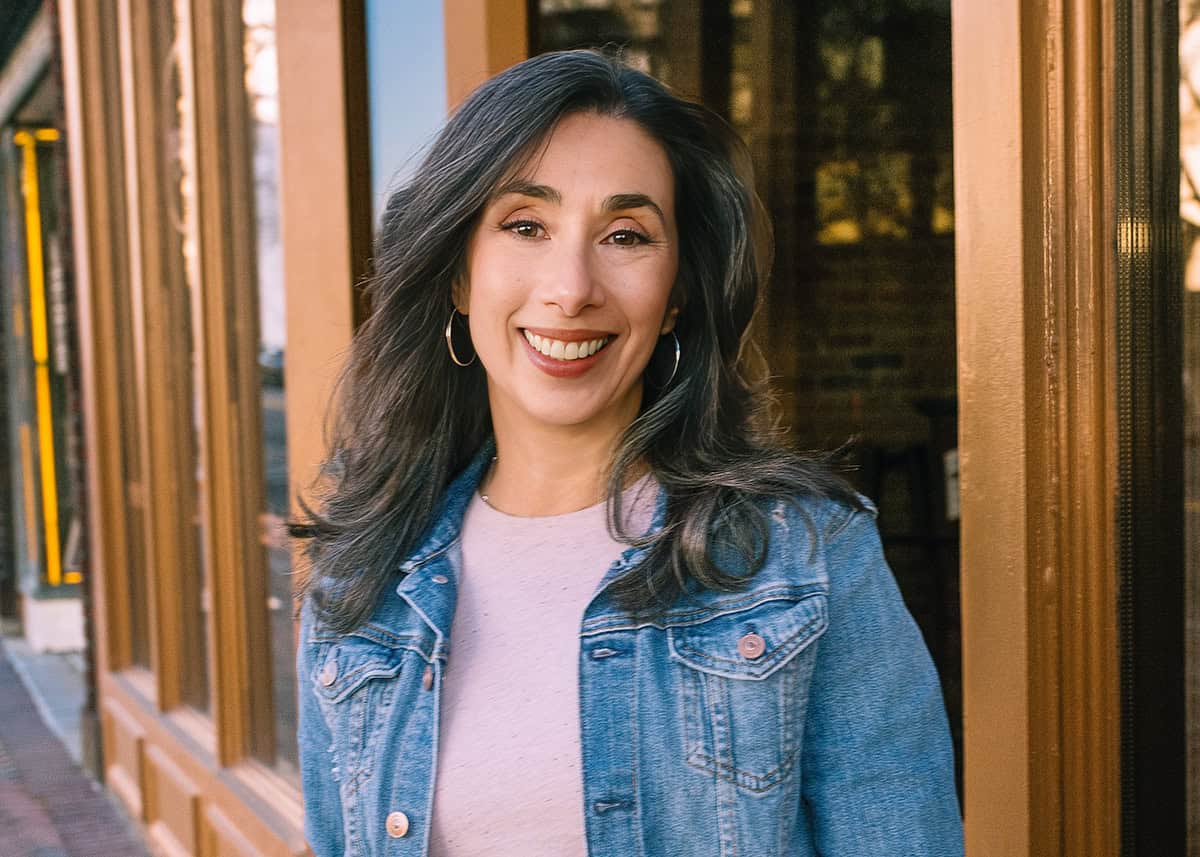
For years, Sharon’s mother spoke sparingly about her experiences during and after World War II. It wasn’t until Sharon was in college that her mother shared details about her life during years when staying alive each day was an act of resistance. Learning how her mother, aunt, and grandmother had survived two Jewish ghettos in Poland and the Stutthof concentration camp deeply impacted Sharon, as did learning how after liberation, and as refugees, her family ended up in Vienna facing unimaginable danger in war-torn Europe. Those stories echoed in Sharon’s mind for decades and set her on the path to write the The Lost Baker of Vienna.
Prior to becoming an author, at one time or another, Sharon has been an audience research analyst, copywriter, television ad salesperson, publicist, the official escort to Danger Mouse at the Macy’s Thanksgiving Day Parade, and a judge at a Chicken Soup Cook-off.
As a freelance food writer her work has appeared in INDY Week and South Writ Large. Sharon is also a former blogger for The Huffington Post and a past contributor at BetterAfter50.com. Her work has appeared in numerous literary journals and anthologies and has been nominated for the Pushcart Prize.
When Sharon isn’t knee-deep in historical research, you’ll find her tinkering with new recipes, trying restaurants in the Triangle’s exploding food scene, traveling, or biking both near and far from her North Carolina home.
0 Comments