




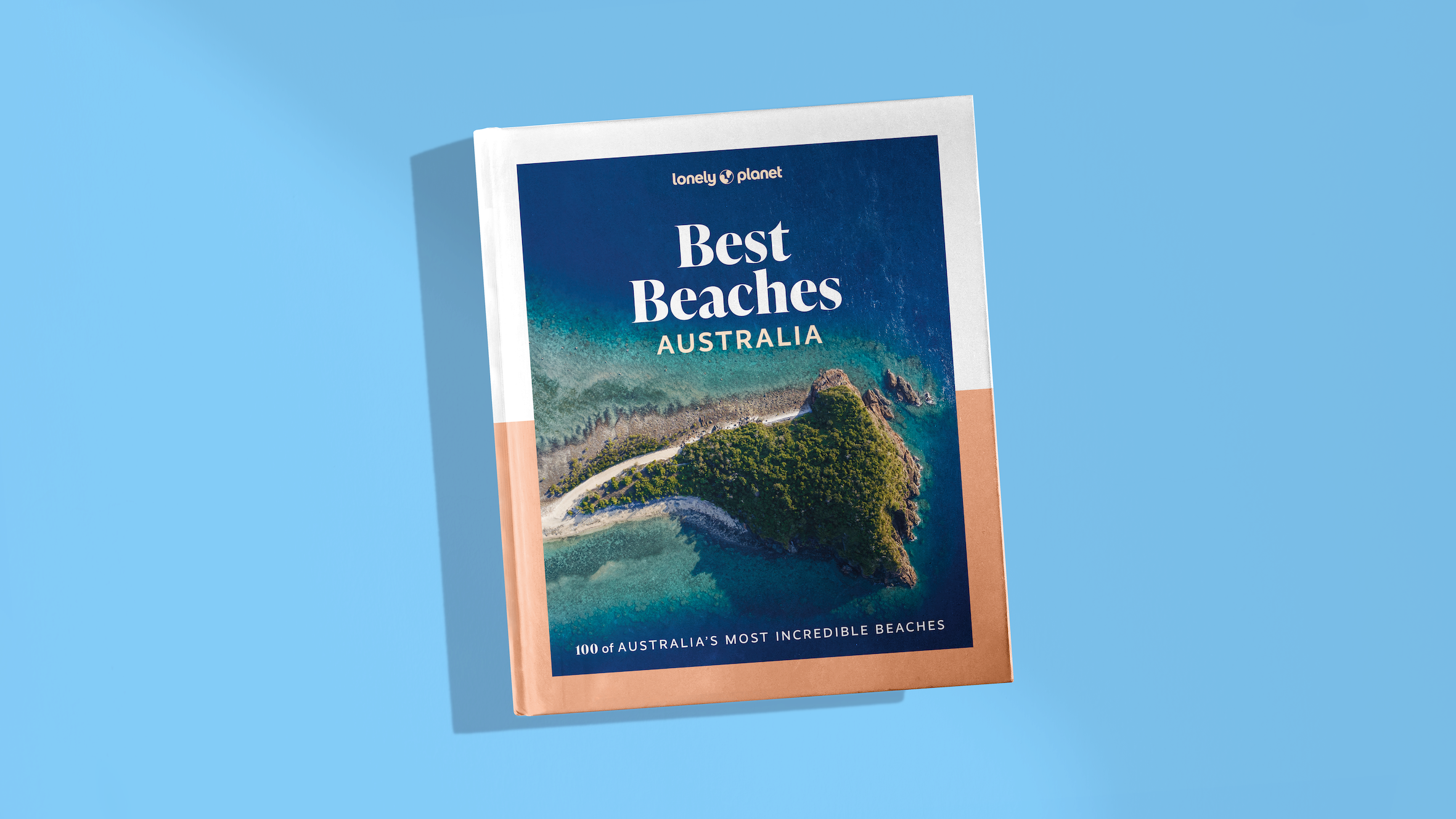
Are you a beach lover? You’re in luck! Here is the Lonely Planet’s guide to Australia’s most beautiful beaches. With stunning full-page photography and testimonies from local writers about what makes each sand so special – whether you’re looking to camp, watch wildlife, enjoy the surf, or just enjoying the sights.
Here’s a sneak preview from the Lonely Planet: Best Beaches Australia guide and some top tips for each beach.
Top Beach for Camping
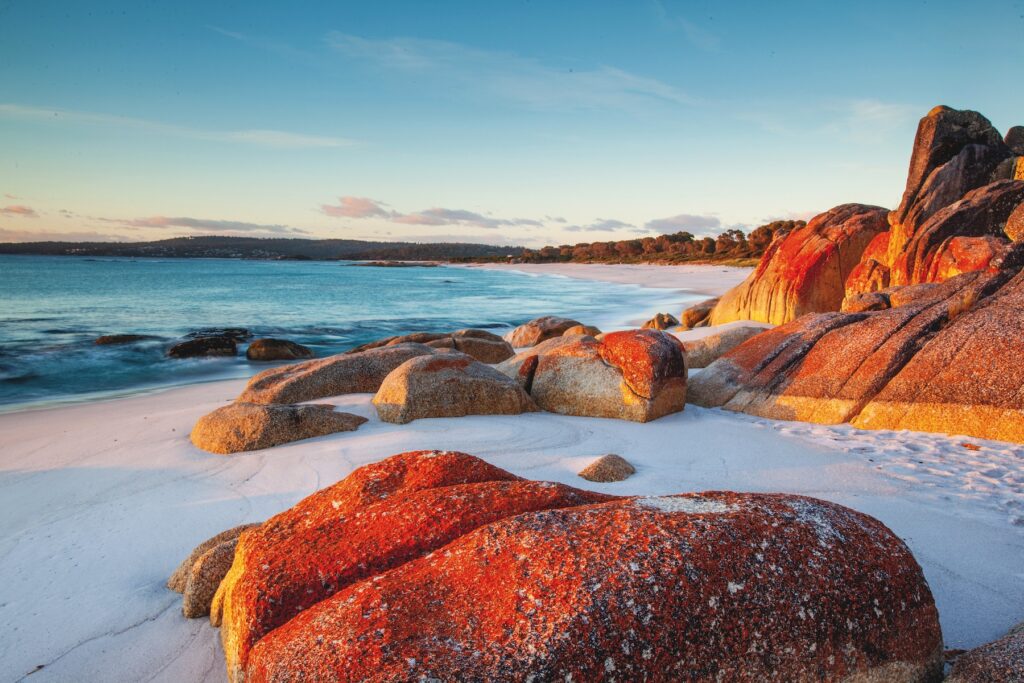
Binalong Bay – BAY OF FIRES/LARAPUNA
The long main beach in front of the small town of Binalong Bay in the northeast corner of Tasmania/Lutruwita is part outdoor gallery, part artwork, with nature the artist. The sand is as white as a canvas. The sky’s blue is dialled up to eleven. The rounded granite boulders are cloaked in tangerine, a creeping lichen resembling splashed paint; and lapped by an aquamarine sea, clear as Champagne, that glints in the sunshine. All of it tempting you to strip off, dash across the soft sand and plunge in. But beware – swimming in such a scene can be life‐changing, like a saltwater ice‐bath on steroids, even in February, the warmest month in Tasmania. On a more prosaic level: some sections of this unpatrolled beach, and others in the Bay of Fires area, can have steep drop‐offs, so swim with care and with a friend.
Getting There
Binalong Bay is 11km (7 miles) northeast of St Helens and 175km (109 miles) east of Launceston, at the southern end of the Bay of Fires Conservation Area that stretches 50km (31 miles) up the coast to Eddystone Point. Beachside camping is available at neighbouring Swimcart Beach on the road to The Gardens.
Top Beach for Surfing
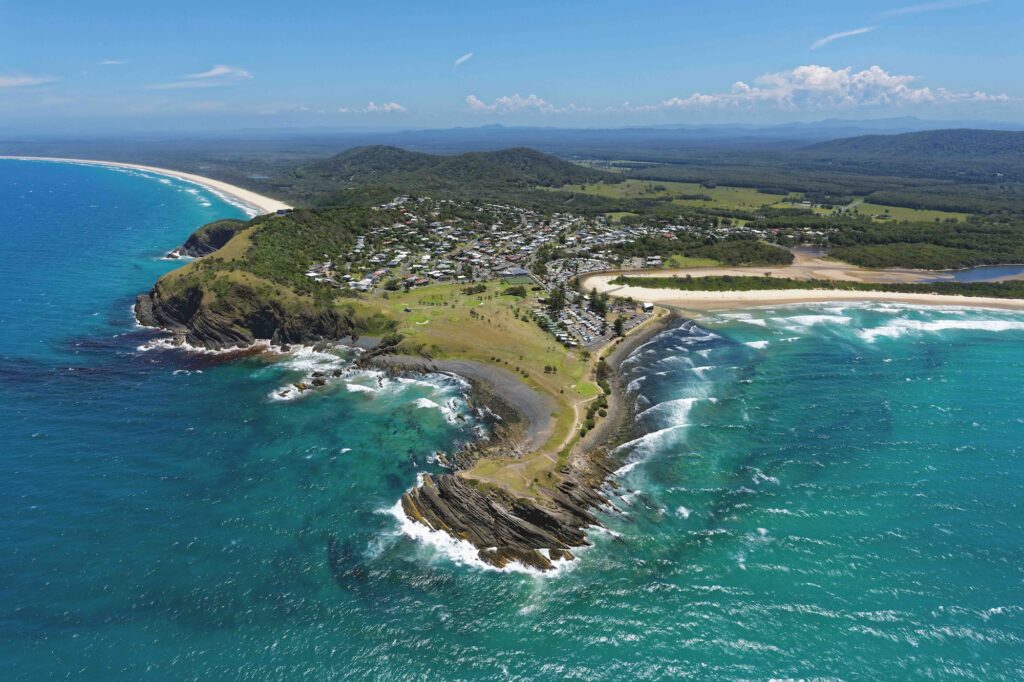
Crescent Head – MACLEAY VALLEY COAST
IN THE WAVE‐SOAKED MINDS of many surfers, Crescent Head on the New South Wales mid‐north coast isn’t a town but a perfectly peeling right‐hand point break, and for good reason. It’s one of the longest and most consistent waves in Australia, where 300m (984ft) rides in the company of leaping dolphins aren’t unusual. Being roughly halfway between Sydney and Byron Bay has also made it an obligatory stop on any north‐coast ‘surfari’, ever since Surfing World founder Bob Evans brought Midget Farrelly and a few other longboarding talents to test the waters back in 1963. Crescent Head became one of Australia’s first National Surfing Reserves, in 2008, in recognition of its importance to Australian surfing culture. There’s also a quiver of beautiful surf beaches south of Crescent, along the mostly sealed Plomer Rd – such as Racecourse, Delicate Nobby, Limeburners Creek, Big Hill and Point Plomer – all with back‐to‐nature campgrounds. At Crescent itself, a short amble uphill from the beachfront carpark – permanently lined with vans and surfers of all ages waxing up – brings you to Little Nobby headland.
Enjoy spectacular views: surfers dotting the takeoff zone, long peeling waves wrapping around the north side of the headland, Australia’s only six‐hole golf course (which has ocean views from every green) and the long, patrolled beach (accessible by a ramp in front of the surf club) stretching north to the distant blur of Hat Head. The training ground of many surfing legends, including four‐time surfing world champion, Mark ‘MR’ Richards, Merewether Beach’s unique combination of rock shelves and reefs mean it can be surfed at any time, on any tide, and in any swell, wind or size.
Designated a National Surfing Reserve in 2009, Merewether is also the home of Surfest, Australia’s largest surfing festival, held across February and March.
Before the first surfers paddled out here in the 1950s, Merewether was a favourite campsite of the Awabakal people, who still use the area today for cultural teachings and gathering traditional resources, such as ochre. The southern hemi‐ sphere’s largest ocean pool was chipped out of the rocky shoreline in 1935, with 10 unroped lap lanes in the deeper of its two 50m (164ft) pools; both have ramp access. A series of rock pools offer additional spots for a safe splash, while a sandy stretch north of the rocks has easy access to the surf, with lifeguards or surf lifesavers on duty year‐round. Overlooking the sand, the Merewether Surfhouse provides a superb vantage point.
Getting There
Crescent Head is 428km (266 miles) or a half‐day drive north of Sydney/Warrane. There’s also a 34km (21‐mile) coastal walk and 4WD‐only road from Port Macquarie, south of Crescent. It’s a seven‐hour train trip from Sydney to Kempsey; in school holidays there are buses from Kempsey to Crescent Head (25 minutes).
Top Beach for Spotting Wildlife
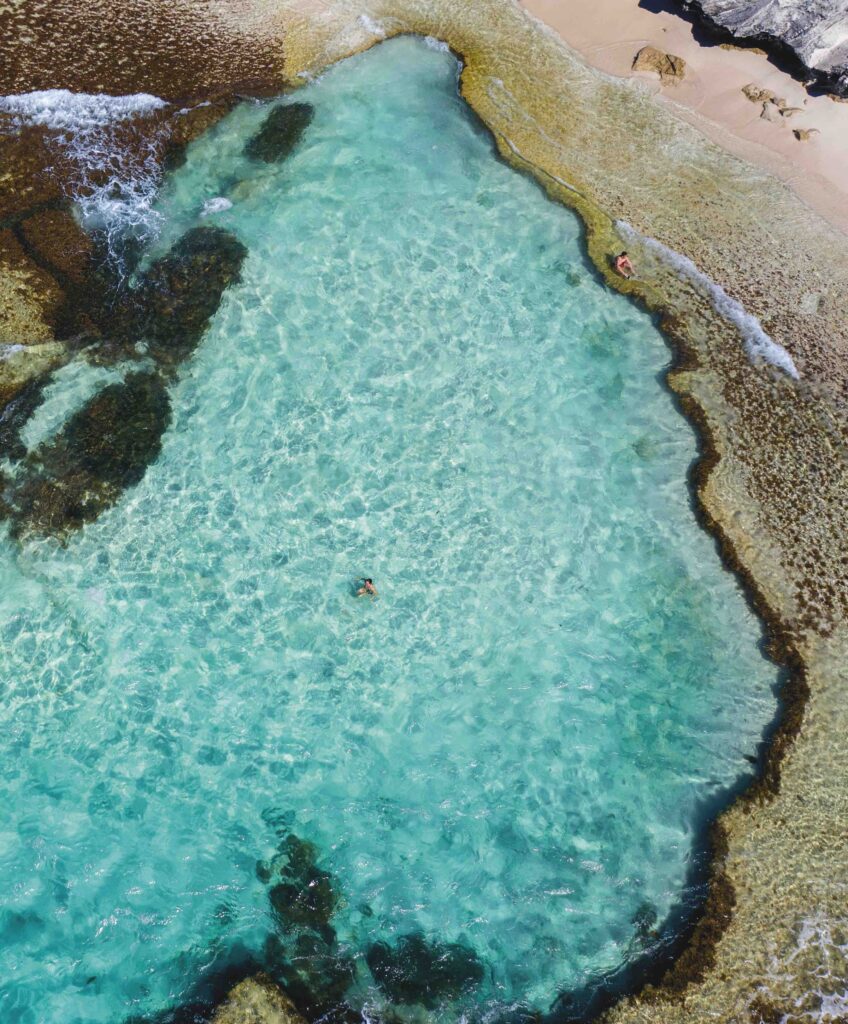
The Basin – ROTTNEST ISLAND/WADJEMUP
Many Australian beaches have human-made ocean pools, but Rottnest Island/Wadjemup has The Basin – a natural pool of turquoise water so clear and calm it feels like slipping into a cool salty bath. A three‐minute cycle (or 10‐minute walk) from Thomson Bay, the island’s main township, and even closer to its campground, this elliptical lagoon carved into the limestone reef is one of the island’s most beloved natural swimming pools. If you’ve yet to understand the enduring appeal of ‘Rotto’, spend a warm summer’s day at The Basin and you’ll soon see why Western Australian locals return year after year. By midmorning, the ding of bike bells fills the air as families arrive – bicycles being the main form of transport on the carless island – with kids all smiles after spying sleepy quokkas, the island’s beloved pint‐sized marsupials, en route.
Beach towels unfurl on the soft white sand, and candy‐coloured snorkels bob in the shallows.
The Basin’s north‐facing position protects it from strong swells, providing ideal conditions for snorkelling and leisurely swims (though keep an eye on kids at this unpatrolled spot). Its variety of limestone ledges and channels are suitable for beginners and experienced snorkellers, with its reef home to a swirling symphony of marine life, from blue‐barred parrotfish to western buffalo bream and the striped stingaree, a small species of stingray.
Peckish? There’s a Mediterranean restaurant right on the shoreline; and Pinky’s Beach Club, just a five‐minute stroll away, is a great spot for relaxed coastal dining. You’ll also find newly refurbished outdoorshowers, BBQs and toilet facilities at The Basin. Long before it was a tourist playground, Wadjemup or ‘the place across the water where the spirits are’, was an important ceremonial site for Whadjuk Noongar people, evidenced by the ancient tools and weapons found on its shores. After colonisation, Rottnest became the site of one of Australia’s most notorious Aboriginal prisons, with hundreds of men and boys forcibly taken from their homelands across Western Australia and incarcerated here. At least 373 of them died here. Today, Wadjemup remains a place of remembrance, and efforts continue to acknowledge this chapter of the island’s history. Thompson Bay’s Rottnest Museum is an excellent spot to learn more about its complex history on your way to The Basin.
Getting There
Multiple daily ferries connect Rottnest Island with Fremantle/ Walyalup (25 minutes), Perth/ Boorloo (90 minutes), and Hillarys (45 minutes).
Top Beaches for the Family
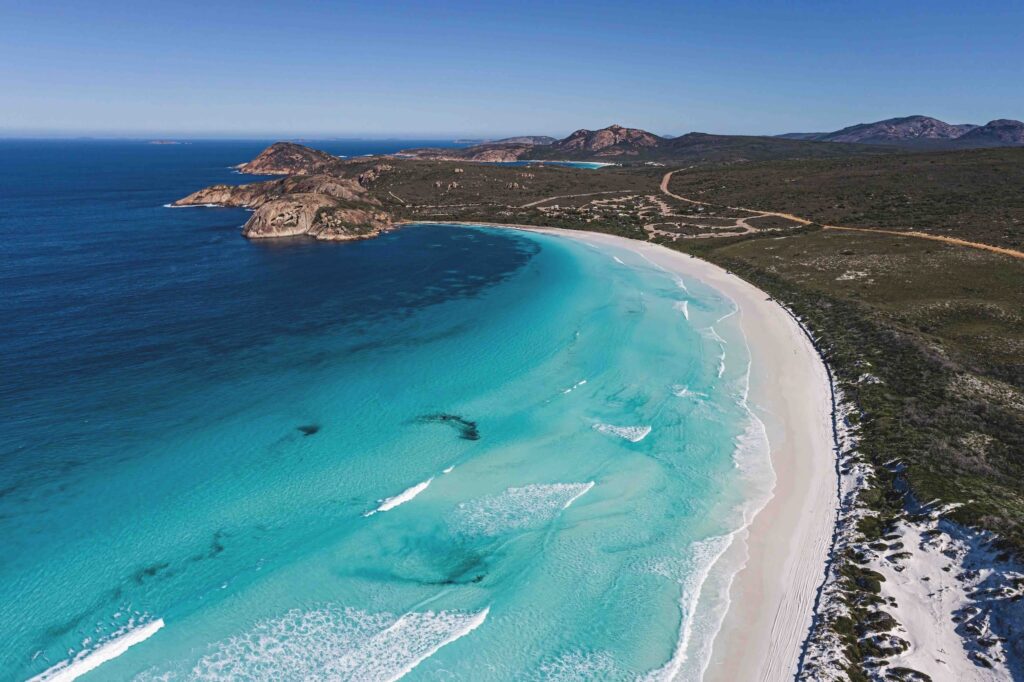
Lucky Bay – CAPE LE GRAND NATIONAL PARK
Imagine sand so white and so fine it whistles under‐ foot, and water in shades of blue so beautiful it doesn’t seem real. Cradle it between scenic granite outcrops linked by bushwalking trails and add a few kangaroos, and you have Lucky Bay. Stretching for 20km (12.5 miles), this protected bay near Esperance/Kepa Kurl in the state’s southwest is right up there with Australia’s dreamiest. Float in the crystalline water, cast a line at a secluded fishing spot, or gaze out to the ocean between July and October for the chance to see migrating whales. From November to early March, consistently windy days make the shallow bay popular with kitesurfers. Come just for the day or camp under a moonlit sky at the western end of the beach, keeping in mind that the 56 spots in this national park campground can book out in advance. Tame kangaroos are commonly sighted on and around the beach at dawn and dusk; admire them from a distance.
Getting There
Lucky Bay is 64km (40 miles) or a 50‐minute drive east of Esperance, which is another 700km (435‐mile) drive (or a short flight) from Perth/Boorloo. There is no public transport to Lucky Bay.


0 Comments