


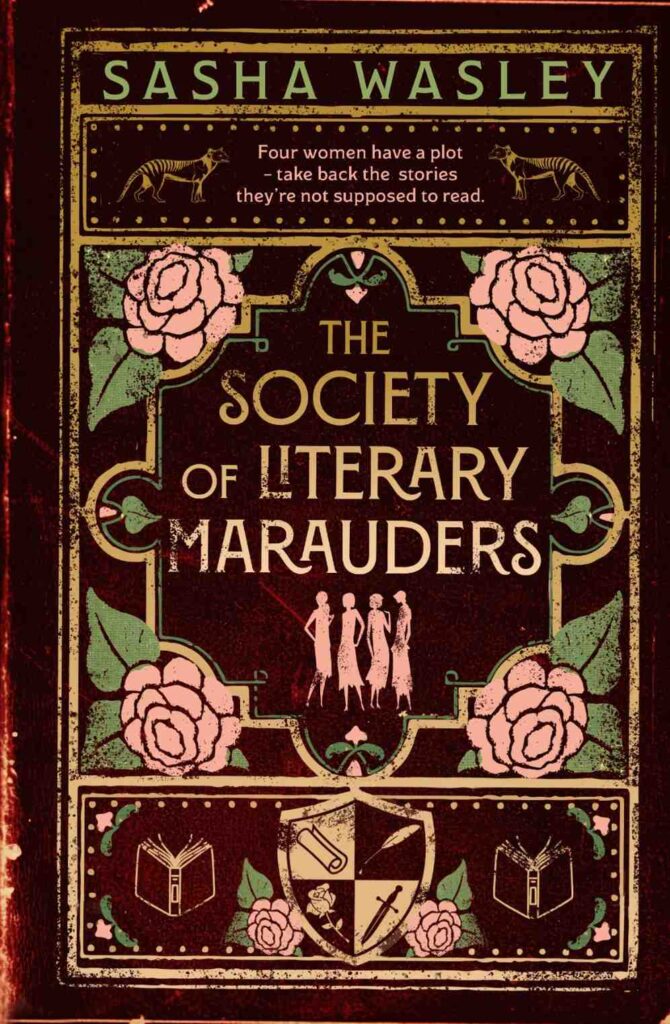
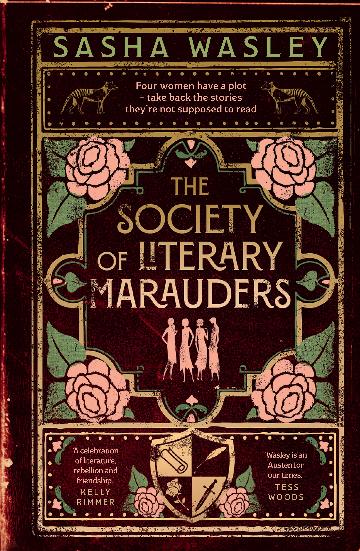
The Society of Literary Marauders by SASHA WASLEY explores the joy of rebellion, female friendships, literary drama, and the refusal to be ‘nice young ladies.’
Read on for a Q&A with the author about what inspired this new novel.
MEET SASHA WASLEY
What sparked the idea for The Society of Literary Marauders?
I knew I wanted to write about something central to my experiences and understanding of the world: structural inequality. While I wasn’t as hard off as some, I was a poor kid, a girl, and I identify as neurodiverse, so I encountered certain barriers to knowledge and in my career goals. It wasn’t until I got to university that I learned about patriarchy, discrimination, privilege, social capital, and Marxism – concepts that explained the chasms between what some people enjoyed and what others were denied. Ironically, uni was also the place where I experienced my own lack of financial security, social capital and female disadvantage most acutely.
For this book, I wanted to reflect that experience in the most amped up way I could, so I translated my own experience of being a white working class girl, only the second of the family to go to university (my big sister was the first), into historical fiction: an Australian bricklayer’s daughter attending Oxford University in the 1920s. My character feels like her education is a house of cards that can collapse with the wave of a hand. My experience of scraping by on Austudy at the prestigious UWA in the 90s, unable to afford a warm drink at the Ref and photocopying sections of the books I couldn’t buy, is the source of Annie’s experiences.
I was also obsessed with the Stuff the British Stole podcast and was eager to explore uneasy questions around colonialism and Empire through frontier battles, stolen museum artefacts and wildlife extinction.
As a lover of Jane Austen, what is it about her work that is so enduring? Do you try to emulate her style in Literary Marauders?
 I think there are two answers: her humour and the very real emotions experienced by her characters. Austen’s characters aren’t lofty or perfect. They’re petty, ignorant, self-absorbed – overdramatic, selfish and mischievous. Even her loved protagonists have their flaws. Once you get past the unfamiliar sentence construction of the 18/19th century novel, reading Austen is like reading a contemporary novel. The characters are relatable, funny, and as real as life. Like Shakespeare’s plays, sometimes it’s only when you watch a screen adaptation of an Austen novel that the humour jumps out, but once you get the hang of her writing, her books are simply hilarious. Hers are pretty much the only books I read over and over again (alongside Alice’s Adventures in Wonderland).
To answer the question, I guess I do try to emulate her style in that I aim to capture both the ridiculousness and the genuine goodness of people in my books. But I’ll never be Jane Austen, no matter how hard I try.
Who was your favourite character to write: Annie, Ridley, Dorelia or Norma?
I loved writing Ridley because she is so incredibly blunt and irreverent. As she says, the veil between what she thinks and says is ‘gossamer – gossamer, I tell you!’ She reminds me of the society girls from Agatha Christie’s books or an interwar Marie Antoinette. Ridley is completely oblivious to anyone else’s hardship, disdainful of earnest scholarliness and the original ‘girl who just wants to have fun’. She hasn’t found anything to be serious about yet, and has the flapper’s thirst for sexual liberation. Although she lacks any any consciousness of her own privilege, Ridley is unexpectedly the one who often points out inequality through her guileless observations. She was tremendous fun to write.
What is your favourite element of writing historical fiction, and what was your research process for bringing 1920’s Oxford to life?
It’s my most and least favourite part simultaneously: striving for accuracy. Nothing jars me out of a narrative worse than thinking, ‘hmm, that doesn’t sound accurate.’ I care about representing the reality of the world through small details, from getting the slang right to checking the cost of student fine for leaving one’s bicycle out. I had people assuring me that I didn’t need to go to Oxford in order to write this book but I was quite literally unable to write a word of Annie’s UK experience until I had been. I applied for travel grant after grant and got nowhere, so ended up funding my own way to Oxford, much to the distress of my bank account.
But those three weeks of deep immersion in the Oxford experience were exactly what I needed. I read in the Bodleian Library; I perused letters, wages books, lists of rules and diaries from the Somerville College archives; I meandered among the shining spires and timed the walk between Somerville and Balliol. I had tea in the tearoom where Annie sits after her responsions exam and peered through the window of the Eagle and Child pub, where Kit declaims a birthday speech for a friend. I went punting on the Isis and stood at the foot of Carfax Tower. I even had a private tour of a steamship in Southampton, where Annie first lands. Only then did I feel like I could write. My slightly rigid neurodiverse brain requires authenticity – and visiting the place where a narrative plays out was the only way I could write it.
The motto of the society is to ‘read any book kept away from nice young ladies.’ How did you decide on this motto and why is it so important to the characters in this book?
The motto, which forms part of the oath the girls take to be part of the Literary Marauders, comes from the oath I took when I got my reader’s card at the Bodleian Library, one of the most beautiful places I’ve ever been. Library users must speak aloud an oath not to do certain things in the library. I was taken by surprise when I had to do it and got a little emotional when I learned it was over 400 years old. That meant my characters would have taken the same oath! In response to being told what they should not read (starting with Lady Chatterley’s Lover, which was banned in England that year), they create their own parodic oath. They all bring their intersectional experiences to it: poor women, women of colour, women who like sex, women who aren’t ‘pretty’ or fashionable. And they all bring lived social injustices to the reading list. They read about sexuality and gender, capitalism, psychology and colonialism.
This is a story of women fighting for their equal right to information, education, and respect, which is a consistent theme across feminist writings, both fiction and non-fiction.
As you have a PhD in feminist literature, what influence did your studies have on this story, and were there any particular texts that inspired your work? For example, did you sneak some references to your own reading list into the story?
 I was hugely influenced by Virginia Woolf’s A Room of One’s Own – a book I referenced extensively in the course of my postgrad degree. In that short book, which is based on a speech Woolf gave at Cambridge in the same year as my book is set, she makes the radical statement that all a woman needs to be a good writer is five hundred a year and a room of her own. In other words, freedom from financial dependence, as well as from the domestic and mental load of being a woman in modern society. I contend that this remains as true today as it was in 1929.
I also brought in Jane Austen’s works, the Bronte sisters’ novels, Fanny Burney, Freud and Marx – all powerful influences from my own university education. Jane Eyre was one of my favourite early feminist texts, and it is equally important to my characters in their own ways.
 There are many plot points in Literary Marauders that feel increasing, (and unsettlingly) relevant to our modern day, especially with the rise of book banning in schools in the US. How is our current reality mirrored in the daily struggles of the four women in this novel?
It’s really quite spooky. The interwar period in European and colonial history had eerie parallels to now, from the rise of fascism and authoritarian regimes, to the backlash against some of the post WWI liberations that had opened up a more progressive social world. The characters in my book start to notice small (and large) injustices and oppression, they become conscious of old privilege and find little ways to fight back – then bigger ways. One of their strategies is to get their hands on and read books they’re not supposed to read.
To my dismay, books are being challenged and banned at a great rate again now, especially in the USA, because they represent progressive attitudes (often dismissed as ‘woke’) or offer inclusive representation. We’re seeing the same backlash against cultural representations and space-clearing for traditionally marginalised people. The #metoo and #blacklivesmatter movements; LGBTQI+ rights and representation. All of these threaten entrenched privilege – of course there’s going to be a backlash. Few revolutions happen fast or without a hitch and we need to keep fighting the good fight. That includes pushing back against book bans.
What are some works from history’s “literary marauders” that you think everyone should read?
I think everyone should read The Communist Manifesto! Not to become a communist, necessarily, but to understand how capitalism works and what socialist principles really mean. Capitalism underpins so much inequality, supporting patriarchal, homophobic, transphobic, and racist structures. Understanding how these systems interact was like taking off a blindfold for me. It genuinely changed how I see the world and my place in it. Having said that, the book is a slog to read (although short) – but there are plenty more modern and interesting books on the subject out there!
In fact, given the period (1928) not all of the books my characters read may feel revolutionary or exciting to the modern reader, but I’d love to see contemporary readers going out of their way to read books that have been banned in the past or are being banned now. It’s the perfect way to start conversations about the suppression of free speech and progressive ideas. In fact, with my publisher, I have created a banned books bingo card people can print and use as a reading guide to increase their intake of challenged and banned books. It will be available on the homepage of my website from 31 March, 2026.
What is next for you? Any writing projects on the horizon?
I always have a bunch of writing projects on the go! I’m currently editing my next children’s fantasy novel and will be going on residence through the May Gibbs Children’s Literature Trust in Adelaide during May 2026 to write the script for a graphic novel under my Ash Harrier pen name. I write a serialised cosy fantasy story called The Curse Responders (published irregularly on Substack). I’m also currently percolating another adult title set in Melbourne in the 1930s, and aim to start work on that in the next few months.
Read our review of The Society of Literary Marauders here.
ABOUT THE AUTHOR
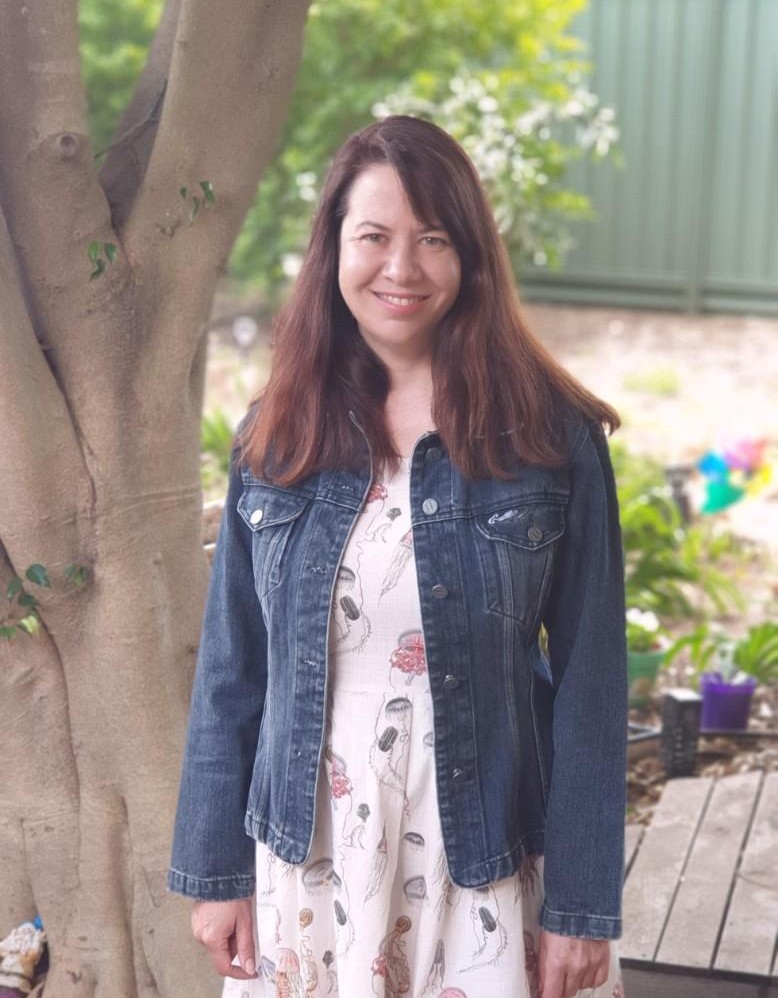
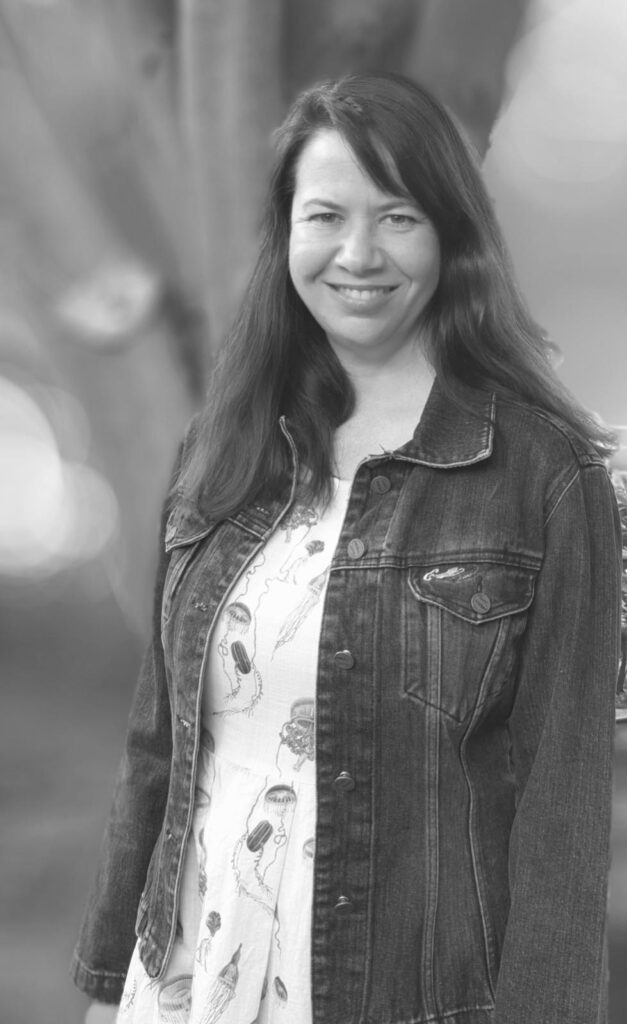 Sasha Wasley was born and raised in Boorloo (Perth), Western Australia. She holds a PhD in feminist literature and loves nature, Jane Austen and puns.
Sasha loves the Australian environment and has a fascination with animals, trees and our extraordinary wild landscape. She likes nothing better than exploring the countryside, going on adventures and discovering new sights.
Sasha is an advocate for literacy and runs writing workshops for children and adults, as well as offering mentoring services. She is a WA Ambassador for Books in Homes Australia charity promoting early book ownership for life success.
Sasha can’t seem to constrain herself to one genre. She writes middle grade fiction and urban fantasy as Ash Harrier. Her debut novel was published in 2015. Today, she lives in the Perth hills region with her partner and two adult children, surrounded by dogs, cats and chickens.
She is grateful to live and write on unceded Whadjuk Noongar land.
Visit Sasha Wasley’s author website here.
Follow Sasha Wasley on Instagram.
Visit Hardie Grant’s publishing website here.
0 Comments