



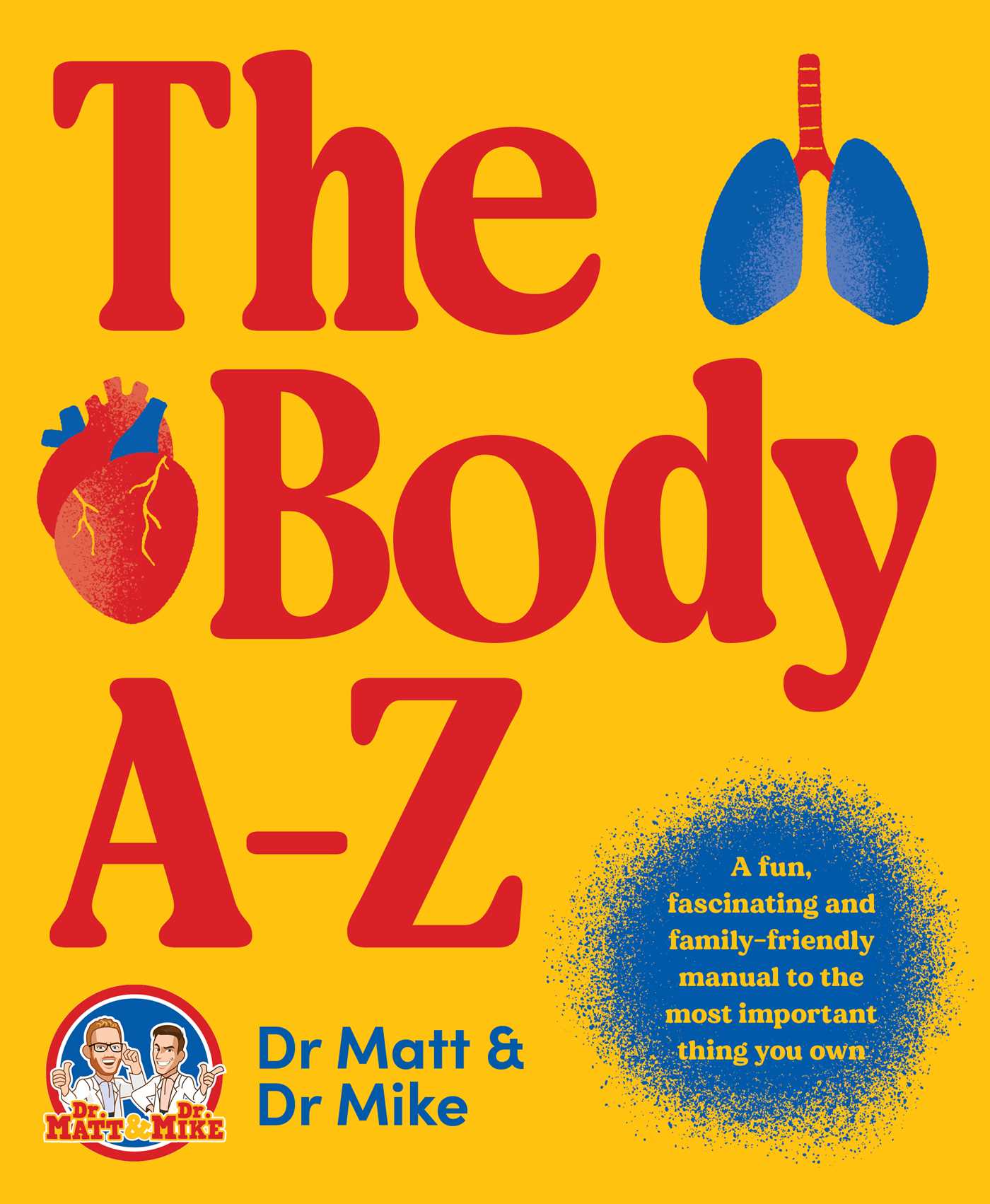
The Body A-Z, from MATTHEW BARTON and MICHAEL TODOROVIC is packed with mind-blowing facts, funny insights and straightforward explanations of everything that makes your body fascinating, complete with vibrant, full-colour illustrations.
In this extract we learn all about singultus!
 ABOUT THE BOOK
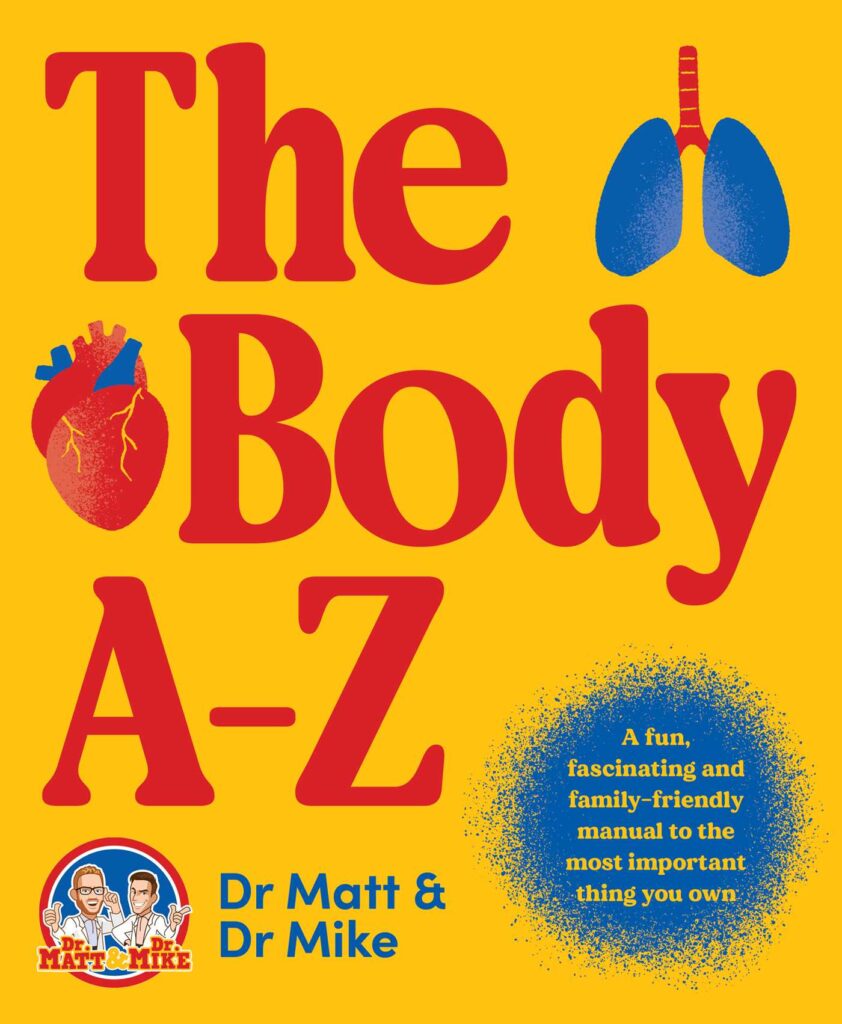
Did you know that liquorice was used to stave off dehydration by desert-dwelling nomadic tribes? Have you ever considered what happens to someone’s body when they don’t eat for 382 days? YouTube stars Dr Matt & Dr Mike invite you on an entertaining, eye-opening A-Z tour of the human body like you’ve never seen before.
The Body A-Z is packed with mind-blowing facts, funny insights and straightforward explanations that make even the weirdest parts of your anatomy fascinating. From decoding medical jargon to exploring the miraculous ways your body works, heals and adapts, this guide has it all – complete with vibrant, full-colour illustrations.
Whether you’re a curious kid or a science buff, or love a good fun fact, this is your ultimate A-Z handbook to understanding the powerhouse that is YOU.
Both award-winning doctors, Dr Matt & Dr Mike have won the Vice Chancellor’s Award for Excellence in Teaching, have appeared on television and ABC Radio and in various publications across the country.
***********
EXTRACT
Singultus
‘I think hiccup cures were really invented for the amusement of the patient’s friends.’ – Bill Watterson, cartoonist
Hiccups, or singultus, as they’re known in the medical world, come from the Latin word for ‘sob’ or ‘gasp’. The term hiccup itself is thought to be onomatopoeic, mimicking the characteristic sound a hiccup produces. A hiccup happens when the muscles involved in breathing – particularly the diaphragm – contract suddenly while the vocal cords snap shut, creating the familiar hic sound.
Almost everyone has experienced hiccups at some point, and they’re usually just a minor inconvenience. But for some, like Charles Osborne, they can become a lifelong ordeal – he hiccupped continuously for 68 years, racking up an estimated 430 million hiccups. Another sufferer, Christopher Sands, endured a more intense but shorter episode, hiccupping every two seconds for 12 hours a day over 27 months.
Interestingly, many animals with respiratory systems similar to ours – including horses, lions and even squirrels – also hiccup.
The p hysiology of hiccups
Hiccups can be triggered by many factors, such as a full stomach, drinking carbonated beverages or eating too quickly. These actions activate chemical and mechanical sensors in the lower oesophagus, stomach and diaphragm. This sensory information is relayed via the phrenic and vagus nerves to the brain’s ‘hiccup control centre’ – yes, there is a hiccup centre!
When the hiccup centre is triggered, the brain then sends motor signals back to the muscles involved in breathing, causing the diaphragm to contract sharply and move downward, while the muscles between the ribs expand outward, making the lungs inflate rapidly. At the same time, the vagus nerve causes the vocal cords to close abruptly, trapping air in the chest and producing the classic hic sound. Simultaneously, the vagus nerve also relaxes the lower oesophageal sphincter – the gateway between the stomach and the oesophagus – allowing air in the stomach to move up and be expelled as a burp.
The baby burp theory
One compelling and entertaining idea about why we hiccup is the ‘baby burp theory’. It suggests that the hiccup reflex is related to the burping reflex, which helps us expel swallowed air from the stomach. Hiccups are most common in infants, likely because they swallow a significant amount of air while drinking milk. This swallowed air stretches the stomach and oesophagus, triggering the hiccup reflex. The reflex then helps push the trapped air from the stomach into the oesophagus to be burped out. This mechanism is helpful for babies, as it clears space in the stomach for more milk rather than air.
Other theories
There are several other theories that may explain why we hiccup:
~ Developmental theory:
Amazingly, foetuses in the womb also hiccup! Before birth, a baby needs to learn how to control the diaphragm and the muscles between the ribs for breathing once they are outside the womb. Hiccups may provide a form
of practice for breathing. One study looked at the brains of premature and full-term babies (by connecting them to a harmless electroencephalogram) and found that, during hiccups, the brain regions associated with breathing muscles lit up. This suggested that hiccups might help the brain map out these muscles.
~ Evolutionary theory:
Hiccups could be a vestigial reflex – a once-useful function that has lost its purpose over time – from our aquatic ancestors who had both gills and lungs. This reflex might have helped them oxygenate their gills with water without flooding their lungs. The hiccup reflex often starts in the phrenic nerve, which first developed in our fish and amphibian ancestors. In mammals, however, the phrenic nerve has a much longer and more winding path, which makes it more prone to irritation – hence, we get hiccups.
 How to get rid of hiccups
Most hiccups resolve on their own. However, if they become persistent and bothersome, several techniques can help by stimulating the vagus and phrenic nerve pathways.
Drinking a glass of water or applying a cold compress to the face can stimulate the vagus nerve and potentially stop hiccups. Other effective methods include interrupting the breathing cycle – holding your breath for several seconds, or performing the Valsalva manoeuvre: exhaling forcefully while keeping your mouth and nose closed – think pooping or unblocking your ears on a flight.
For those who are desperate, there’s an extreme remedy that’s been medically proven, though it’s not something you’d want to try casually. In a case documented in the Journal of Emergency Medicine, a patient suffered from hiccups for over three days, and was unable to eat, drink or sleep. After various medications and conventional methods failed, doctors tried a digital rectal massage (DRM), a method inspired by a similar clinical case they recalled. Miraculously, the hiccups stopped immediately. An hour later, the patient was discharged without further hiccup attacks.
Why did this work? The answer lies with the vagus nerve, which connects the brain to many parts of the body, including the respiratory and digestive systems, all the way down to the rectum. Stimulating nerves through a rectal massage can interrupt the hiccup reflex, providing relief. Dr Francis Fesmire who first published this technique, in a paper titled ‘Termination of Intractable Hiccups with Digital Rectal Massage’, was later awarded an Ig Nobel Prize for his unconventional yet effective approach.
DID YOU KNOW?
In many cultures, including Indian, Baltic, Slavic, Turkish, and Kenyan traditions, hiccups are believed to mean someone is talking about you!
**********
ABOUT THE AUTHORS
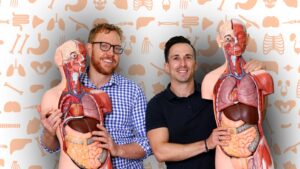 Dr Matt Barton, PhD is a Bioscience Senior Lecturer in the School of Nursing & Midwifery. Dr Barton completed a PhD in Neuroscience and his main research interests are neuronal injury and regeneration, particularly in peripheral nerves, and is an active researcher in medical education.
Dr Mike Todorovic, PhD is an Associate Professor of Medicine at Bond University and co-founder of Dr Matt & Dr Mike’s Medical Education, a global platform delivering anatomy, physiology, and pharmacology content through YouTube, podcasts, and online resources. With a PhD in neuroscience and a passion for making science accessible, Dr Mike has built an audience of over one million subscribers worldwide.
Read more about their book HERE.


0 Comments