




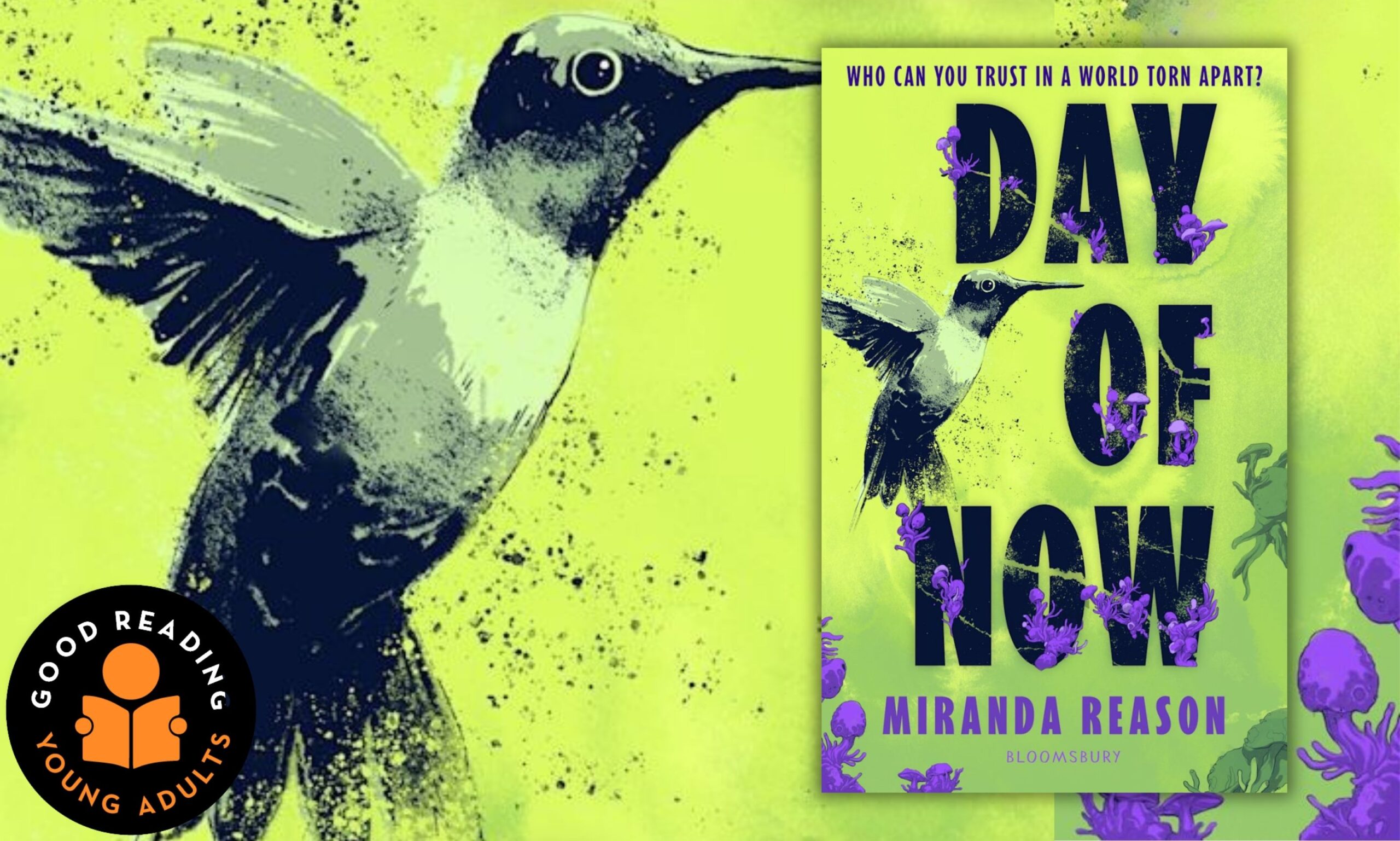
MIRANDA REASON’s Day of Now is a powerful post-apocalyptic story about facing impossible choices.
Read on for a Q&A with the author.
MEET MIRANDA REASON
 What inspired you to write Day of Now?
Various things, I think. I wanted to write about a world stopped in time, in which nature was slowly reclaiming its space. And I wanted stories of our pop culture to have survived in this world, to be mixed with facts, to be half-mythologised. Mostly, I just wanted my characters to go on a dangerous journey, full of horrors, wonders and narrow escapes.
Did you draw on any real-world experiences, history or media to create this dystopian world?
Well, I started writing this story in 2021, in the middle of the COVID pandemic, which definitely influenced it a bit – there are tales of people hoarding food, medicine and toilet paper right before the old world ends, there is the search for a vaccine, there are even FFP2 masks: Toxic spore mists frequently break out, and survivors who don’t have gas masks use the old FFP2 kind, which they had at hand from earlier pandemics.
I was also influenced by zombie-related media and dystopian fiction in general. The fungus idea for Day of Now came about because I wanted the spore mists as one of the main sources of infection, but maybe (or probably) I was also subconsciously inspired by The Last of Us and M R Carey’s The Girl with all the Gifts, both of which I love. Instead of real zombies, I have infected humans and animals running around with rabies-like symptoms; different, but not too far away from the rage virus in 28 Days Later (not that I knowingly made that connection then). Good stories always influence and inspire.
While we’re on the subject of stories – all the stories that Dayna and Pax know are real films, TV series, novels or fairy-tales, as their father used to entertain them with such retellings. The remnants of the past seem magical and mythical to them, because of such stories.
The world itself is our world, just overgrown, mostly abandoned and full of new dangers. I used real locations.
What aspects of Dayna and Pax’s sibling relationship were most important for you to capture?
Well, basically I wanted them to have the usual sibling relationship – usual as I remember it, that is, from growing up with my brother – but in a post-apocalyptic scenario. So, Dayna and Pax can bicker, tease and irritate each other, but at the same time, they get each other in a way no one else does, as they grew up and shared the same experiences in almost total isolation. They’re also very aware of the other’s abilities: Pax might ignore his sister’s orders about ordinary things, but in dangerous situations, he obeys her without question, and she trusts him. With their father gone, they’re all they have left of their old life, and they’d do anything to protect each other.
What kind of obstacles do Dayna and Pax face as they try to save their father?
The two siblings are extremely competent and savvy in their dangerous world – more so than most adults – but have also mythologised a great deal of pop culture and think in terms of heroes and monsters. On their journey, they learn that the two aren’t always easy to tell apart, and that it’s hard to know when to trust and when to run.
Connected to this, and mainly concerning Dayna (the older of the two), is the first realisation of genuine fear and doubt, which she will have to come to terms with if she wants to go on.
Did you learn anything new about your writing process while working on this story?
I did approach the setting and voice in Day of Now a little differently than I usually do. I used real locations and buildings, which was a little restrictive but also very satisfying once I got the layout right, as it helped ground the dystopian world in reality. It was like having elaborate, ready-made film sets at hand – I worked a lot with Google maps and images for distances, impressions or memory jogs (I also visited many of the main settings myself, but not until I’d finished the first draft as I don’t exactly live around the corner) – and all I had to do was imagine these places overgrown and neglected or, in some cases, repurposed, and describe them as Dayna would.
It’s through Dayna’s perspective that we see her world, and that was fun to write and think about. Though she’s very straightforward and practical about the dangers of her present, she’s also quite romantic about the past.
Through her voice, everyday objects like phones or photos are turned into amazing artefacts; even ancient chewing gum spots on the streets can become something significant – a connection to a lost civilisation.
This is my first published novel, so it’s the first novel I worked on with other people’s input. One big thing we did was shorten my original story so that it wouldn’t be too long, and I was a little nervous about that. But my editors’ suggestions were brilliant, and the scenes I wrote to replace the longer scenes that were removed ended up working better than before. So I learned that a story can also greatly benefit from listening to other people’s views and ideas. But also to trust my instinct when there are aspects or scenes I don’t want changed or cut – and I’m grateful that my decisions were always respected in those cases. It was a very rewarding experience altogether.
What do you hope readers feel after finishing Day of Now?
I hope their hearts will still be racing.
ABOUT THE AUTHOR
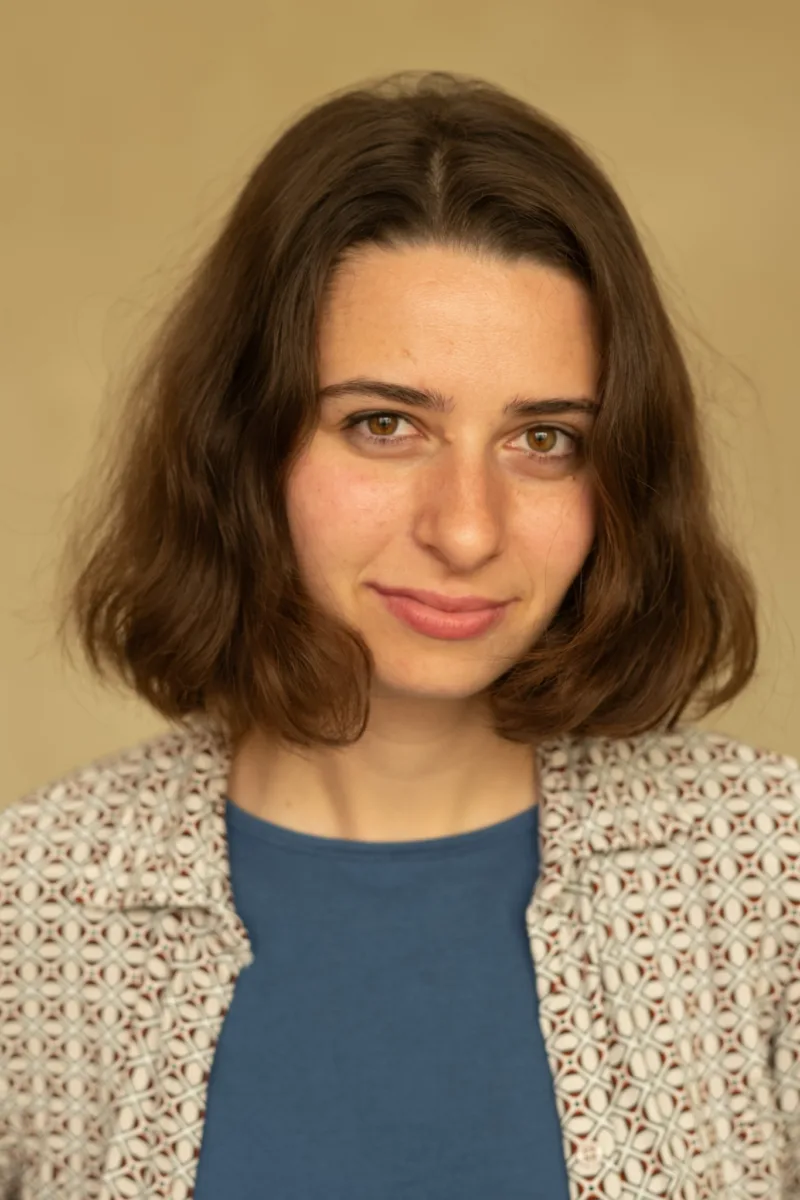
Miranda Reason was born in Berlin in 1993 and grew up in a bilingual, Anglo-German household. She works as a film restorer of classic German movies and writes in her spare time. Although she lives in Germany, she has always preferred English for her storytelling.
Day of Now is her first novel.


0 Comments