



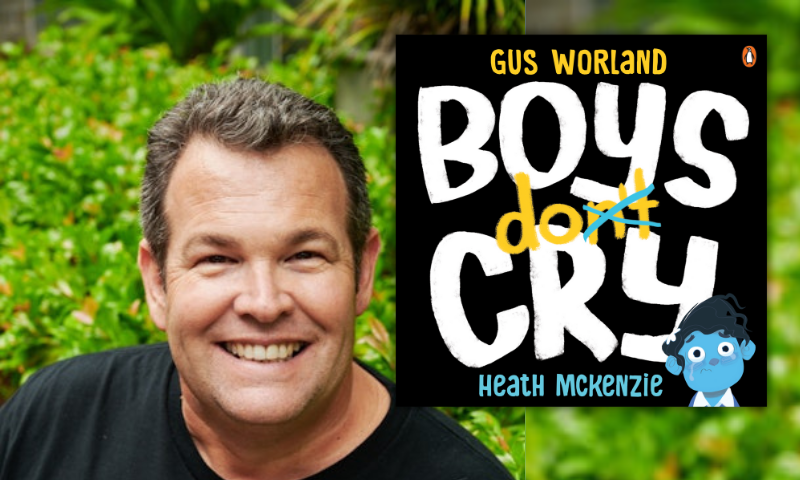
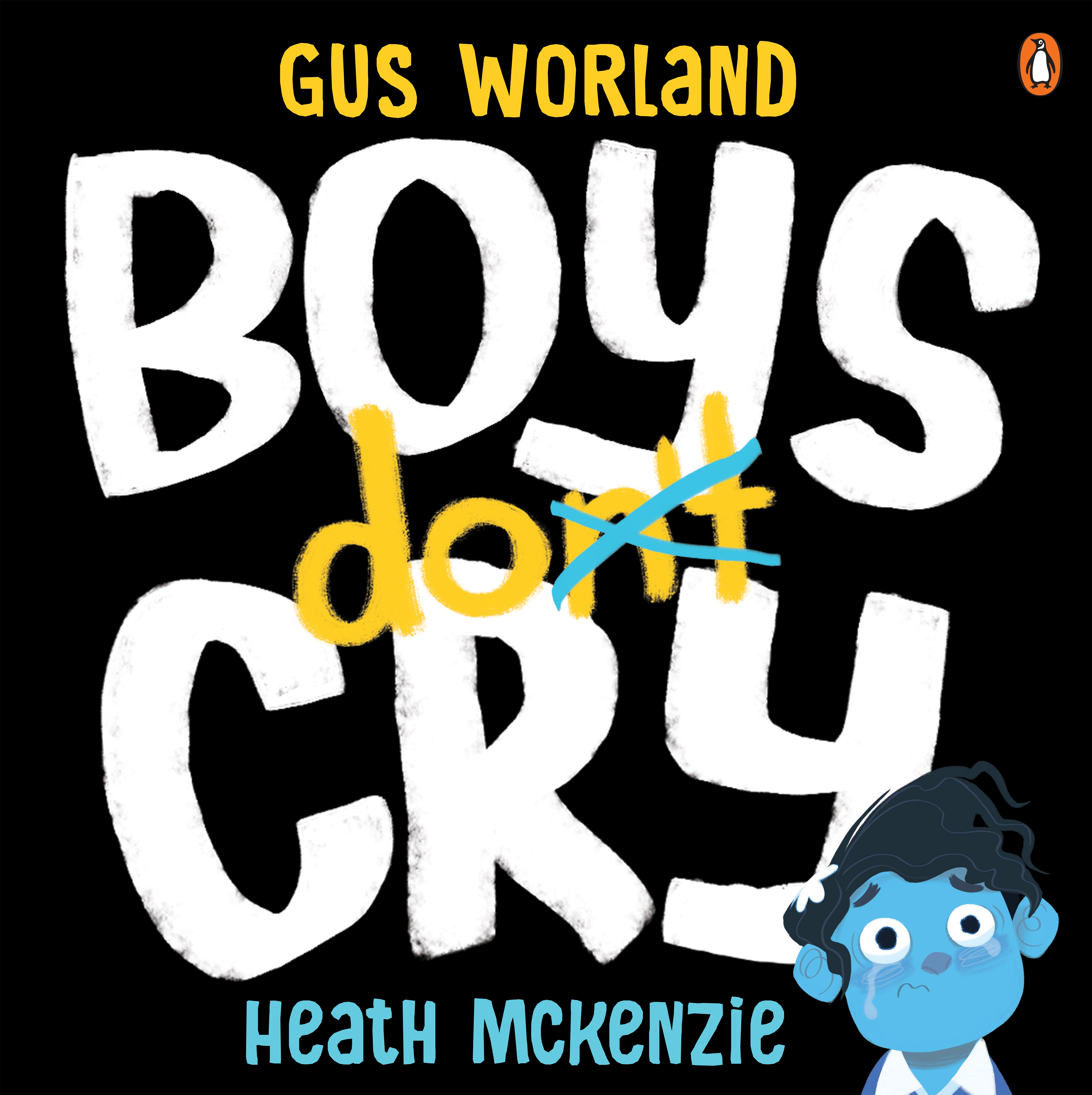
We caught up with GUS WORLAND to discuss his book Boys Do Cry, a warm and humorous picture book about being okay to share your feelings.
What inspired you to write Boys Do Cry?
For me as a dad and someone who read a lot of books to their kids, it seemed a bit out of this world to think I could do it. When we came up with the idea and Penguin said yes, now that it’s in my hands it’s amazing to know we can change people’s thinking and conversations at a point in time in parents and kids lives.
How did your personal experiences or your work in mental health and advocacy influence the creation of this book?
We’ve been told all our lives to man up, shut up and get on with it. It’s an important lesson to learn that is not helping us and the numbers and stats of suicide and depression show that is now time to human up and speak up as opposed to shut up.
If this book can play a part in some way normalising being human being emotional then it would have done its job.
You’ve been a passionate advocate for mental health through your work with Gotcha4Life. How does Boys Do Cry fit into your broader mission?
There’s no doubt that I’ve learnt over time that we need to have open conversations of mental fitness at a younger age and this book is a great opportunity to have the conversations a bit earlier.
The book challenges the outdated idea that ‘boys don’t cry.’ Why do you think it’s so important to start these conversations with young readers about emotions?
There’s nothing more important than being a human and being human means having good days and bad days, highs and lows. We have to make it normal now for people to show emotions early so they realise that showing your array of emotions gets you through life’s ups and down.
The alternative is to keep what we’re doing and keep having high amounts of people suiciding, anxious, depressed and not having the emotional muscle to deal with it. This will only continue to happen over and over again.
This book is also for the parents to have a look at their own lives and show a bit of vulnerability and set an example.
What do you hope readers, especially boys, take away from the book?
I hope that the parents and the child, whether they are boys or girls, realise that it’s okay to be vulnerable, and be someone who leads with vulnerability and that it’s actually normal to cry and let people know you are going through something emotional and to ask for help.
Do you have plans for more books or projects aimed at encouraging mental fitness and emotional openness, especially for young readers?
I am really hoping that this book will be the first of many that will highlight the fact that it’s okay to be human and okay to go through different emotions and that it’s normal. I am hoping it will be one of a series.
ABOUT THE AUTHOR
 Gus Worland is a Gotcha4Life Founder, Speaker, and Mental Fitness advocate based in Sydney, Australia. Gus gets a room (or a global audience!) laughing, crying thinking and talking afterwards about a topic others feel uncomfortable speaking about. Gus breaks down barriers with an authentic, honest, interactive conversation delivered in his relaxed, informal, style. What you see is what you get. And what you get is incredible.
Follow Gus Worland on Instagram here
 Heath McKenzie is a best-selling, award-winning Melbourne-based author and illustrator who specialises in stylised digital illustrations (aiming to make them look as non-digital as possible). He has written and illustrated over 40 picture books and illustrated a whole lot more across numerous forms of print media.

0 Comments