



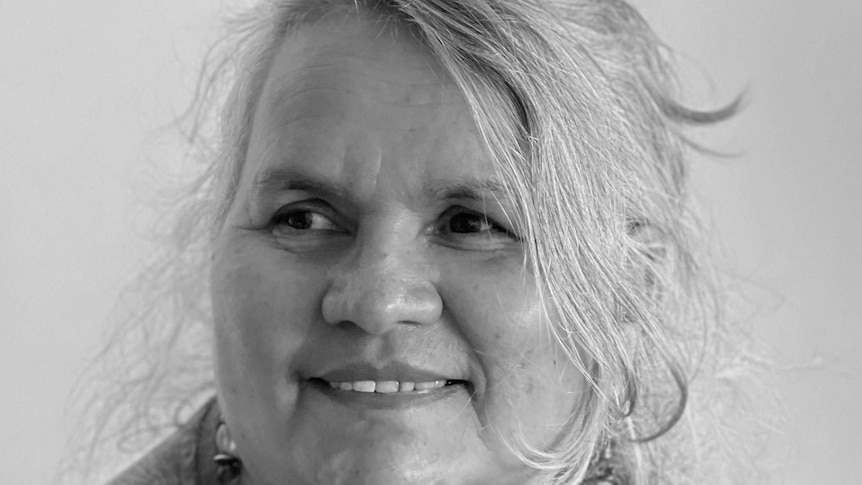
DEBRA DANK, whose non-fiction writing defies genre definition, shares her reaction to family archival discoveries with JENNIFER SOMERVILLE.
In measured, yet passionate tones, an Aboriginal educator for more than 40 years writes of the effect on families and communities of children being ‘taken away’ as the Stolen Generation.
 Dr Debra Dank has written two earlier books, We Come with This Place (2022) and Terraglossia, the latter published earlier this year, with each forming part of her PhD thesis.
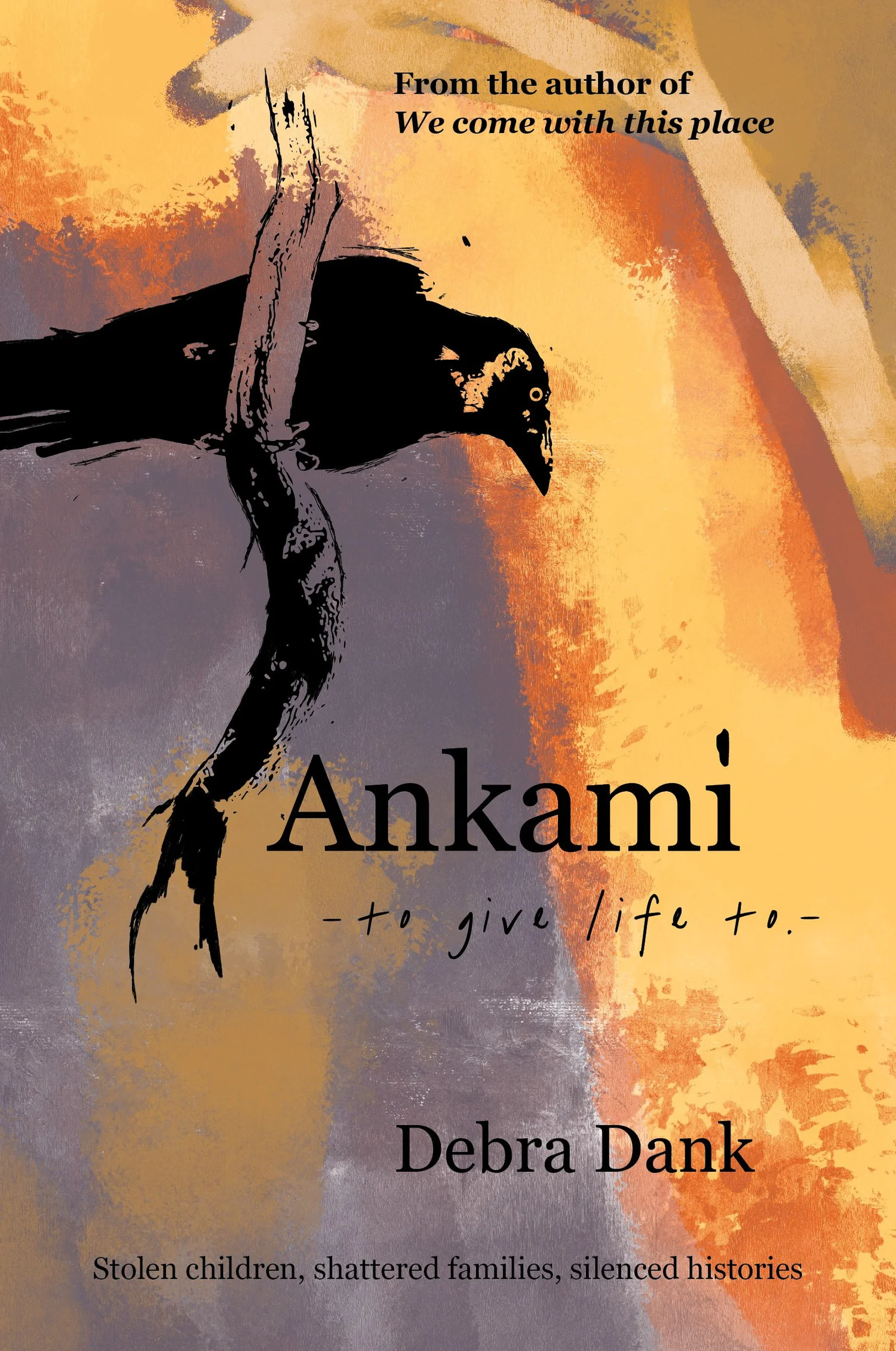
Inspiration for her latest book, Ankami, sub-titled ‘to give life to,’ came when she received a bundle of papers from the Northern Territory archives, regarding her father’s family.
Dank is a Gudanji/Wakaja and Kalkadoon woman, from the Barkly Tableland of the Northern Territory, now living in south-east Queensland, who thought she knew her paternal grandmother’s story, but the documents she received revealed a dark tale that nobody in the family had ever discussed.
That grandmother is recorded as having died at 35. The documents showed that she had had four children taken from her, all older than Dank’s father, and they were never spoken of in the family.
‘While writing this book gives life to those four … and I don’t know whether they were male or female … it also fleshes out the narrative of families and communities those Stolen Generations left behind,’ she said.
 We don’t often hear about the impact having those children taken away made on communities, families and mothers.’
Dank wonders if the leadership of this country is comfortable with the things done to Aboriginal people being swept away and disregarded; and if ordinary Australians are also comfortable with this shared history.
She does not believe anyone is to blame, should feel ashamed or guilty, but believes it is important that all people know what happened.
‘The events described in those papers I received are not palatable for any of us, but they are the lived experience of Aboriginal people. Strangely I am no longer angry but feel a great sadness for our country,’ she said.
Dank is very clear that she tells stories, not necessarily in any particular genre.
‘I’ve never had a genre recipe in my head as a story started to grow. I don’t sit down and plan what I will write. I think of big themes then relate them to my own experiences.’
In a theme also explored in Terraglossia she believes that in colonial spaces people don’t always critique the new introduced language, seeing if it makes sense of the environment and the community.
She has a strong belief that Standard Australian English (SAE), brought to this country by the colonialists, invaders or settlers, is not sufficient.
She cites the case of her father, a station worker for many years, who spoke three languages but was considered to be illiterate in SAE, a judgement made by people who were usually monolingual.
Dank is passionate about gathering information about family and Country because she considers the Australian and the Northern Territory governments have no real interest in the connection between people and place.
‘Our place, the Beetaloo Basin, is being fracked and in the worst way. Hydraulic fracking destroys the substrata of this one earth we have. A toxic mix of chemicals and water is blasted into places that will allow the gas sitting below the surface to be harvested,’ she said.
‘One of my relatives was told not to worry about the chemicals as they were about the same as that put into swimming pools.
‘I have a pool at my house, and I can say categorically that I would not want to drink the water it contains.
‘The supply of clean drinking water is not just an Aboriginal problem in the Northern Territory. It is a problem for the whole of Australia and the fracking of the Beetaloo Basin means I worry for the water security of this country.
‘Aboriginal science has known for generations that having clean water from underground aquifers is important. Western science needs to catch up.’
Dank presents the bureaucratic background to the removal of many children, termed ‘half-caste’, from their families. She says those violent removals continue, with the numbers now exceeding those taken in the initial Stolen Generations period.
The discovery of her father’s four lost siblings brought the matter right home to her, even though she had known families that survived the removal of a child and
had thought she knew how close the practice had come to her family.
In counterpoint to her father’s family living on a NT cattle station, where her late grandmother had been raped and abused, her mother’s family had a long and respected existence in Camooweal.
Her great-grandmother, whom Dank knew well when growing up in Camooweal, had been born of an Aboriginal mother and non-Aboriginal father, but had always been acknowledged as part of that non-Aboriginal family and sent to school on the east coast.
Dank writes that the realisation that there was a whole part of her father’s family missing, that nobody talked about, rocked her to her foundations. She believes that to see across cultures is not to translate, but to listen. It asks for humility, patience and for willingness to accept difference and not fear it.
Throughout her life, and particularly in her 40 years of teaching at primary, secondary and tertiary level, she has encountered racism and still sees it. She thinks Australians have been dancing around inter-racial relationships since Cook sailed the east coast, but her own beloved non-Aboriginal husband is regarded as one of their own by her Aboriginal family.
Regarding cultural teaching, Dank sees a great difference between culture and information.
‘Information can be Googled or read in books written by others, but culture is absorbed; lived in every day, the mundane, the joy and the sorrow,’ she said.
‘When our people die before they’ve taught us what they know, and what we need to know, we lose the how, not just the what.
‘I can find out what a coolamon is, even buy one online, but until my aunty taught me how to cradle it, how to shape the wood, how to hold the axe and the angle to cut the wood, how to carry it balanced against a hipbone, I didn’t know it. I only knew of it.’
Her pain at the information from the archives was compounded by becoming angry with herself by allowing those notes to hurt her.
She recalled that her paternal grandmother did the work of a stockman, like many other Aboriginal women who helped to establish vast cattle and sheep stations. Her grandmother had died in Mt Isa after the birth of her 10th child, who also died.
Like his mother, Dank’s father worked on Alexandria station, largely unpaid, almost enslaved. She is still waiting for compensation for her late father’s early working days and believes this country was built on slavery.
‘Just because the dominant community says no slavery existed does not make it true,’ she said.
Despite all the pain and dislocation felt by her families, Dank believes that most Australians are kindly, who care and want others to be able to enjoy the same standard of living as they do.
But during her employment, she has heard smart, intelligent, educated folk discussing world events, genocidal atrocities, lack of rights for women, self-determination of minority communities, the right to land, language and cultural practices … all in foreign places … as if those same conversations were not needed in Australia.
She sees Australia as a young and brash bureaucracy that started its life as a result of the dehumanising of those deported to this country and of those found to be already in occupation.
She is scornful about the oft-quoted belief that Aboriginal people not looking someone in the eye is a sign of respect.
‘I wonder how that narrative evolved,’ she said. ‘We never looked others in the eye to ensure we remained invisible, because then they would ignore us. For me it was never about respect, but respect is a much more palatable story,’ she explained.
‘I’ve been teaching for a very long time and a few years ago a young teacher fresh out of the city explained to me that her class of Aboriginal children was not looking at her, and she was delighted they were showing respect. I had to tell her it was not respect, but a whole lot of other factors, and she was horrified at her presumption.’
Dank has earned a good deal of respect herself throughout her years of teaching and is now an Enterprise Fellow of the University of South Australia. She has been working with remote communities, mostly in the Northern Territory and soon in South Australia, researching narrative and language.
She has found a lot of support from Aboriginal readers for Terraglossia, the title of which she coined herself, disputing the colonial terra nullius definition of the continent.
Despite bringing out two books this year, Debra Dank is hard at it again, having written the first few pages of a new book on the theme of Aboriginal workers in the Northern Territory pastoral industry.
‘I’m a child of people who worked for everything they achieved. So, when I finished teaching it was an opportunity to write, not wasting a moment,’ she said.
And write she does, with an elegance and passion that sublimates any anger and sadness from her archival discoveries with hope for a combined future for all Australians. •
**********
Read a book review of We Come With This Place by Debra Dank
Read an extract from We Come With This Place by Debra Dank
ABOUT THE AUTHOR
Debra Dank is a Gudanji/Wakaja woman, married to Rick, with three adult children and two grandchildren. An educator, she has worked in teaching and learning for many years – a gift given through the hard work of her parents. She continues to experience the privilege of living with country and with family. Debra completed her PhD in Narrative Theory and Semiotics at Deakin University in 2021.


0 Comments