



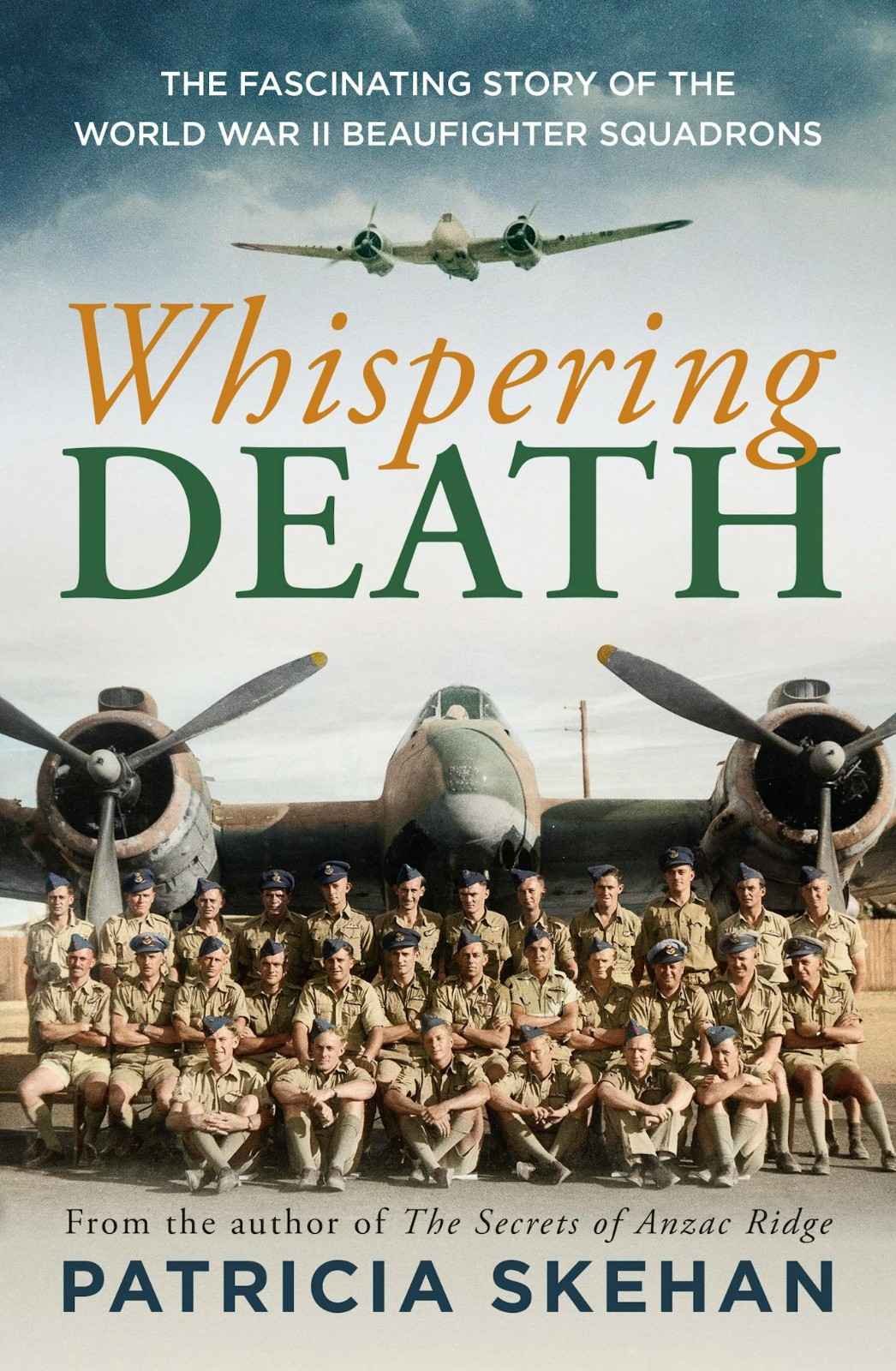
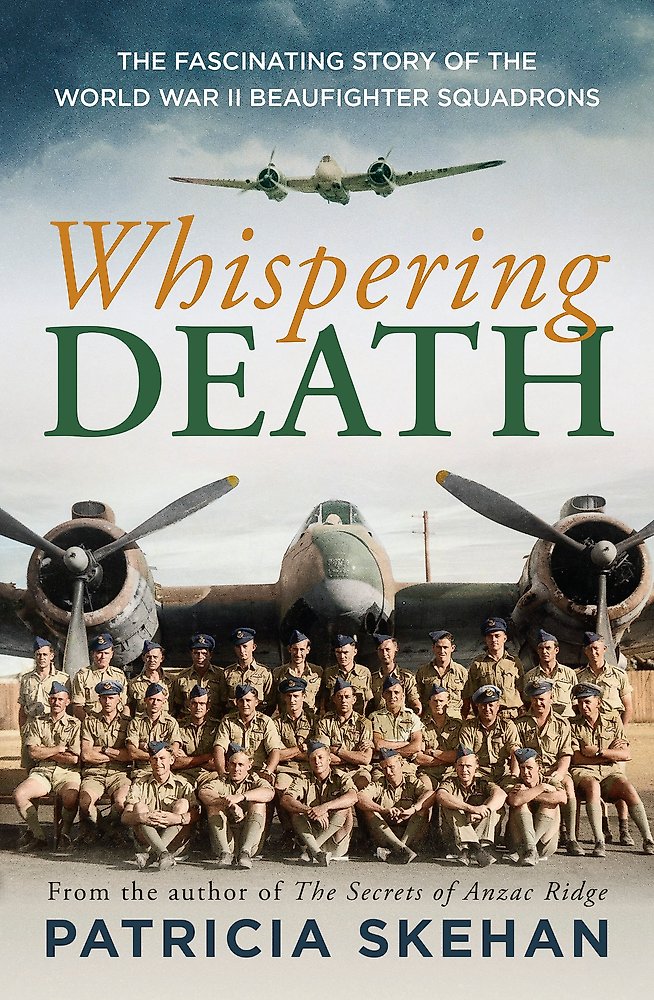
Whispering Death by PATRICIA SKEHAN follows the Australian-built Beaufighters and the legendary 93 Squadron. Adapted from the memoirs of a veteran, this is the story of the bravery, ingenuity and camaraderie of the men who flew Australia to victory in World War 2.
Read on for a Q&A with the author.
MEET PATRICIA SKEHAN
How did you encounter the story of the Beaufighters and what inspired you to write Whispering Death?
I have known ‘Aunty’ Lorna for many years but never connected her married surname to her brother, Lerryn (Bill) Mutton, OAM. When, on Lorna’s prompting, he arrived at my door in 2012, armed with boxes of primary source documents, wartime flyers, five photograph albums, lists of 93rd Squadron crew contacts, plus an illustrated Beaufighter Squadron journal and other memorabilia, I was stunned. Hearing his passion for having their story written intrigued me, but his tears, on holding one particular photograph of his Squadron leader’s grave, convinced me that this story had to be told. I grabbed my tape recorder.
Where did the name ‘Whispering Death’ come from?
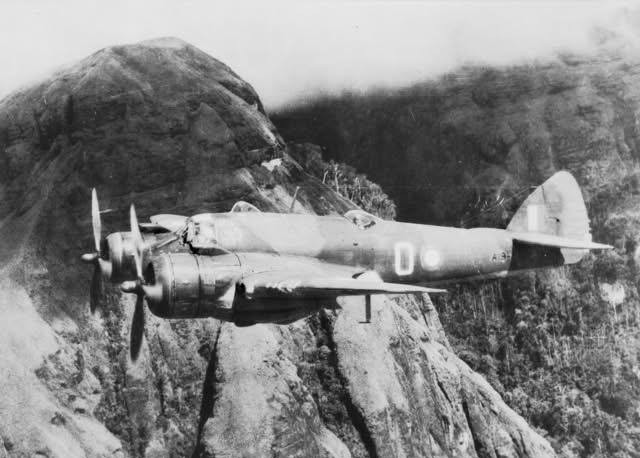
That name has been attributed to several sources, including British and Japanese origins. The Beau had twin sleeve-valve engines that rotate the same way, so there was no vibration to create that usual aircraft’s mighty roar on take-off. Other airplanes’ engines are opposing and produce that familiar rumbling sound. You don’t hear a Beau until it is overhead. By then it is too late to run for cover.
Parts of this story were transcribed from World War II fighter pilot Lerryn Mutton OAM. Did you meet with any other members of his squadron?
Yes, that list I mentioned contained dozens of contacts of their 93 Squadron Association members, but Lerryn guided me to the most relevant pilots and crew, those still alive in Sydney. Also, we recorded phone calls to several interstate members. Over the ensuing months, we visited the men. Those photo albums jogged many memories. I remained friends with several crew families till they passed away.
You are a founding executive member of the City of Canada Bay Heritage Society and a speaker for multiple historical societies. After spending so much time surrounded by the past, what have you learned about preserving it?
How important it is to retain – and publish – those memories, ‘Lest We Forget.’ Lerryn’s collection had been held by another writer for over two years. “He’s done nothing with it,” Lerryn lamented.
Despite that red flag warning, we spent several Sunday afternoons in forward planning, sorting through the twenty boxes, making folders for logical material groups, discussing possible titles, chapter headings and selecting photographs, before beginning the actual manuscript. Also visiting the impressive Aviation Museum at Narromine in central NSW, home base of the Beaufighters during WWII before they moved to Kingaroy for further training.
Your previous book, The Secrets of ANZAC Ridge in Flanders Fields, was also transcribed from letters and documents. Why do you think people seek you out to tell their stories?
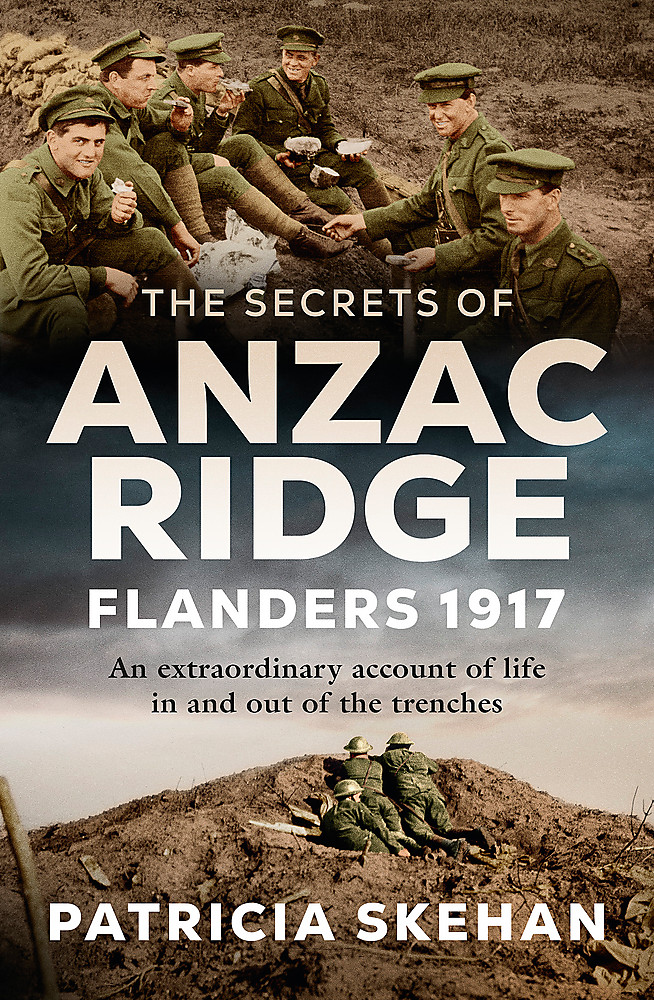 I have usually encountered their relatives with access to such diaries at numerous talks I give for Rotary, Probus, U3A or heritage associations. I express the importance of preserving our wartime stories, not letting them languish in a bottom drawer, and encourage people to contact me. However, three of my close associates provided family memoirs or records and photographs after Covid-19 meant being locked out of schools and having time to read and digest significant and compelling stories.
What is the process of writing a history book from testimony? Is it difficult creating a narrative out of another person’s voice, and do you ever inject your own personality into the writing?
As these diaries or written memoirs are primary source documents we, as researchers, do not alter them, although they are often condensed for brevity or to avoid repetition. Much depends on the author’s ability to write well, but I have been fortunate, so far, in accessing great stories. I let the narrator’s narratives speak for themselves, let their voices be heard. Then I write connecting paragraphs or observations, telling of the research behind the tales, often just as compelling. As I often state, I don’t find these stories, they find me! I do use Trove, AWM, and NAA archives for additional material.
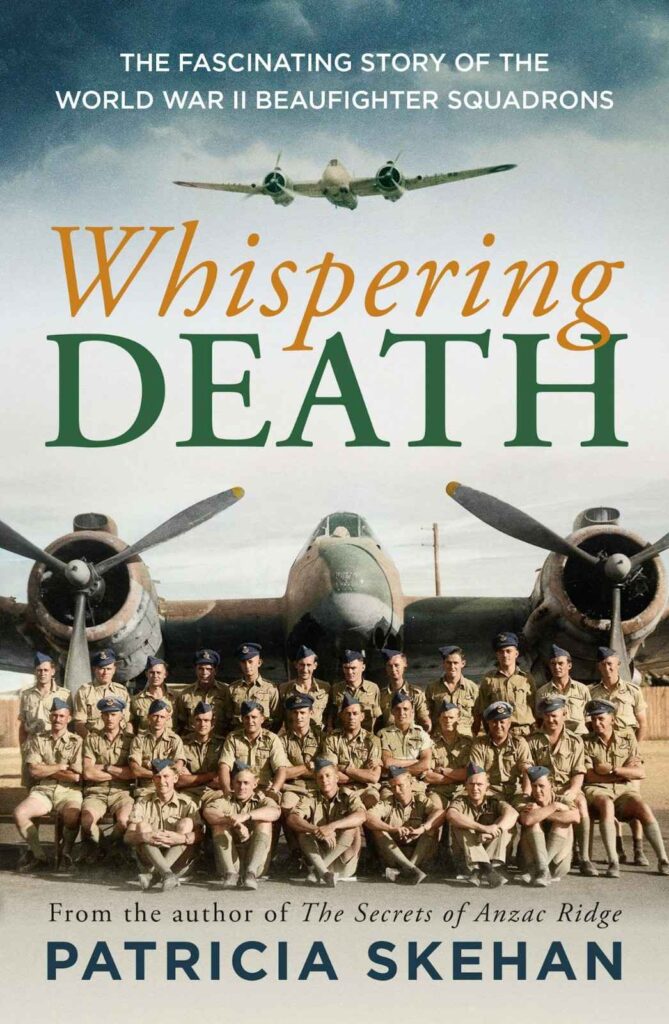 What is the history behind the nickname ‘Green Ghosts’ and why was this squadron so legendary?
As Lerryn Mutton explained to me, the 93 Beaufighter Attack squadron was the last one formed during World War II. Most catchy squadron emblems and phrases had already been used, so they struggled for a while to produce something suitable. The plane’s motley green camouflage inspired part of the name, the ‘whispering’ facet evolved into Green Ghosts and the spooky, sneaky aspect led to Spookus Sneakinus being their wacky motto.
Each squadron had specific roles to play during the war years, just as each type of aircraft had a specific purpose; bomber, fighter, surveillance, rescue, supply drop, etc. The Beau, being a low-flying plane, was more visible from the ground than high-flying jets. Its role in surveilling Sandakan and other significant areas, patrolling the coastlines, distributing propaganda and surrender leaflets and escorting fighter jets to Japan after the Armistice, helped to gain its reputation, not to mention the dashing pilots and navigators and their crazy antics.
War stories inevitably involve massacres, horror and violence, and there’s an added layer of trauma knowing these deaths really happened. How do you protect your mental health when hearing about the darker side of the past?
I take inspiration from what those men endured during the war. If they could live and die in such circumstances, surely writing about those experiences from the comfort and safety of my own home or office would be child’s play. I am privileged to have such moving, realistic stories to showcase our significant wartime history. Much is taught in our schools about overseas conflicts, but we don’t appreciate how close we came to being invaded on our homeland. Australia could have ceased to exist as a nation if that tide in the affairs of men had turned differently.
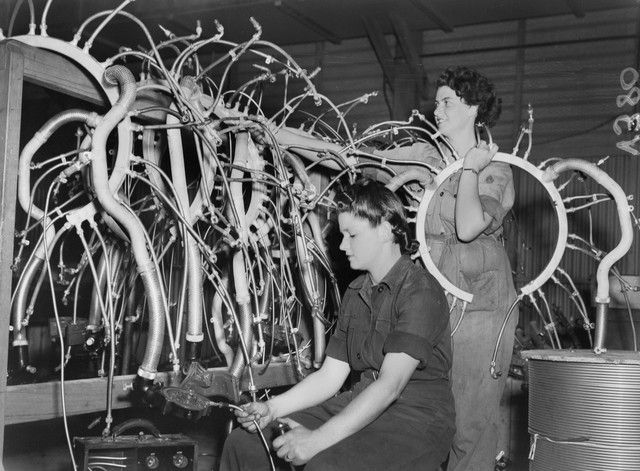
This book also focuses on the WAAF (Women’s Auxiliary Australian Air Force) and the incredible work they did in code-breaking. Will we see a separate book all about them?
I never say never but found that there was insufficient information to fill a book on this aspect of the war during my research. Most of their work was of a secret nature, and those women took their stories to the grave. My colleague, Graham Eagleton, in his gripping book, Ted and Tommy, mentioned his mother working in England for a secret sector during the war, but never revealing what happened within those missing years of their family history.
What was the most fascinating thing you learned (about history or about yourself) when writing Whispering Death?
About history? Being born on Armistice Day in 1946, I assumed that there would be another world war within my lifetime. I’m so grateful that my assumption was wrong, despite many regional wars in numerous countries. Mankind has still not learned the lessons of war, which is so futile.
About myself? In my twenties, I worked as volunteer secretary to Sergeant Frank Harley, President of the 2/6 Commando Regiment Association. I’m amazed at the twists and turns that fate had dealt me in the historical highways and byways I travel, researching the lives of men and women who made significant, often unappreciated, contributions to our freedom as a nation-state. Recently, being invited to Canberra to attend a black-tie dinner with our contemporary Commandos, my karma has come full circle. My current manuscript is titled Commandos: A War of Stealth and Shadows, which follows the adventures of several commandos identified in the Whispering Death story.
ABOUT THE AUTHOR
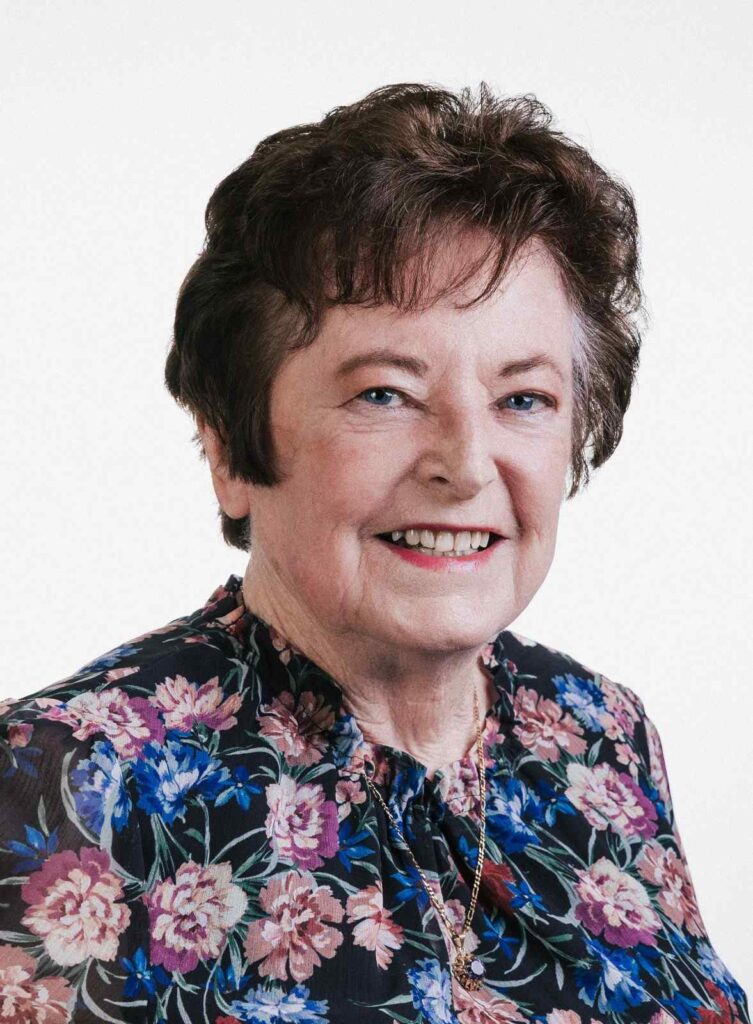 Patricia Skehan is a founding executive member of Concord Heritage, now City of Canada Bay Heritage Society. She guest-speaks for organisations including Rotary, Probus and VIEW clubs and historical societies, and lectures for U3A. She has presented heritage talks on FM radio and has been published nationally. Patricia conducts tours at Yaralla and Rivendell estates in Concord West. Since 1999, Patricia has travelled across NSW to give over 1000 heritage talks on 16 different subjects. She travelled to Britain in 2001 and 2005, researching the Thomas Walker family’s royal connections at the University of Cambridge.
In 2013, Ethel Turner’s granddaughter asked Patricia to transcribe letters from Jean Curlewis to her famous mother, written while a volunteer nursing aide during the 1919 Spanish Flu epidemic. Sourcing rare archives from Royal Prince Alfred Hospital, the Red Cross, Sydney University, Trove newspaper collections and museum sources, she found clues about Anzac secrets when given the seemingly unrelated diary of a young WW1 soldier.
Patricia was guest speaker at the Cenotaph in Sydney on Armistice Day 2020; her talk on the impact of the Spanish flu epidemic was televised nationally. Her first book The Secrets of Anzac Ridge was published in 2025
Follow Patricia Skehan on Facebook
Read more about the book on the publishers website

0 Comments