

Australian-born author GERALDINE BROOKS reveals to JENNIFER SOMERVILLE how a poignant, powerful memoir resulted from seeking time and space on Flinders Island to mourn a beloved husband.
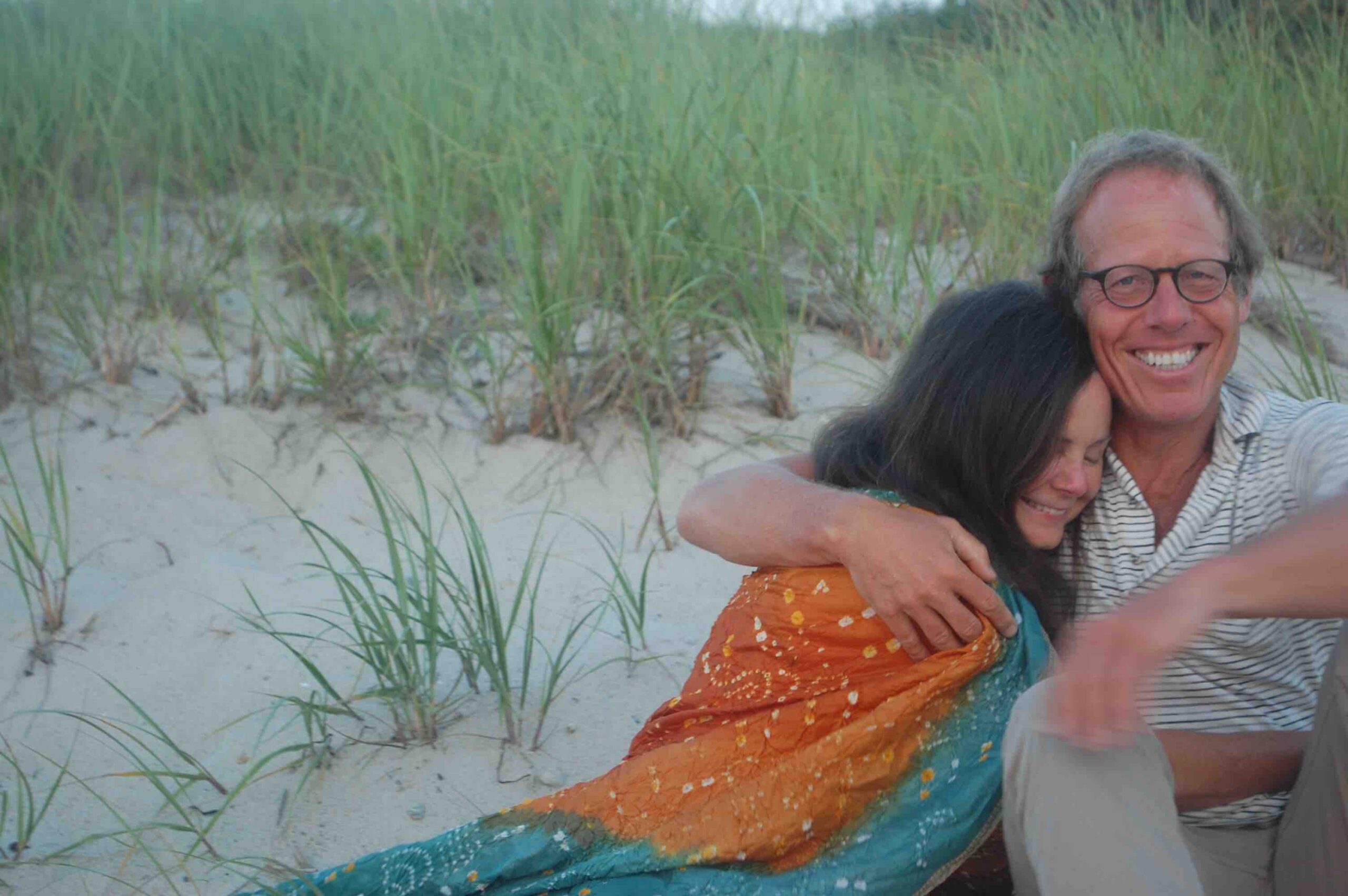
 There is one character who dominates Geraldine Brooks’ latest book, Memorial Days, her most personal work to date. That character is her late husband, author, historian, and larger-than-life extrovert, Tony Horwitz.
He died suddenly in Washington DC while on a book tour promoting Spying on the South. It was 27 May 2019, Memorial Day in the USA, when the nation remembers its military war dead.
For three years afterwards, Brooks put aside her necessary grieving to keep her life going, as an author, mother of two sons, and resident of Martha’s Vineyard, off the coast of Massachusetts.
Australian-born Geraldine Brooks is an author and journalist who grew up in Sydney. She worked for The Sydney Morning Herald and in 1982 she won the Greg Shackleton scholarship to the journalism master’s program at Columbia University, where she met her future husband.
The pair worked as journalists in many war-torn parts of the world, and each won a Pulitzer Prize, Horwitz for national reporting of grim working conditions in low-wage jobs and Brooks the fiction prize for her novel March.
Brooks and her husband had briefly visited Flinders Island in Bass Strait when she was considering a novel based on the life of Lady Jane Franklin … a project which did not eventuate, for reasons outlined in Memorial Days.
So, it was to Flinders Island that Brooks returned when she knew she had to give herself space to grieve properly.
‘It wasn’t because I was tamping down my feelings,’ she said, in recalling those days, weeks, months and years after she received a phone call from a Washington hospital to tell her that her partner of more than 30 years had collapsed and died on a Washington street.
‘I had to keep the show on the road, look after our grieving sons, doing everything I did before Tony died, as well as all the things that he had done, such as look after our finances, and I had to do it on a steep learning curve. There just wasn’t time and space enough for me to indulge in the necessary work of grieving.
‘I’m acutely aware that I was in a privileged position, and was lucky I had some security, whereas some people are not in that position.’
When she went to Flinders Island, renting a shack beside the ocean, did she intend to write a book?
‘I knew I was going to write. Writers write, that’s what we do. But whether it would be a book, and whether anybody would want to read it, I didn’t know,’ she said.
And afterwards, how did she feel?
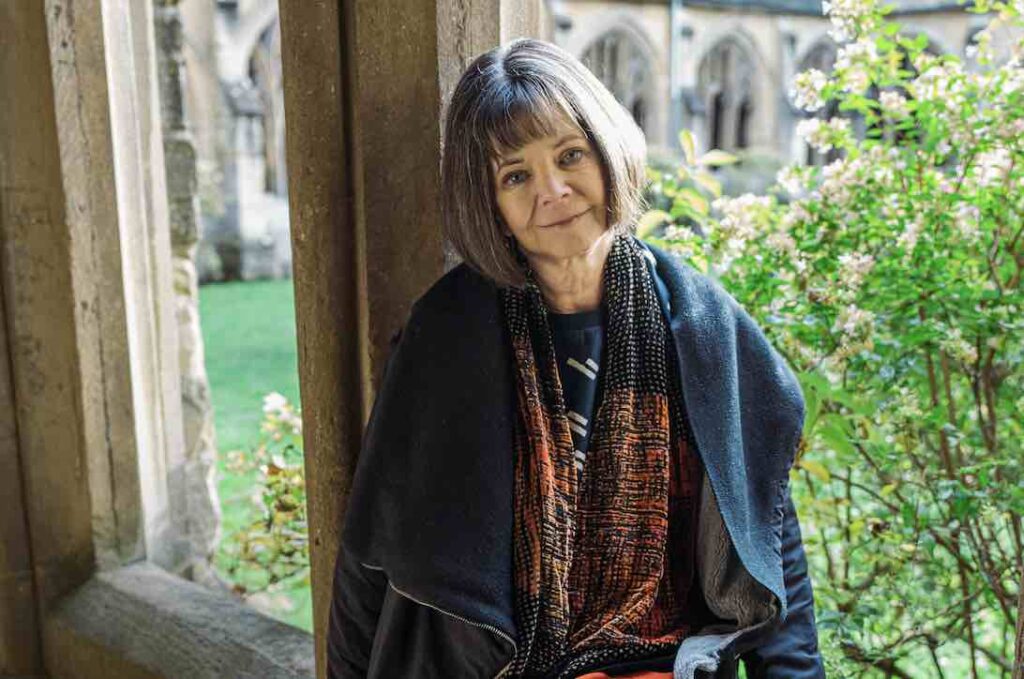 ‘I felt better. I think it was the time involved, when you have to put something down on paper, and the analysis needed. It was what I did instead of therapy. Tony’s mother went to a therapist for several months and found it helpful to be able to talk to someone about Tony and not have them say, “Yes, you already told me that”.’
The island stay, when she recalled her long and happy marriage, as well as the trauma of Tony’s death and its aftermath, brought Brooks back into what she called ‘re-alignment’ so she could actually be what she was pretending to be.
The finished work is not only a poignant remembrance of her late husband, but alternating chapters capture the wild beauty of Flinders Island, its tiny population, its solitude and its beneficial effect.
Brooks found some bureaucratic blunders made her husband’s death all the more traumatic. Her final chapter campaigns for individuals to keep a file of what they do in their marriage or partnership, so that in the sudden death of one, the other is not left floundering.
She was midway through writing her latest novel, the prize-winning Horse, when her husband died, and it took some time for her to return to it. And when she did, Brooks had a character in Horse forced to identify another character who had died by looking at a photograph … as she had had to do when she finally reached Washington after rushing from her island home in 2019.
It was an early reader of the work, a fellow writer, who drew her attention to that detail.
‘We writers tend to plunder our own lives, but I hadn’t realised I had written about that,’ she said.
What will follow this deeply moving memoir about healing the loss of a beloved husband?
‘I’m starting research for the next book, to be called The Table. I’ve just finished a term at Oxford University as a visiting fellow at New College … which always makes me laugh as it was new in the 14th century. This book was inspired by a piece of furniture I noticed when I was in Oxford several years ago, thinking of the conversations that would have happened across that old table.’
While Brooks has usually based her books on some kind of historical fact, she laughingly says part of that is because it’s ‘intriguing, and part of it is because I’m a lazy slut’.
‘It’s so much easier to know that there’s this incredible story as a basis, but if you made it up it would be implausible. Truth doesn’t have to be plausible, as Mark Twain said.
‘I like to find things that are absolutely intriguing, that we know happened, but we can’t know everything that happened. If there’s a tremendous paper trail then it’s a job for a narrative historian, like Tony was, who can unearth all this beautiful research, then make a wonderful narrative.
‘The stories I go for are the ones where the voices of the time have fallen silent, or were never heard in the first place, so there’s room for imagination.
‘You can think that this is one possible way it might have been, or this is one possible way the people living through this event might have felt.
‘Guys leave an enormous paper trail and there were plenty of documents about the Civil War in the US to understand the main character in my novel March.
‘But in the 17th century, women’s diaries, letters or journals barely existed, either because women were not allowed to become literate, or just too busy. In the two 17th century communities I’ve written about, women just didn’t get an opportunity to be educated. Girls might be taught to read, so they could read the Bible, but they did not write, as only men communicated with people outside the family.
The stories I go for are the ones where the voices of the time have fallen silent …
‘I often get asked what period of time I would like to go back to, and I answer: Absolutely none, as a woman.’
While Brooks is trying to centre her life more and more in Australia, she still has two American sons. One of whom, having been adopted from Ethiopia, is not automatically entitled to Australian citizenship, but the other one is, although born in the USA.
She is not looking forward to the Trump’s presidency, believing it will be a very unsafe time for immigrants in the US.
‘They’ll go after the most vulnerable, such as immigrants, the poor, and transgender. I hope that in two years the American electorate will have buyers’ remorse and give control of the Senate back to the other side of politics.’
Brooks knew that Tony had spent his life covering those disaffected people, typically men of the Right who romanticise the old Confederacy, who are such a foundational part of the Trump base.
‘When I watched the 2021 invasion of the Capitol, I thought that Tony’s probably had a beer with at least 10 per cent of those guys, trying to understand what motivated them. It’s a shame he didn’t live to cover those events. He spent so much time trying to document the divisions, not north against south, but rural against urban, and open the elite’s eyes to the difficulties in the economy and the way it wasn’t working for those people.’
Is Memorial Days a therapeutic book for other people who have lost loved ones?
‘I would never be presumptuous enough to say what anybody should get out of a book, but I do think it’s a cautionary tale for us all, that between one step and another, your whole life can change,’ she said.
In writing her latest two books she followed two pieces of advice: One from Ruth Bader Ginsburg was: ‘Do your work. It won’t be your best work, but it will be good work, and it will be what saves you.’ And the other, which underpins all of Memorial Days, was from Ernest Hemingway: ‘Write what you know.’
**********
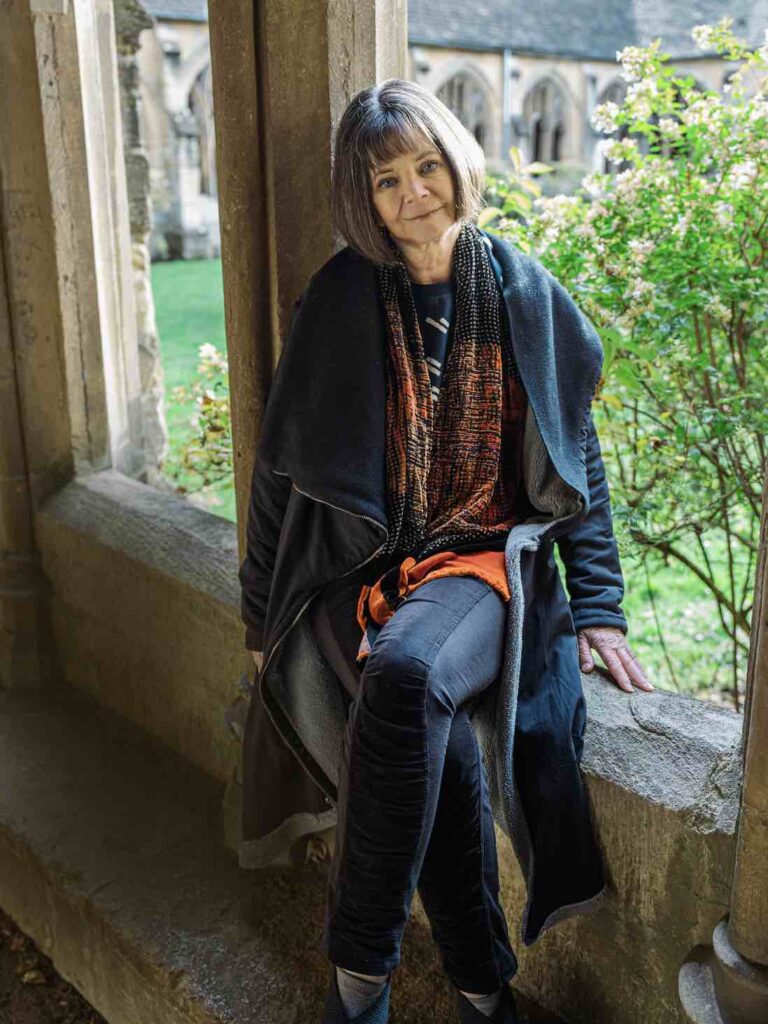
Geraldine Brooks was awarded the Pulitzer Prize in fiction in 2006 for her novel March. Her novels, People of the Book, Caleb’s Crossing, The Secret Chord and Horse were all New York Times bestsellers.
Her first novel, Year of Wonders is an international bestseller, translated into more than 25 languages and is optioned for a limited series by Olivia Colman’s production company.
She is also the author of the non-fiction works, Nine Parts of Desire, Foreign Correspondence and The Idea of Home.
In 2016, she was named an Officer in the Order of Australia.
Visit Geraldine Brooks website
.
0 Comments