





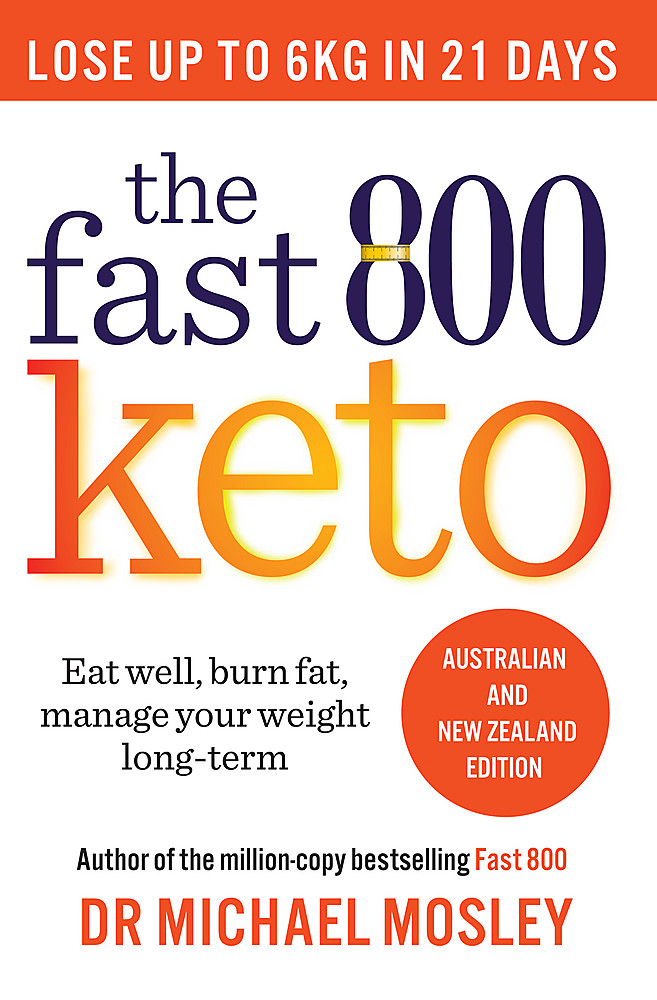
DR MICHAEL MOSLEY’s Fast 800 Keto combines ketogenic diet with low-calorie intermittent fasting for weight loss. In this extract he shares with us the results of his experiment to eat only ultra-processed food.
In 2020, I decided to do a self-experiment in which I would put myself on a medium-level ultra-processed food diet for an Australian documentary called ‘Australia’s Health Revolution’. I didn’t go crazy; I just moved onto a fairly typical Australian diet in which at least half my calories came from ultra-processed food.
I went back to eating cereal for breakfast, fruit yoghurts, plenty of snacks and some microwaveable frozen meals. Several times a week I also went to a fast-food restaurant and had a burger and chips, with Coke to wash it down, or fried chicken and chips, again with a sweet, fizzy drink. I had my weight, waist, blood sugars and blood pressure measured before starting on this diet, and then at the end of two weeks.
At the start I quite enjoyed it, eating the sort of food I hadn’t had for a long time. I also ate foods I had never tried before, like the cheese sausage, a sausage stuffed with cheese which I am told is particularly popular with Australian truckers. When I checked out the ingredients of a typical cheese sausage online, this is what I saw: Pork, water, cheese, milk, potato starch, sodium nitrite (a preservative), dextrose (a form of sugar), diphosphate, sodium acetate, sodium carbonate and sodium ascorbate. Yummy. One of the things I quickly noticed, on my new diet, was that within hours of eating, I would get really hungry and crave more junk food. I soon started sleeping badly, snoring loudly, and in a matter of days I felt far more lethargic than normal. I was tracking my blood sugar levels throughout the two weeks and within a few days they started to rise, alarmingly. I was more anxious than normal, and that contributed to my need for more comfort food.
Like me, he soon started piling on the weight. He slept badly, felt sluggish and became constipated. He also started craving more and more junk food.
After two weeks, I did repeat tests. By now I had put on 3kg, my waist had expanded by around 3cm and my blood sugar levels had gone into the diabetic range. My blood pressure had also soared to 140/90, which alarmed the GP who tested me.
So I got out my keto urine sticks (in order to be able to measure levels of ketones in my urine) and put myself on the Fast 800 Keto diet. Within 10 days I had shed the weight, and when I was retested, everything had returned to normal, which was a huge relief.
A friend of mine, Dr Chris van Tulleken, who is particularly worried about the impact that ultra-processed foods are having on the bodies and brains of children (as I pointed out earlier, they eat far more of the stuff than adults), did a similar self-experiment for the BBC for a programme called ‘What Are We Feeding our Kids?’.
He went further than I did. For a month, 80 per cent of everything he ate came in the form of ultra-processed food, such as cocoa-flavoured breakfast cereals, chicken nuggets and microwaveable lasagnes. Eighty per cent sounds like a lot, but that is what around one in five Brits eat.
Like me, he soon started piling on the weight. He slept badly, felt sluggish and became constipated. He also started craving more and more junk food.
In four weeks, he put on 6.5kg, much of it fat, and there was a significant rise in his appetite hormones. But the most striking changes took place in his brain. He had his brain scanned before and after the experiment, and to his horror discovered that eating all that ultra-processed food had, in a month, literally rewired his brain.
Rachel Batterham, who is Professor of Obesity, Diabetes and Endocrinology at University College, London, and who supervised his self-experiment, told Chris that she had detected a lot of new connections in his brain, many of them between the reward centres and the cerebellum, an area that controls automatic behaviours. In other words, he appeared to have been reprogrammed by his new diet to seek out and eat even more of these unhealthy foods. Chris managed to lose the weight he had put on, but who knows if his brain will ever fully recover.
Although fats, carbs and sugar have in turn been blamed for the current obesity crisis, there is mounting evidence that the real problem is ultra-processed food, which is typically high in poor-quality fat, carbs, sugar and salt, making it incredibly calorific and hard to resist. And as Dr Chris van Tulleken discovered, once you start eating these foods they can mess with your brain.
We know that eating lots of ultra-processed foods, particularly when you are young, contributes to anxiety and depression.
Not only are ultra-processed foods full of the unhealthy stuff, they also tend to be low in fibre, so we go on eating them without feeling sated. On top of that, given that eating fibre is essential for keeping your gut bacteria in good shape, a diet high in ultra-processed foods is going to damage your microbiome and lead to inflammation in the gut.
And finally, ultra-processed foods tend to be low in protein, and as we are about to discover, protein is a key driver of appetite.


0 Comments