





MICHAEL MOHAMMED AHMAD is the founding director of Sweatshop Literacy Movement and an award-winning author. He has also been shortlisted for the Miles Franklin Award for his novels The Lebs and The Other Half of You.
Bugger is his fourth novel that looks at the devastating impact of abuse within families.
 What are you reading now, and why?
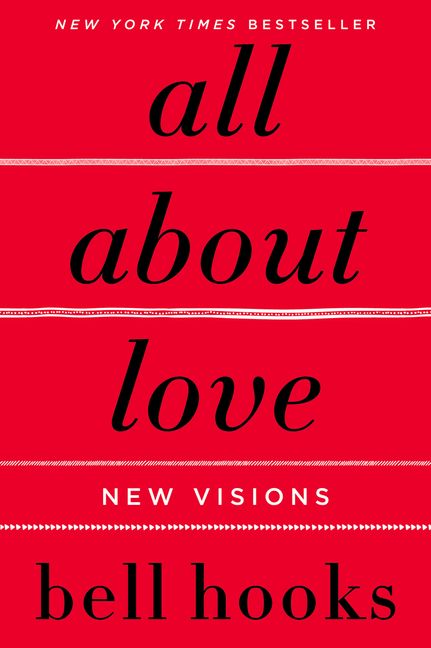
All About Love by bell hooks has been my daily ritual for the past 26 months. We witnessed the most unspeakable horrors, live-streamed directly onto our smart phones, and this book gave me the courage to keep going…
 What books have made you cry, or laugh out loud?
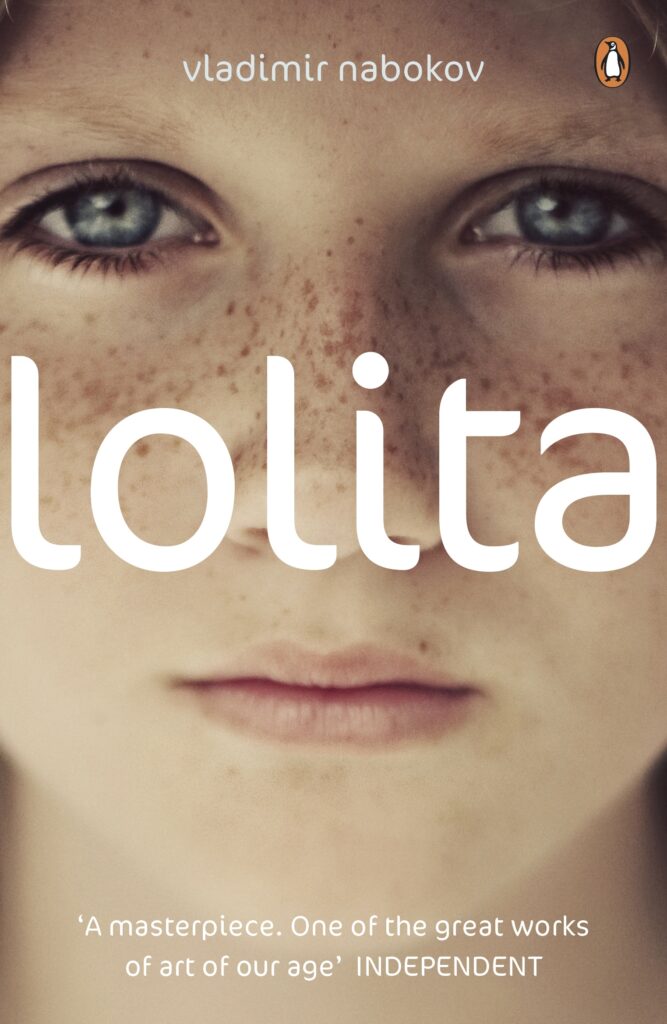
Lolita by Vladimir Nabokov always makes me cry. It is the most beautiful book ever written. About the most revolting crime a person can commit. Told from the perspective of the worst kind of human.
If you were to recommend two books to a friend, what would they be?
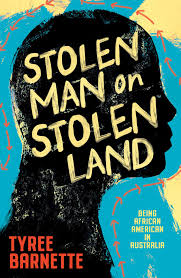
 Stolen Man on Stolen Land: Being African-American in Australia by Tyree Barnette because we can learn so much about who we are by seeing ourselves from the outside.
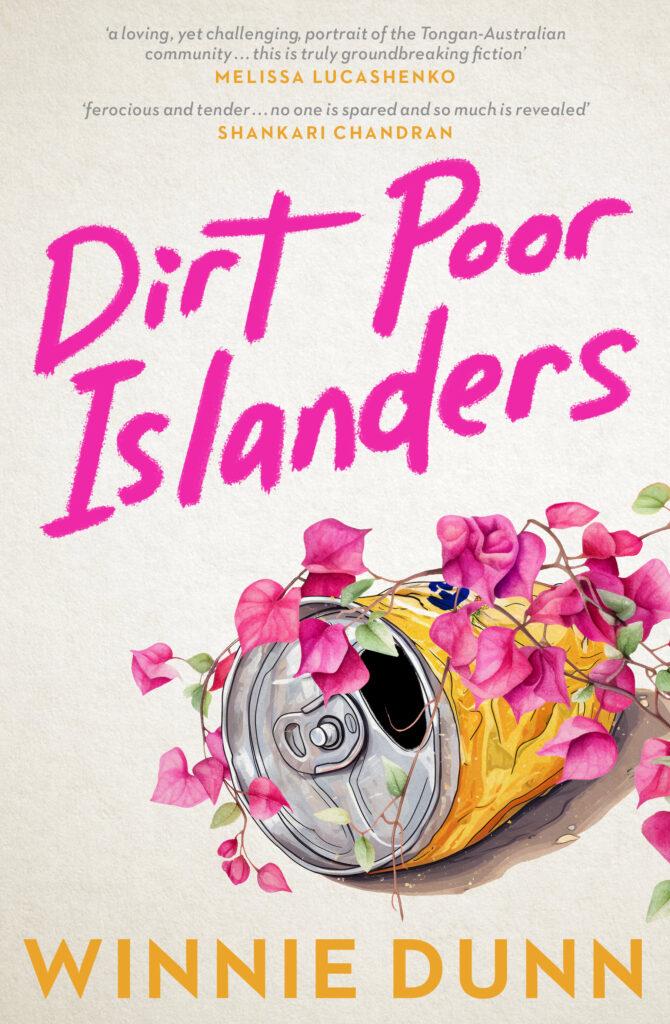
Dirt Poor Islanders by Winnie Dunn because it is the first Australian novel written by a Tongan author, which expands the boundaries of what we ever thought was possible in Australian literature.
Can you remember the first time you understood the power of storytelling in your own life?
Bloodsport. The year was 1989 and Jean Claude Van Damme appeared in his first lead role as Frank Dux, an American martial artist who competed in the underground full-contact tournament called the Kumite. Frank Dux’s opening fight was against a sun-kissed man in a traditional Saudi headdress named Hossein. As soon as the bell rang, Frank took out Hossein with a few quick punches, breaking the world record for the fastest Kumite knockout in history. But shifty Hossein did not concede defeat, and after Frank was declared victorious, the Arab pounced up and attempted to take a cheap shot at him from behind. Astonishingly, Frank pre-empted the attack, delivering a reverse elbow-punch combination that permanently sent Hossein to the canvas.
If I ever had a fist-fight at school, I planned to embody the spirit of Frank Dux – practising on my bed, throwing three straight punches, one roundhouse kick and one helicopter fly-kick, which would surely concuss any foe I went up against.
The next day, at lunchtime, an older boy from Year 3 named Thomas Pearce, who had splitting blue eyes, called me a ‘Lebanese sh*t’. As the other kids in his grade looked on, I charged at him, throwing a succession of punches and kicks, each of which missed Thomas by a metre. Thomas stood back, watched me tire myself out, stepped in towards me, and then gave me one hard push, sending me straight to the dirt like a sack of horse manure.
Lying on the ground while Thomas and the other kids laughed and chanted, ‘Lebanese sh*t, Lebanese sh*t’, I immediately understood the power of storytelling: I was not Frank Dux. I was Hossein.
In Bugger, you confront the painful reality of abuse within families. What made it important for you to bring this story to light?
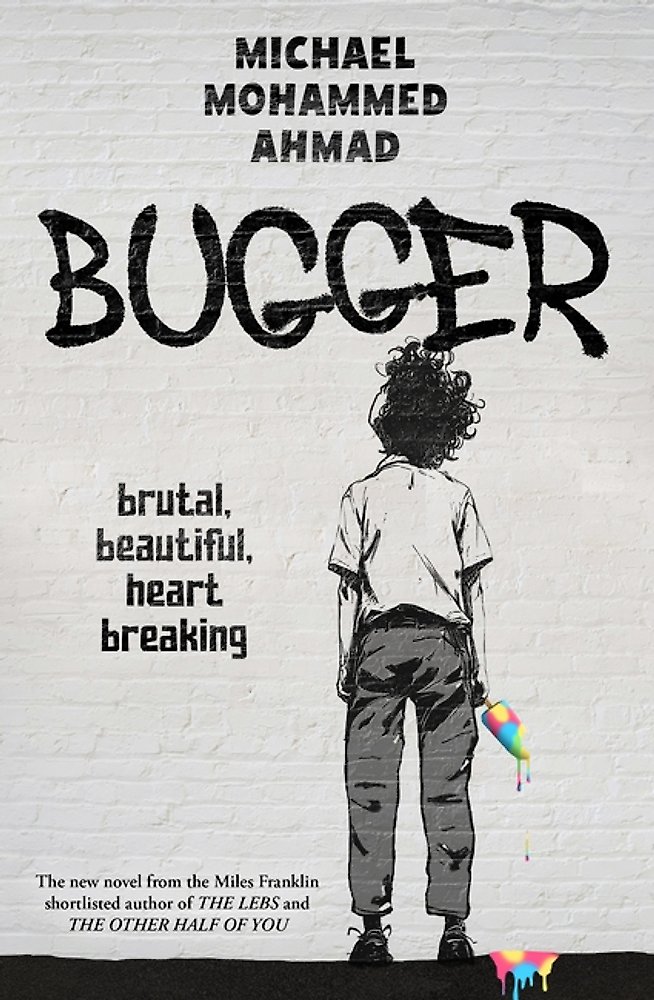
The most painful aspect of the abuse that my siblings and I faced as children was not the crime itself; it was the fact that when we spoke out, the adults in the room threatened us, silenced us, covered it up and protected the perpetrators.
After discussing my intentions for this book with my five siblings, and receiving their blessing, I made the decision to reclaim what had been taken from us – to expose a horrible truth that had been hidden for two decades and, hopefully, inspire other survivors to find the strength and support to do the same.
You also explore how the betrayal of a loved one can shake a person’s sense of trust and self. Are there particular stigmas or misconceptions around these experiences that you hope the book helps to challenge?
Please allow me to answer this question through a very specific prism: the stupid things men say. Indeed, whenever you ask most men about child abuse, they usually respond with some moronic version of: ‘I swear to god, if anyone ever hurts my girl, I’ll literally kill ’em.’
This is an easy fantasy for wannabe-tough-guys to concoct when they’re imagining the perpetrator to be some creepy unloved stranger lurking in the sewer. But it becomes far more difficult and terrifying to confront such a crime when the perpetrator is revealed to be just a ‘normal person’ with an ‘ordinary life’ who is very close to you: a father, or brother, or uncle, or nephew…
A ‘real man’ rises above the Hollywood version of child abuse and confronts the truth, regardless of how painful and frightening that truth may be. A ‘real man’ pursues justice, care and healing; not for his image, not for his ego, not for his buddies. For the victim. Only for the victim.
‘As a creative writer, I always attempt to create multifaceted characters based on my lived experiences, which reveal the messiness of being a victim and survivor, and the nuance in being an abuser and perpetrator.’
Bugger reveals how the boundaries between safety and danger can blur when abuse comes from within a family. What did you want readers to understand about that emotional conflict?
The biggest issue with our current understanding of child abuse is the dichotomy between ‘perfect victim’ and ‘absolute monster’. Neither exist. Real human beings are complicated. Real life is complicated.
As a creative writer, I always attempt to create multifaceted characters based on my lived experiences, which reveal the messiness of being a victim and survivor, and the nuance in being an abuser and perpetrator. Together, I hope this framework provides Australian readers with a realistic and honest portrait of child abuse, which paves the way for meaningful intervention and rehabilitation.
If you could bring six people who’ve inspired or shaped you in some way, living or dead, together for dinner, who would you invite to the table?
My mother. My grandmother. My great grandmother. My great great grandmother. My great great great grandmother. And my great great great great grandmother.
In writing a book that confronts such a painful reality, what kinds of conversations do you hope it will open up within families and communities?
Bugger is told over a single day and a single night, in the present tense, from the point of view of a 10-year-old boy. As such, the narrator is an autobiographical version of myself during the most harrowing and painful experience of my entire life.
It is often easy to look back on a horrific incident with clarity – to obtain the right words and language and insights to recognise and articulate that a crime had certainly been committed. But as a child, the experience is not only beyond anything joyful, it is even beyond anything painful; it is something far more tragic: complete emptiness. A child does not know what is happening to them, they don’t know why it is happening to them, and the future looks like a dark corridor bolted shut on the other end.
Unlike my previous three novels, which all conclude with a sense of closure and fulfilment for the protagonist, this time I made the difficult decision to close the book with a question mark.
Bugger willingly hands the final chapter over to you, my dear reader. I invite you, with all my heart, to decide what happens next: what action do you take on behalf of a helpless child when confronted with such a difficult reality?
**********
ABOUT THE AUTHOR
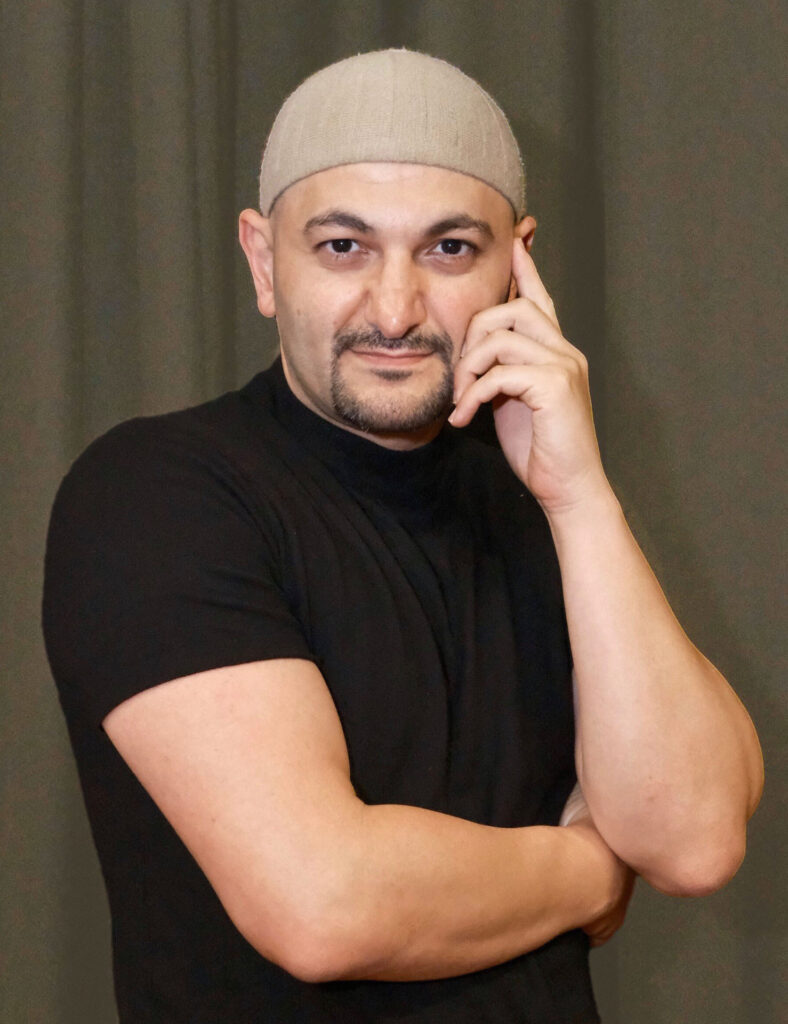 Michael Mohammed Ahmad is the founding director of Sweatshop Literacy Movement and editor of the critically acclaimed anthology After Australia (Affirm Press, 2020). Mohammed’s debut novel, The Tribe (Giramondo, 2014), won the 2015 Sydney Morning Herald Best Young Novelists Award. His second novel, The Lebs (Hachette, 2018), won the 2019 NSW Premier’s Multicultural Literary Award and was shortlisted for the 2019 Miles Franklin Award. His third novel, The Other Half of You (Hachette, 2021), won the Queensland Literary Award for Fiction Book of the Year, and was shortlisted for the Miles Franklin Award and the Voss Literary Prize. Mohammed received his Doctorate of Creative Arts from Western Sydney University in 2017.
Visit the Sweatshop Literacy Movement



0 Comments