


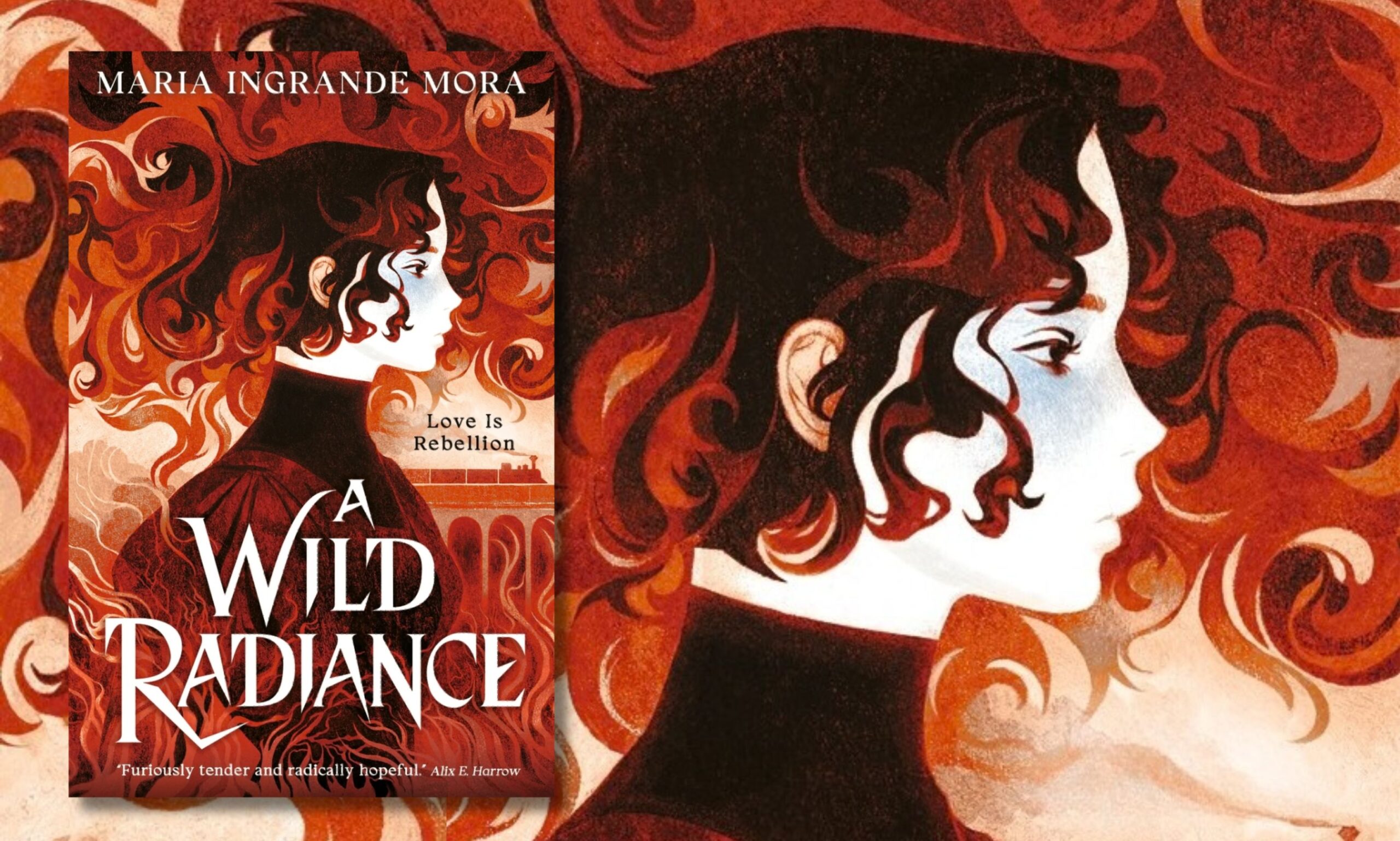
A Wild Radiance is a searing and romantic fantasy about an oligarchic state on the verge of a magical industrial revolution.
We caught up with the author MARIA INGRANDE MORA to hear about what she is reading.
MEET MARIA INGRANDE MORA
What are you reading now?
 I’m listening to Red City by Marie Lu and reading The Redwood Bargain by Markelle Grabo.
If you were stranded on a desert island and you could only have three books – what would they be?
Swordspoint by Ellen Kushner
The ‘Tawny Man’ Trilogy (Fools Errand, The Golden Fool, Fool’s Fate) by Robin Hobb
The Spear Cut Through Water by Simon Jimenez
Where is your favourite place to read?
I have a hammock swing on my screened-in porch and I adore reading on it and listening to birdsong and windchimes.
 Do you read one book at a time or multiple?
I often read one book on my e-reader and one on audio. I listen to books slowly because I typically only listen while getting ready and showering in the morning, and when I’m doing chores.
Do you use a bookmark or fold the corners of pages?
I fold the corners! My poor books… I will simply lose bookmarks.
What sparked the idea for A Wild Radiance?
After traveling to Rocky Mountain National Park in Colorado, I couldn’t stop thinking about the conservation of public lands, and how much they’re constantly threatened by industry. I’ve always been into the idea of exploitation and industrialization of magic, and the road trip was the perfect unlock for me: I wanted to combine magic-as-technology with a beautiful rural setting.
The final push toward starting the draft was listening to Burn Down the Mission by Elton John and beginning to understand some of the emotional stakes at play. I actually have some messy brainstorming notes in a notebook I bought in Denver before flying home from that trip. I find travel to be very catalytic when it comes to story.
The magic of radiance is central to your world. How did you come up with this magic system?
It took some playing around to nail down the classifications of Children of Industry, but I knew from the start I wanted different categories of magic user based on the function of the magic. Transistors use magic as a weapon, Conductors use magic as a tool, Generators create magic as a power source, and Animators have a more symbiotic relationship with magic. Oftentimes classifications like these can be used to propel a character’s lack of belonging. Here, Josephine isn’t sure she was meant to be a Conductor, and she struggles to perform up to expectations.
 Are there particular scenes in the book that you’re especially proud of, or that you loved writing the most?
The Continental Exposition was the culmination of a lot of research and stress – which is oftentimes the perfect recipe for effective writing. I’m very proud of how it turned out, especially the building tension and all-too-familiar heartache of injustice at scale.
I had the most fun writing the river raft escape. I felt very immersed (no pun intended) in the cold rushing water and the adrenaline rush.
What book character would you be, and why?
I feel most aligned to Julian, though he has a much more mathematical brain than I do. I love my people fiercely, but it takes me a while to warm up. I have a strong sense of justice.
At the same time, I can definitely relate to Josephine’s impulsive, emotional nature. Though she’s much quicker to resort to violence than I am.
I’d love to say that I’m like Nikola but she’s simply ten thousand times more charismatic than I am.
If you could meet one author (living or dead) – who would it be and why?
I would love to chat with C.S. Pacat about her world building and the ways she subverts reader expectations and genre tropes.
ABOUT THE AUTHOR
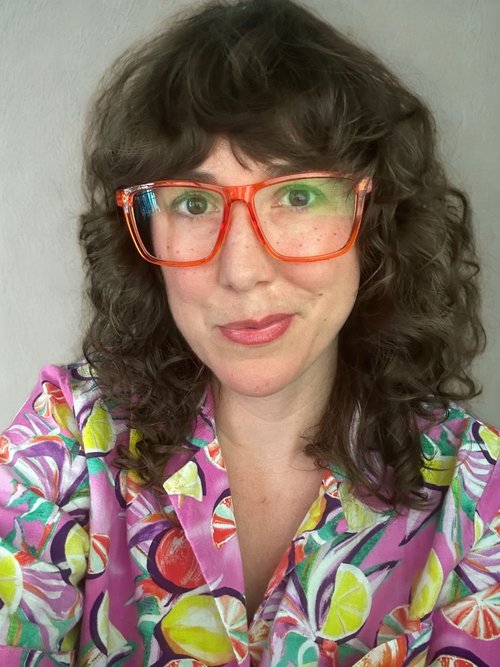 Maria Ingrande Mora (they/she) is the acclaimed author of The Immeasurable Depth of You, an Amelia Elizabeth Walden Award finalist. Their YA debut, Fragile Remedy, was selected as Junior Library Guild Gold Standard Selection. Their graphic novel series, Ranger Academy, featured one of the first nonbinary characters in the Power Rangers universe. Their forthcoming young adult fantasy, A Wild Radiance, will be released January 2026. A graduate of the University of Florida, Mora lives in St. Petersburg with three cats and two teenagers.


0 Comments