



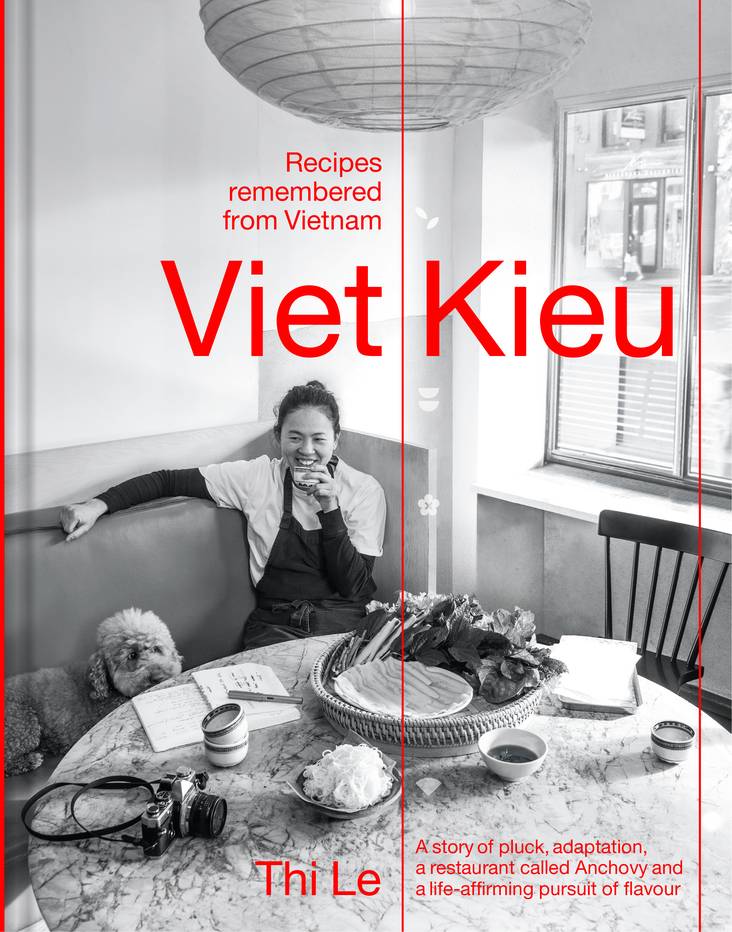
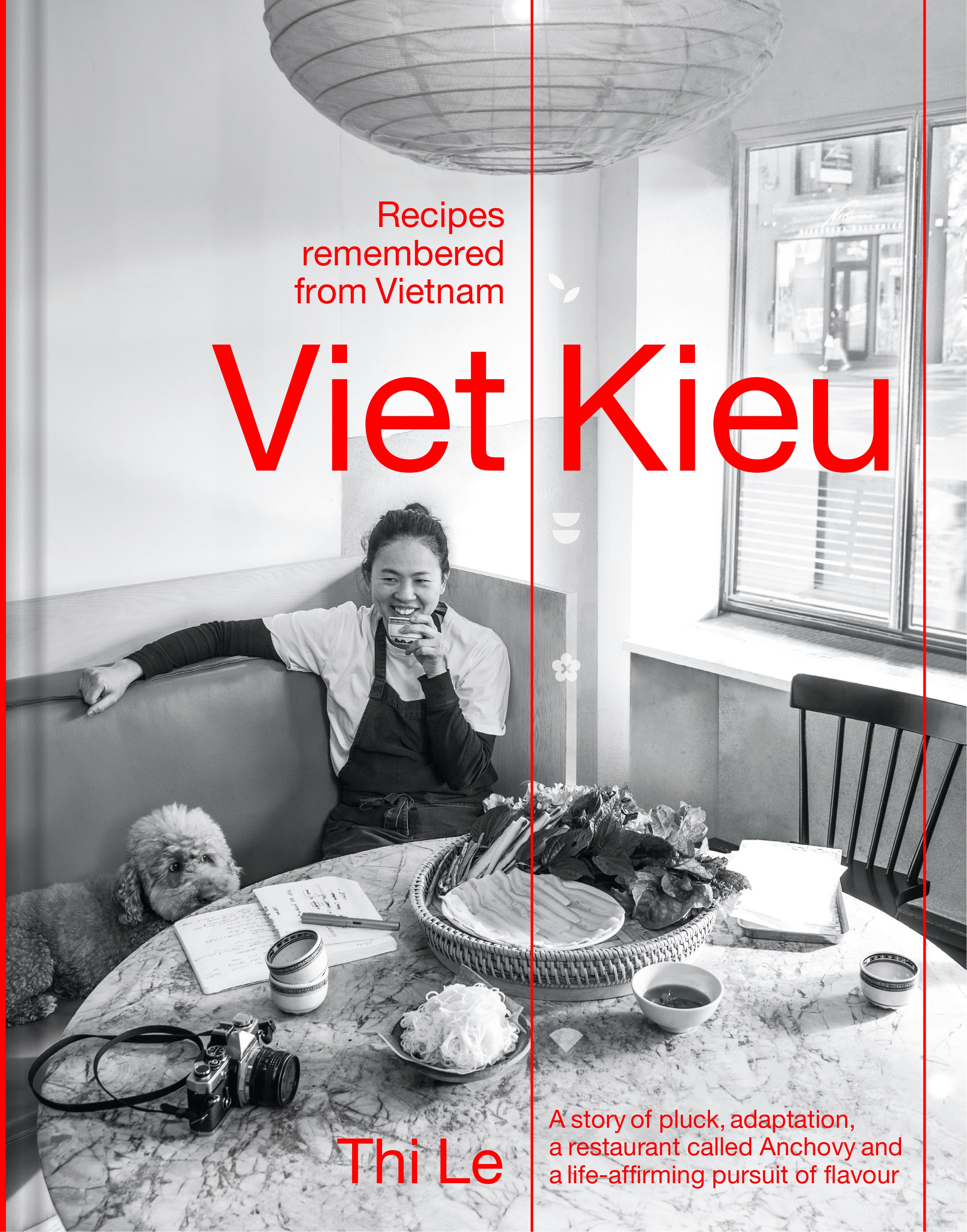
Viet Kieu explores the heart of Vietnamese food and cooking techniques, as interpreted by acclaimed chef Thi Le.
Viet Kieu adj., noun: Person of Vietnamese ancestry living abroad; foreigner in a familiar country.
Self-described viet kieu has spent her life navigating her place across two worlds while never feeling truly at home in either one. The movement between the two is what defines her remarkable approach to ingredients and flavour.
Viet Kieu includes classics like Cháo gà (Chicken congee) and the southern-influenced Can chua chanh dây (Sweet & sour fish soup with passionfruit), to a vibrant Prawn goi salad with a nuoc mam dressing, and the basics for fermenting Com me (sour rice), along with communal feasts like a Viet Cajun seafood boil-up and the beloved leafy ‘Wrappy guy’, each of this book’s 100-plus recipes reflect Thi’s unending appetite for food that is alive with freshness, a relentless curiosity and an uncompromising desire to distil the cuisine of her heritage through a modern lens.
Viet Kieu also tells the compelling story of a girl raised in outer western Sydney in a home where narratives of upward mobility were absent. Where a safe identity felt elusive. It’s a tale of hardship, deep resilience, cooking as a life raft, a groundbreaking restaurant in Melbourne – and fierce love too.
Here’s a recipe to share.
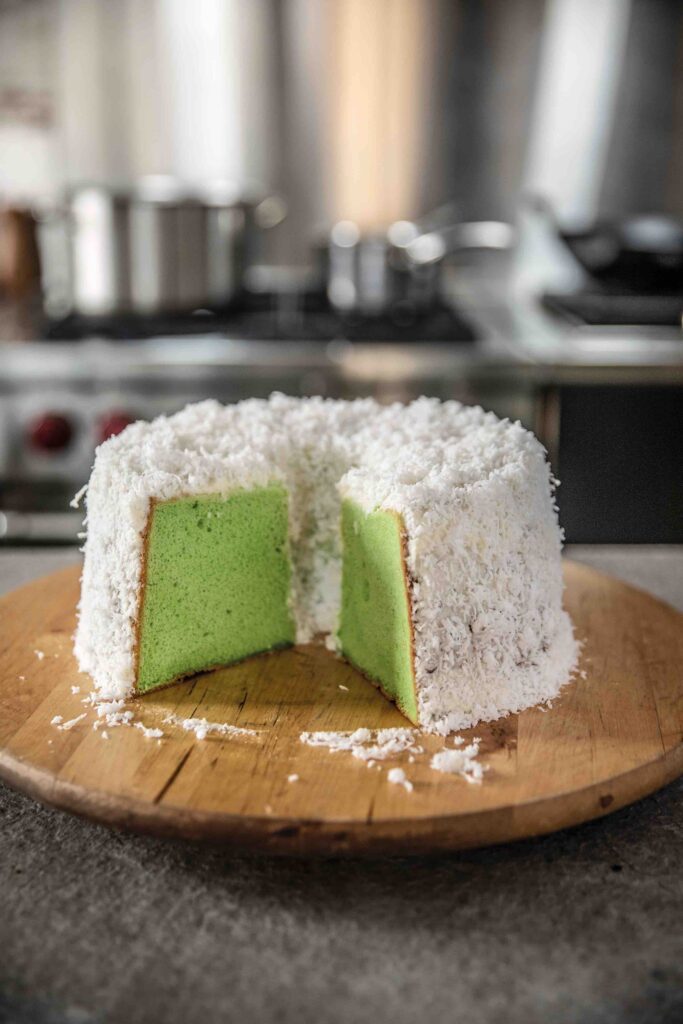
Pandan Chiffon Cake
A pandan chion cake represents a childhood memory for many of us. Some of us scoff it balled up into a single dense morsel; others eat it slowly, mesmerised by its fragrance and lightness. Pandan is an interesting food item to describe. The aroma is vanilla-like, cut with a bit of greenness.
I find dog owners understand the smell innately – it is the smell of a dog’s paw pads, a sweet grassy note. I owe the development and refinement of this recipe to Kim Chin, a fellow kieu, who is as passionate about nostalgic desserts as I am.
Serves 12
8 egg yolks
200 g (7 oz) caster (superfine) sugar
100 ml (3½ fl oz) pandan juice (see notes)
50 ml (1¾ fl oz) coconut cream
60 ml (¼ cup) vegetable oil
¾ teaspoon pandan essence
¾ teaspoon natural vanilla extract
150 g (5½ oz) plain (all-purpose) flour, sifted
2 teaspoons baking powder
pinch of salt
10 egg whites
1 teaspoon cream of tartar
Coconut whipped cream
3 g (1/10 oz) gelatine leaves (gold strength)
2½ teaspoons cool water
130 g (4½ oz) white chocolate callets
325 ml (11 fl oz) thickened (whipping) cream
175 ml (2/3 cup) coconut cream, at room temperature
Salted coconut
200 g (7 oz) freshly grated mature coconut
pinch of sea salt
Notes
You can make the pandan juice by blitzing 500 g (1 lb 2 oz) pandan leaves with 100 ml (3½ fl oz) water. Strain the mixture before using.
Pandan essence is necessary for both its aroma and aesthetics. Find it with the food colouring at the supermarket.
The cake tin is the same one used for angel food cake, 25 cm (10 inches) in diameter.
Make the cake
1. Preheat the oven to 170°C (350°F).
2. Place the egg yolks and 120 g (4¼ oz) of the caster sugar in a mixing bowl. Using an electric mixer, whisk until light and aerated.
3. Whisk in the pandan juice, coconut cream, oil, pandan essence and vanilla. Stir the sifted flour, baking powder and salt through.
4. In a separate bowl, using clean beaters, whisk the egg whites until frothy. Gradually add the remaining 80 g (2¾ oz) of caster sugar and the cream of tartar, whisking until firm peaks form.
5. Gently fold one-third of the egg white meringue at a time through the yolk mixture.
6. Pour the batter into a large ungreased 25 cm (10 inch) angel food cake tin. Smooth the surface. Run a skewer through the batter, then drop the tin once from a height to pop any large air bubbles.
7. Bake for 40–42 minutes, then check for doneness. Use your finger to gently press on the centre of the cake. If the cake springs back, then it is done. If your finger indent remains, cook a little longer.
8. Remove from the oven and leave to cool upside down in the tin.
9. Once fully cooled, remove the cake from the tin by running a sharp paring knife around the inside of the tin.
10. Without the icing, the cake will keep for up to 3 days in the fridge if properly covered with plastic wrap.
Make the coconut whipped cream
11. Place the gelatine leaves in a small bowl, cover with the water and leave to bloom for 10–15 minutes; it should form a gel-like mass.
12. Place the chocolate in a heatproof bowl.
13. Heat the cream in a saucepan over medium heat, being careful not to let it boil. Pour it over the chocolate and stir until melted.
14. Add the gelatine and stir until dissolved, then stir in the coconut cream.
15. Strain the mixture through a fine-meshed sieve and chill to set for at least 1 hour.
16. Whip the coconut cream to stiff peaks. Set aside.
Ice the cake
17. Place the cake on a rotating cake stand. Using a palette knife and the help of the cake stand, spread the coconut whipped cream all over and around the cake.
18. Mix the salted coconut ingredients together and sprinkle over the cake. Once iced, the cake will keep for 2 days in the fridge, but it’s best eaten on the same day.
 ABOUT THE AUTHOR
 ABOUT THE AUTHOR
Chef Thi Le is a significant voice in shaping Australia’s cultural dining landscape. She has consistently championed the progression of Vietnamese cuisine in our culinary psyche since opening her restaurant, Anchovy, in 2015. Her aim is to use her platform as a restauranteur in the industry to advance the identity and ethos of Vietnamese and South East Asian cuisine.
Since opening Anchovy, Thi has been recognised within the industry with a spate of awards including Gourmet Traveller Chef of the Year 2023 and Melbourne Food and Wine’s Trailblazer 2023 . Thi has most recently opened Jeow (2022, Laotian cuisine) and Ca Com (2021, wood-fired banh mi) to much media and industry recognition.


0 Comments