


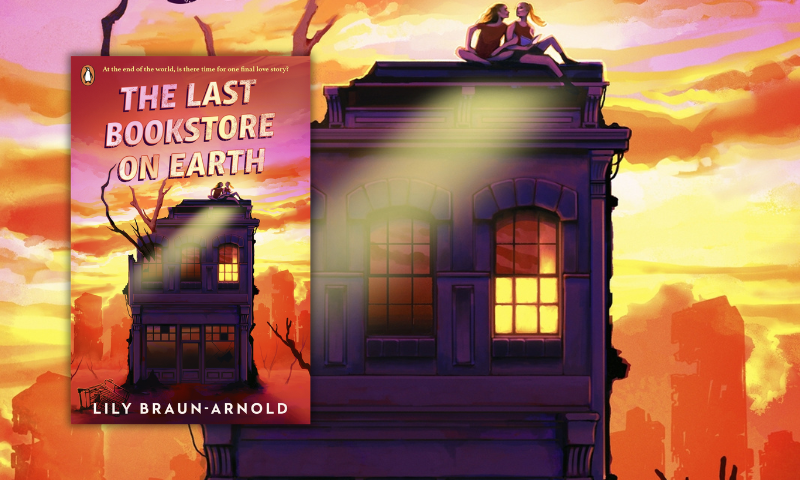
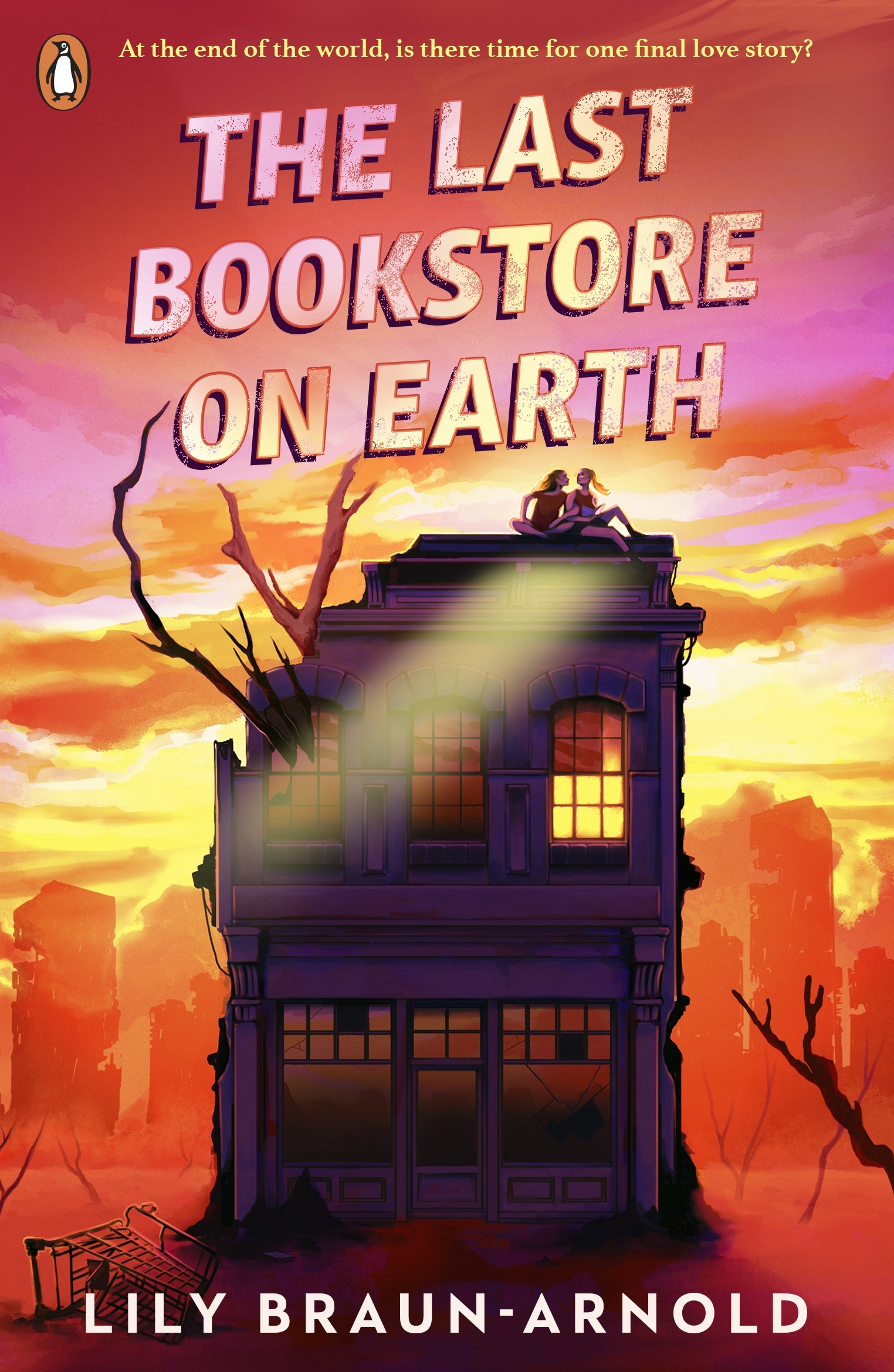
LILY BRAUN-ARNOLD’s debut novel, The Last Bookstore on Earth, is a timely story of queer love and survival set against the backdrop of a climate change apocalypse.
What inspired The Last Bookstore on Earth?
The Last Bookstore on Earth was inspired by my love for the local bookstore that I worked at throughout high school. While there, I saw firsthand the amount of community that books and bookstores provide, and it was really important to me to capture that. When I was in high school, the bookstore was a constant in my life. Liz’s bookstore functions the same way for her – despite what has happened to the world around her, she still can rely on her bookstore.
Your novel skilfully blends climate apocalypse with a love story. What inspired you to combine these genres, and how did you balance the intimate character dynamics with the larger environmental catastrophe?
To me, the apocalyptic genre really hinges on relationships – if you don’t have a person you care about during the end times, you don’t really have anything at all. Because of this, it was important for Liz to have someone she loved, whether romantically or platonically. The larger scale disasters and the more personal, small, disasters go hand in hand for Liz. Her relationship with Maeve is interwoven with her quest for survival, and both threads of the story progress together.
The bookstore serves as both a physical shelter and symbolic safe haven in your story. What made you choose this particular setting, and how does it reflect themes in the novel?
My choice in setting was partially because of my own experiences working in a bookstore, but also because of the escapism that books and reading provide. As cheesy as it sounds, no matter what happens in the world around you, your favourite books and characters – as well as the comfort they provide – remain the same. In a way, the setting reflects Liz’s own reluctance to change. When the world ends, she goes back to the bookstore because she’s comforted by it, and the books that the bookstore contains mirror that sense of ‘sameness’ that Liz craves.
The protagonist, Liz, collects stories from survivors who pass by. How do these collected stories shape the larger narrative, and what role does storytelling play in survival?
Liz leads a rather sheltered life at the bookstore, at least until Maeve arrives, and the stories that she collects allows her to understand the world beyond the bookstore. Liz is able to vicariously experience life outside and preserve those experiences for others. In a world where very few methods of recording still exist, this is one of the ways that these stories are able to continue on. To Liz, if the stories survive, the people in them continue to survive as well, just like the characters in the books that surround her.
Your protagonists meet when Maeve breaks into Liz’s bookstore. What made you choose this unconventional meet-cute, and how does it set the tone for their relationship?
Liz and Maeve’s relationship is built on uncertainty – something that causes friction later in the story. Their unconventional first meeting underscores that, and also underscores their differing modes of survival. Maeve breaks in while searching for shelter and supplies, something that Liz has never had to do since arriving at the bookstore. When they meet, they’re immediately at odds, both because of the circumstances of their meeting, but also because of how different their paths to that moment are.
What drew you to explore love against a deadline, and how does the impending storm impact the way your characters approach romance?
Liz and Maeve are brought together by their shared goal of survival, and the looming deadline underscores that. Each argument they have and each decision they make is made more important by the impacts that it has on their survival. And, each moment that they take for themselves in spite of the looming storm holds even more weight. It’s a situation that makes it hard for romance to flourish, but for Liz and Maeve, it does anyway, making their bond with one another all the more strong.
What was the most challenging scene to write, and how did you work through it?
The most challenging scene for me to write was definitely the ending fight scene. The majority of the book is spent following one or two characters in very intimate settings and situations. When the ending of the book arrives, the bookstore is suddenly filled with people, each with their own goals and histories. Keeping track of them and their motivations as they moved through the space was certainly difficult. I ended up rewriting those last few chapters a few times to make sure that the scene held the weight that it needed to.
ABOUT THE AUTHOR
 Lily Braun-Arnold is 19 years old. She is a sophomore at Smith College and works at her own local independent bookstore in New Jersey. The Last Bookstore on Earth is her debut novel.

0 Comments