



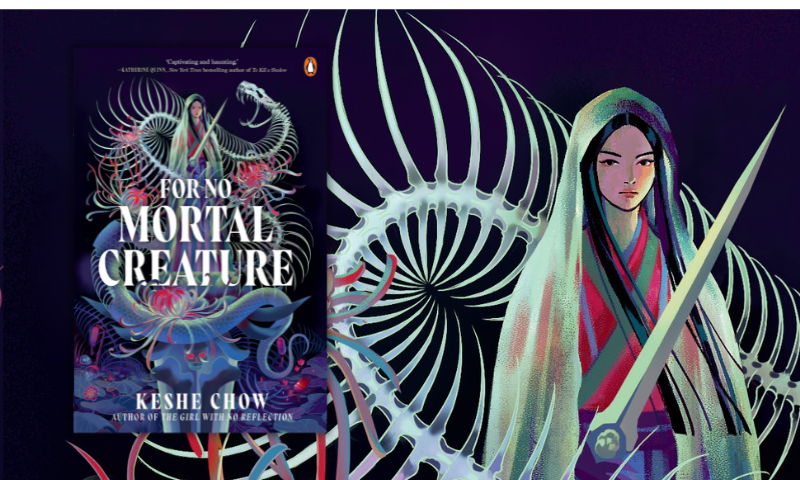
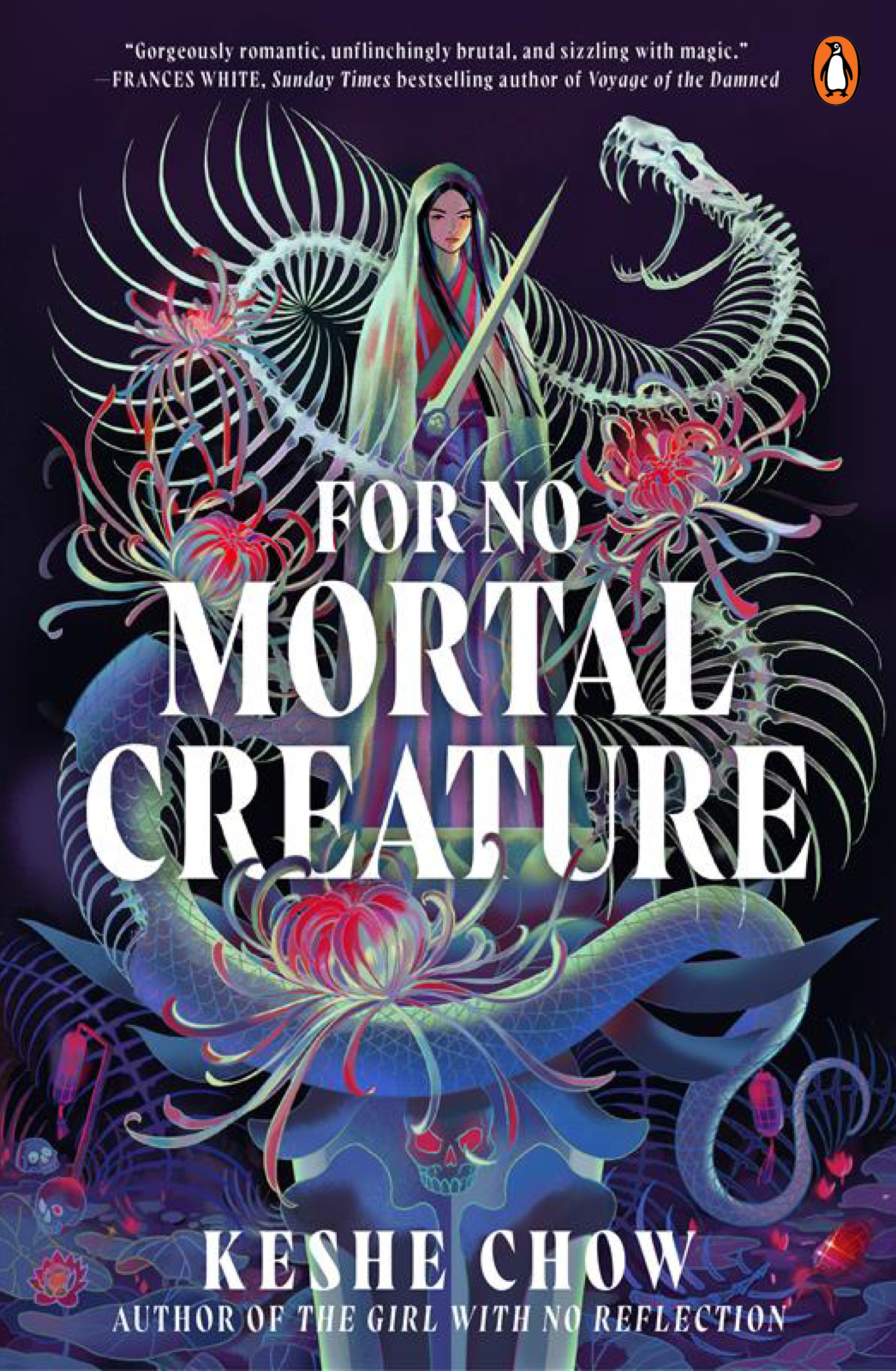
KESHE CHOW’s latest novel, For No Mortal Creature, is a romantic fantasy inspired by Wuthering Heights. It follows a girl with the power to move between life and death as she travels into the afterlife to save her grandmother. Read on for a Q&A.
What sparked the idea for your novel For No Mortal Creature?
I was doing research into Chinese supernatural creatures for another project when I came across the word jiàn (聻), a now-obsolete Chinese term for the ghost of a ghost. This was such a compelling idea to me – it got me thinking about the idea of ghosts who could die multiple times, and afterlives within afterlives, much like the movie Inception! I knew I wanted the atmosphere to be really creepy and gothic, so I also took inspiration from Wuthering Heights, which is one of my favourite classic novels, and mashed those two references together to create For No Mortal Creature.
What can you tell us about the supernatural and magical elements of this story?
In For No Mortal Creature, ghosts can die and become ghosts of ghosts. Ghosts of ghosts can die and become ghosts of ghosts of ghosts, and so on, until … who knows? No one knows how deep the afterlife goes, because people don’t usually come back.
Each time a ghost descends deeper into the death realm, they can then haunt the level immediately above them. However, they can’t see ghosts in the level below them until they’ve had a near death experience, or died again.
What challenges will Jia Yi face in the death realm?
As she descends deeper into the afterlife, things become darker, murkier, and more dangerous. Jia Yi’s tether to the living realm becomes weaker and more tenuous. And as she journeys farther into death, the ghosts she faces become more monstrous. There are literal ghosts who want to hurt her, as well as ghosts of her past: people who she has betrayed as well as those who have betrayed her.
Did you draw from existing mythology, places or stories to create the realms in your story?
I incorporated both eastern and western ghost stories and superstitions into the story. For No Mortal Creature is set at the very edge of a fictional empire, Jinghu Dao, that shares a border with another country called Yske. Jinghu Dao is Chinese coded and Yske is English coded so there are cultural and political clashes that come into play.
Were there any chapters or scenes that were especially difficult or rewarding to write?
The entire book was quite difficult to write because the concept is quite complicated plot- and logistics-wise! More specifically though, I found the opening chapter quite hard to write as it took me a while to nail the vibe. The book started out in a much more urban setting but it wasn’t capturing the haunting atmosphere I was striving for. It was only when I moved the opening chapter to the forest that the prose really began to sing!
What does your typical writing day look like?
I write ‘full-time’ but have school-aged kids, so in reality writing full-time means trying to squeeze a full day of work into a very very short day! I generally drop the kids off at school, run some errands and/or do some exercise, spend the day writing/answering emails /housework, then all too soon it’s time to pick up the kids again! My afternoons and evenings are pretty much all taken up by family time. I try to do some social media and promo stuff at night though my coherence levels vary with my degree of tiredness!
Did you do any special research for this book?
The word jiàn (聻)is so quite obscure and obsolete, so much so that many Chinese speakers are not familiar with it. So I actually did purposefully track down some of the original texts that mentioned it to make sure I hadn’t completely imagined the whole thing! I read some academic papers which described the origins and history of the word as well as some of the older works of fiction that mentioned it.
Where do you find your ideas? Are they sparked by things you see, read or hear?
Pretty much everywhere! Sometimes it’s something random, like in this case, a single word … Other times it’s something I’ve read, or watched on TV, or seen in nature. Sometimes I get inspired by a piece of art or a snippet of a song. Or sometimes it’s an interesting person you meet or see on the street. Occasionally I catch myself staring at someone random; they probably think I’m checking them out but in reality I’m just observing their looks and mannerisms and filing them away for a future character!
ABOUT THE AUTHOR
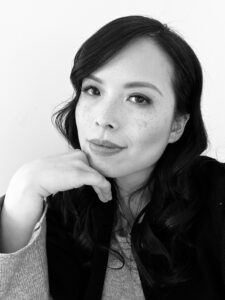 Keshe Chow is a Malaysian-born Chinese-Australian author of fantasy, romance, and speculative fiction. She won the 2020 Perito Prize, the 2021 Rachel Funari Prize for Fiction, the 2021 Yarra Literature Prize, the 2022 Victorian Premier’s Prize for an Unpublished Manuscript, and the 2023 Uncharted Thrilling Story Award. The Girl with No Reflection is her debut novel.
0 Comments