



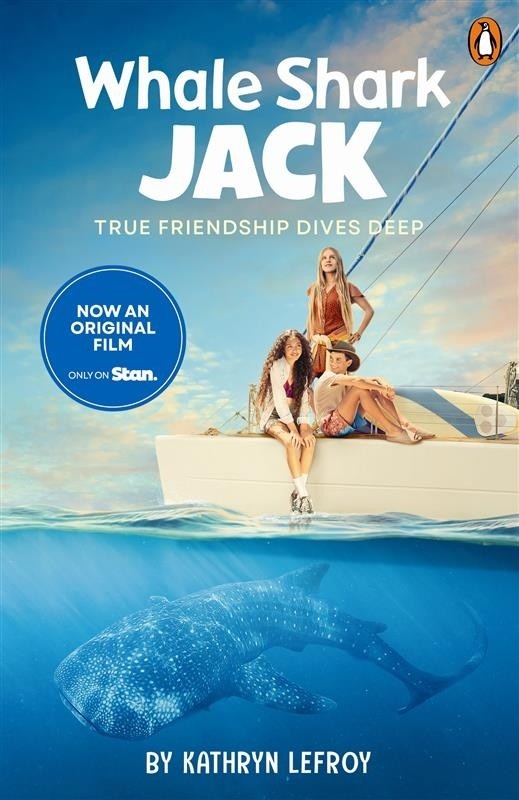
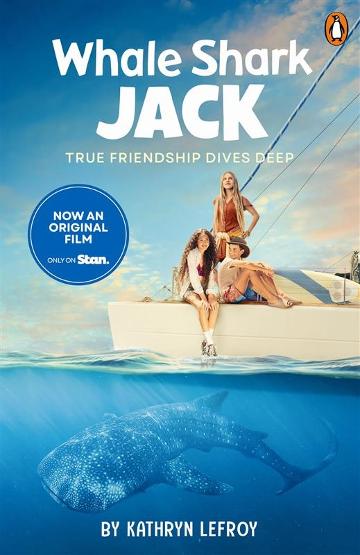
KATHRYN LEFROY’s Whale Shark Jack is a novel based on the heartwarming and adventure-packed family movie, Whale Shark Jack, a captivating tale of friendship, marine conservation and family loss.
Read on for a Q&A.
MEET KATHRYN LEFROY
What inspired you to turn the Whale Shark Jack film into a novel?
I’d always felt this story had the bones of a beautiful novel, but it was seeing the characters come to life on set that really sealed it for me. Watching the actors inhabit the characters made me acutely aware of how much emotional depth sat just beneath the surface – feelings, motivations, and contradictions that film can suggest, but isn’t able to linger on. So, when Penguin approached me about adapting the script into a novel, I didn’t hesitate. I’d been living with this story for years. I knew it inside out, back to front. I’d written novels before. How hard could it be?! (Spoiler alert: it was a lot harder than I thought!)
The greatest challenge was doing justice to the film’s extraordinary visual language. The directors and cinematographers created an immersive underwater world that lets audiences feel like they’re swimming alongside Sarah. All that shifting light underwater, the vastness of the ocean, the otherworldly beauty of a whale shark gliding past. How do you capture that magic with just words? That was the puzzle I had to solve.
My hope is that the book and the film can stand on their own, offering two ways into the same story, but that together they form a richer conversation.
 How did you adapt the cinematic storytelling into prose that works for readers?
I had to deliberately unlearn some of my film-writing instincts. Cinema demands compression, clarity, and relentless forward motion. There’s no space for lingering description or intimate character thoughts. At its heart, a screenplay is a blueprint for directors, actors, and crew rather than the final experience itself. Not to mention that film has an entire sensory toolkit at its disposal: performance, music, editing, cinematography. All of these things help enhance the audience experience.
Novels work differently as you have only language. But that limitation can work in your favour. You can slip inside a character’s mind, slow down time to savour a moment, or linger on details that would drag in a visual medium. Emotional beats that register in a glance on screen need to be unpacked and explored on the page.
Writing the novel meant digging deeper into the characters, especially our protagonist, Sarah. I could show not just what Sarah does, but explore why she does it, what she fears, and what she hopes. It meant slowing the story down to invite readers intimately into Sarah’s inner world: the weight of her grief, the thrill of discovery, the small moments of connection that shift everything. These needed room to breathe and unfold at a slower pace than on the screen.
What was your research process like for the marine life, whale sharks and the coastal setting?
I’ll let you in on a secret: when I wrote the first draft of the script, I had never seen a whale shark in real life. I hadn’t even been to Exmouth or the Ningaloo Reef! At that early stage, I was leaning heavily on information from the directors (who had been there many times), my imagination, and lots of internet searches.
But everything changed once I finally experienced the place for myself. I was lucky enough to travel to Ningaloo with the directors and cinematographer early in the film’s life for a test shoot, and swimming alongside the immense, gentle whale sharks recalibrated the entire story for me. Something clicked. The scale, the stillness, the quiet awe of being in their world made it clear how the story could evoke a sense of joy and wonder rather than spectacle alone.
That trip also gave me the chance to speak with people who work directly with whale sharks. No amount of online research can replicate the insight you gain from listening to someone who swims with these creatures daily, tracking and protecting them. Those conversations shaped not just the factual texture of the book, but its deeper emotional undercurrents as well.
Did writing Whale Shark Jack give you opportunities to explore parts of the story that weren’t fully developed in the film?
Yes, absolutely! The book allowed me to explore character motivations that were only hinted at on the screen, and to sit with the emotions that the film had to move past in order to keep its momentum. Some scenes that are pivotal in the film became just a single line in the book, while elsewhere I was able to create entirely new scenes that the film didn’t need but the book did. Writing in prose gave me freedom to explore questions of loss, conservation and curiosity in different ways that might disrupt a visual narrative, but feel right at home on the page.
The shift from screen to page also created new possibilities for how the Baiyungu language could be experienced by audiences. For both the film and the novel, I worked closely with Hazel Walgar, a Senior Cultural Knowledge Holder and Traditional Owner of the Baiyungu people, with deep ties to Nyinggulu (the Ningaloo Coast). Alongside her sister, Gwen Peck, Hazel created the Baiyungu Healing Song especially for the film. As the last fluent speakers of the Baiyungu language, Hazel and Gwen play an integral role in preserving Baiyungu culture and sharing it with the wider community. The novel has allowed us to bring that song to life in a new, intimate way on the page.
Did you learn any interesting facts about marine life while writing this book?
 Almost everything I know about the ocean now, I learned by writing this story. When I first started working on the film, I was actually quite scared of the ocean. But by the end of the shoot I was snorkeling with tiger sharks!! Truly!! The waters around Ningaloo Reef are extraordinary: beautiful, strange, and genuinely awe-inducing. If you ever have the chance to go, I couldn’t recommend it more highly. So, although I learned a lot of things about marine life, here are three of the most fascinating things I learned along the way:
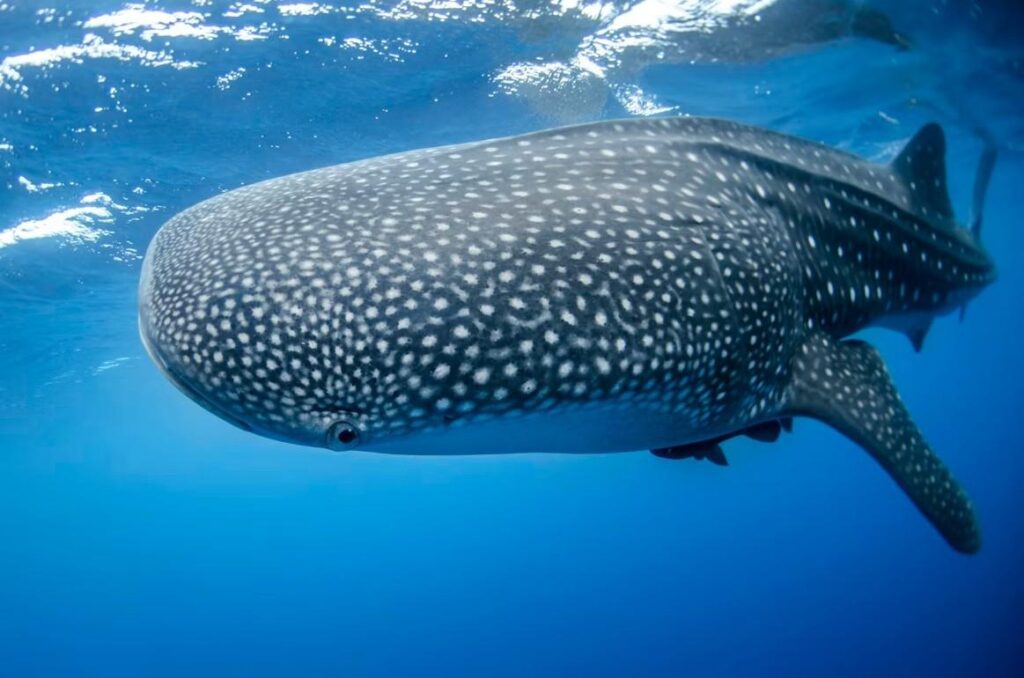
No one knows where whale sharks are born or where they spend their early lives — not even the people who spend their lives researching them!
Whale sharks are covered in thousands of tiny, tooth-like structures everywhere… including their eyeballs.
And the most confronting fact of all: in the time it takes to watch the movie Whale Shark Jack, the equivalent of around 75 whale sharks’ worth of plastic is dumped into the ocean!! So please reduce your plastic use and dispose of your rubbish thoughtfully. The whale sharks and the oceans they depend on will thank you!
What do you hope young readers take away from the book?
I hope they close the book wanting to jump straight into the ocean! Or if not that, then at least peer more closely at the world around them. Sarah and Jack’s story is really about noticing the small wonders we walk past every day, asking questions nobody else thinks to ask, and caring fiercely about the things that matter.
The natural world is full of mystery and magic if we’re curious enough to look. Whether it’s standing at the edge of the ocean watching for a whale shark’s shadow, lying under ancient trees, or gazing up at a sky packed with stars, there’s this incredible feeling of being part of something vast and ancient and worth protecting.
This planet is fragile and beautiful and belongs to all of us. And here’s the thing I really want kids to know: you don’t have to wait until you’re grown up to make a difference. Some of the best ideas, the bravest actions, and the most important questions come from people who are told they’re too young to matter. Sarah proves that’s rubbish. You’re never too small to make a difference.
ABOUT THE AUTHOR
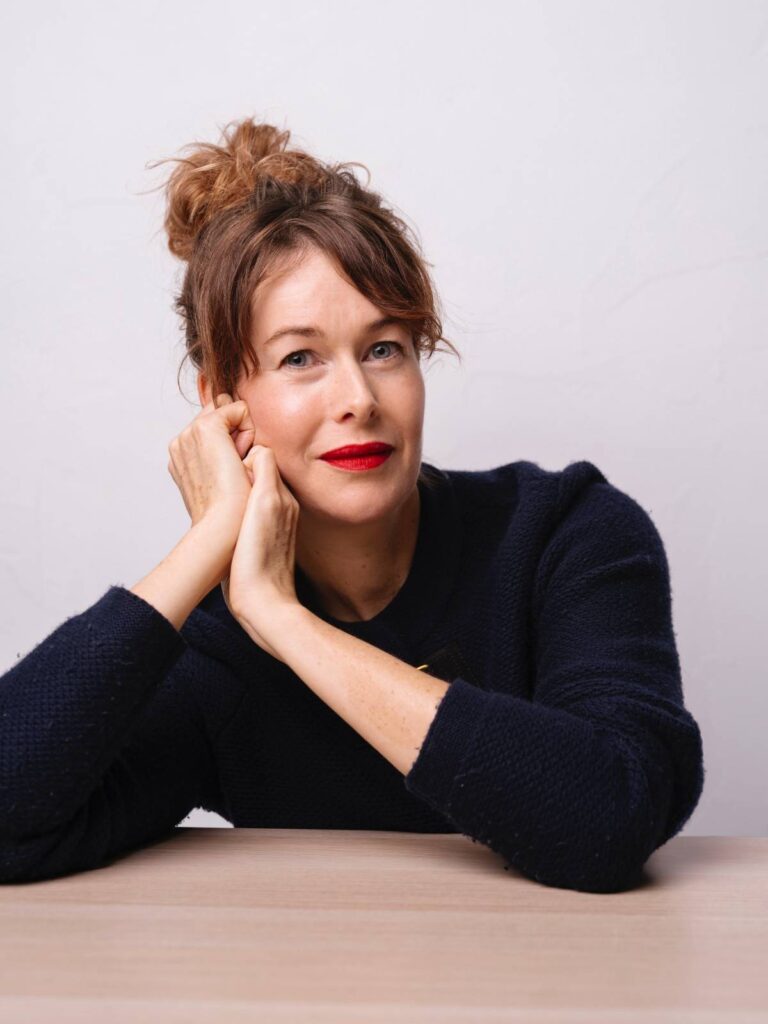 Kathryn is an award-winning novelist and screenwriter who can’t quite decide between the page and the screen, so she does both. She’s the author of several novels for young readers, including the popular ‘Alex and the Alpacas’ series, The Secret of the Stone, and now Whale Shark Jack – a story that started as a screenplay, became a novel, and has swum its way onto the big screen as a feature film.
When she’s not writing books, she’s developing and producing film and TV projects with creative partners scattered across the globe. She has a knack for finding stories that make audiences laugh, think, and believe in the extraordinary. And she’s got plenty more of them waiting in the wings!
She calls Fremantle home, where she spends a lot of time roaming the neighbourhood with her beloved dog, Pilot Bean, while plotting adventures across oceans, continents, and everywhere in between.
Visit Kathryn Lefroy’s website
0 Comments