

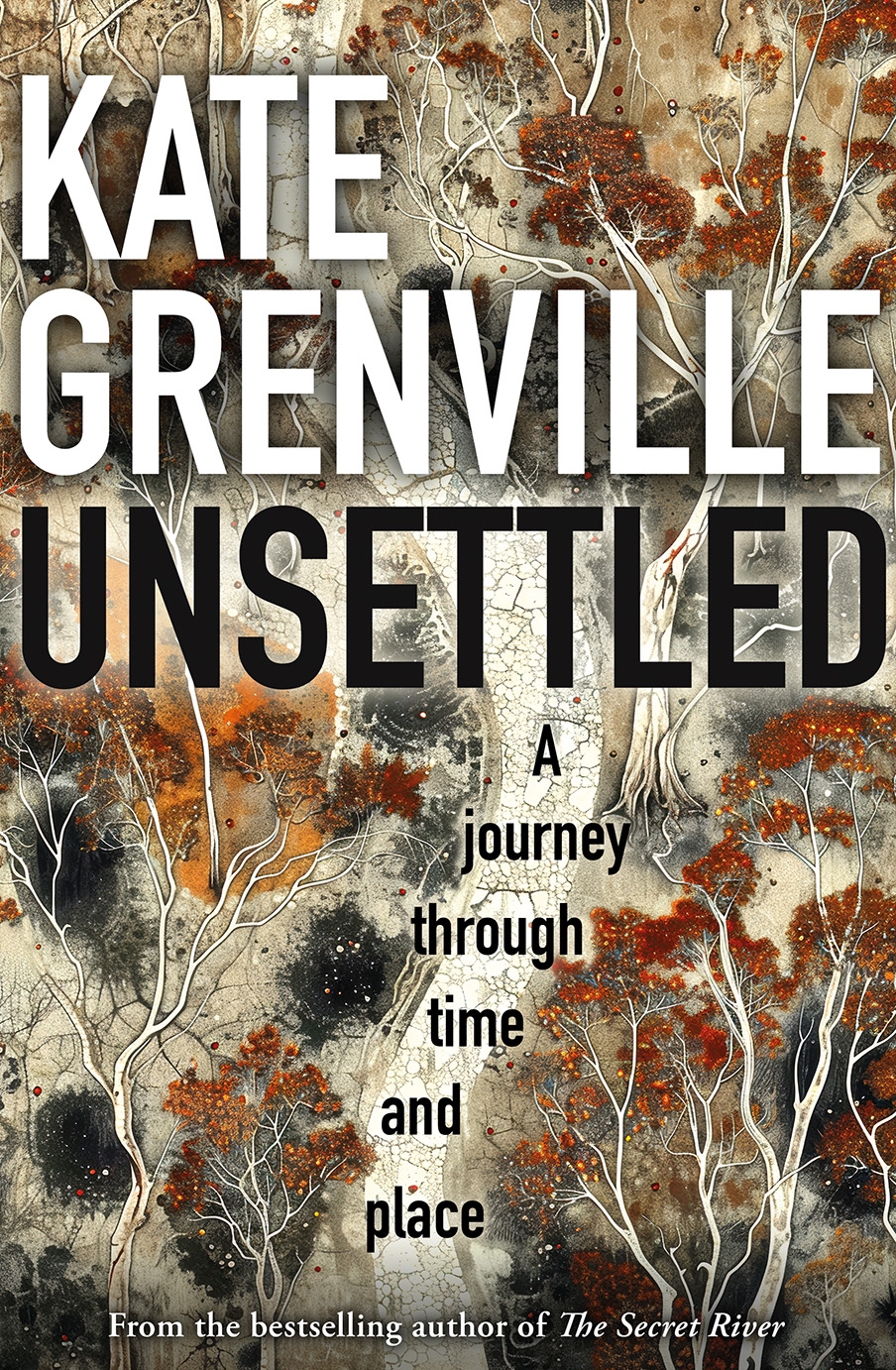
KATE GRENVILLE has used the title, Unsettled, for an account of a highly personal road trip.
She brings to it a thought-provoking view of Australia’s history, JENNIFER SOMERVILLE writes.
As Kate Grenville asks at the start of her new book: ‘What do we do with the fact that we’re the beneficiaries of a violent past? If we acknowledge that we’re on land taken from other people, what do we do about that?
‘The land was stolen, but that was generations ago. Are we to feel guilty, or is it all too far in the past? We can’t undo history, but we can’t ignore it either.
‘These questions put us non-Indigenous Australians at the centre of the question, but this doesn’t feel right. We might wring our hands and wonder what to do but how can that matter in comparison with two centuries of suffering by First Nations people?’
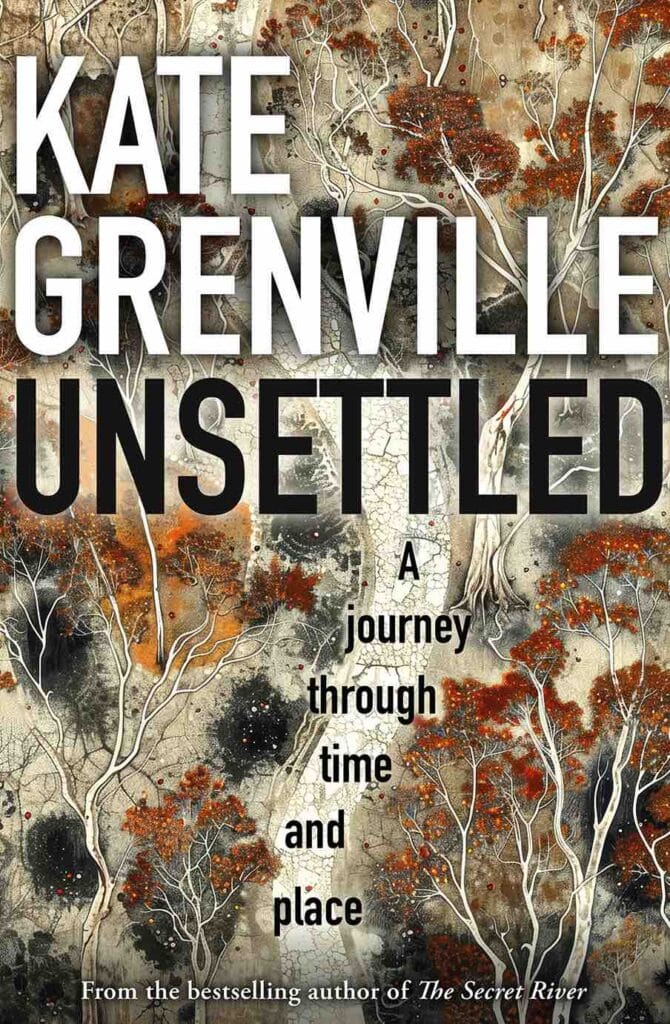 It was the failure of the Voice to Parliament special referendum that made her decide to burrow into these hard questions. That referendum failed because 60 per cent of non-Indigenous Australians voted No.
Grenville believes that sooner or later, truth needs to be told; a treaty or other agreement needs to be negotiated; and the voices of First Nations need to be heard in the places where decisions are made.
‘I don’t know how to be part of big, difficult decisions like this. Something smaller needs to happen as well, something more personal. All non-Indigenous Australians, no matter when or how they came to this country, benefit from the fact that this place was taken from the original inhabitants.
‘People with a different background to mine may consider these unsettling questions differently, but looking at my family’s footprint in this country over two centuries felt like a place I could start.’
Grenville describes what she did to write this book as small scale and personal, open-ended and improvised, a journey with many detours and a few dead ends.
There are no answers, just one person’s attempts to look with new eyes.
Grenville, a wordsmith already famous for The Secret River, a novel loosely based on the life of her ancestor Solomon Wiseman on the Hawkesbury River, looks at words, and their meanings in this highly personal pilgrimage.
And that is just one of the words she interrogates to see if it fits her purpose. She thought ‘pilgrimage’ is what a person might do if there was a shadow on their life they could not quite see.
Grenville had started her research more than 20 years ago, had lots of notes used for her works of fiction, and others she could use for this project, so a final road trip in early 2024 meant she could then write Unsettled fairly quickly.
To recall her family’s two centuries in Australia, Grenville returned to Wisemans Ferry, where her great-great-great grandfather Solomon Wiseman made his life after being transported to New South Wales in 1806 after stealing timber as a lighterman on the Thames. When transported to the convict colony he was accompanied by his wife and young son. On arrival in Sydney he was assigned to his wife as a convict servant and soon earned his ticket-of-leave and then a pardon.
He became prosperous after establishing a ferry across the river, building an inn and having interests in many other businesses.
Grenville homes in on semantics to look at his story. The family story was that he ‘took up’ land near what has become Wisemans Ferry. What weasel words they are, she claims, because he did not ‘take up’ something that was neglected or abandoned, to finish the job and look after it properly, but just ‘took’ it.
On the fertile riverside land that the original Australians had used to grow their root crops called midyini, or ‘yam daisies’ as the settlers termed them, Wiseman dug up those root crops, throwing them aside so he could plant corn.
That story was repeated on fertile loops of riverside land further north along the river valleys that Wiseman’s descendants travelled, routes that Grenville has followed in her book as far as Tamworth and Guyra.
Along the way she acknowledges that the people who once lived happily beside the creeks and rivers were forced into more inhospitable ranges and hills by the people who ‘settled’ the area, first on small farms, then squatters on larger properties, and selectors who were able to buy portions of those larger stations from the Crown.
The family story was that he ‘took up’ land near what has become Wisemans Ferry. What weasel words they are, she claims, because he did not ‘take up’ something that was neglected or abandoned, to finish the job and look after it properly, but just ‘took’ it.
During research for her various fiction and non-fiction works, she has asked for, and received, help and advice from Aboriginal people, approaching them diffidently because she did not want to be part of an ‘endless line of white people wanting something from them’.
‘They shouldn’t be asked to get involved in what I regard as our problem. The toxic legacy of colonisation is something our forebears made, and at least for a time, I think it’s right for us to do our soul-searching on our own,’ she said.
‘It was our forebears who came here and did the damage. It’s our attitudes, our words, our frames of reference that keep blocking the way forward.
‘From our position of power at the centre of things, we’ve looked out at the people we displaced and seen them as something we had to do something about … the Aboriginal issue or the Aboriginal problem.
‘The phrase “acknowledgement of country” trips off our tongues these days and while acknowledgment is a good thing, it has taken us 200 years to get that far. But there’s a sense that it’s something we’re doing for First Nations people but whether it’s respectful, or tokenism, it’s a way of looking away from ourselves and what we’ve done.’
Grenville became quite impassioned as she drove further north-west through St Albans, taking a potshot at ‘heritage’ items in the local pub, finding it means ‘what we’ve inherited’, but then she questioned whether she has a right to be scornful, with her forebears just like those shown on the walls of the pub.
As a consummate wordsmith, she shared her delight in the landscape unfolding before her, but she also realised how shallow-rooted that familiarity with it is, compared to the people who lived there for millennia before colonists arrived.
Back to her analysis of words: Grants of land were really gifts, because without any legal basis the entire enormous expanse of what became Australia was named as Crown Land.
Grenville’s private pilgrimage is clearly marked in a series of maps between chapters, with a family tree also featured. Early in her writing career she adopted her father’s middle name, Grenville, rather than his surname, Gee, as the former had more gravitas than the latter.
Grenville underwent a rude shock when she drove from meandering country roads into the Hunter Valley and what she terms an industrial wasteland of coal mines. When she turned down a country road towards where one ancestor had lived by the river, there was what she terms a ‘hellscape’ on the other side of the waterway.
On through Murrurundi and Currabubula she roamed, following the family trail, finding to her dismay that an ancestor who had built a pub at what is now known to locals as Curra, had also been a squatter. So, had he or his wife shot at Aboriginal people, as some other squatters had done?
In carrying out research into the pastoral leases eventually granted to the squatters, Grenville uncovered a clause written by London authorities, granting Aboriginal inhabitants free access to the land ‘to enable them to procure animals, birds and fish and other foods on which they subsist’.
The squatters ignored the clause, as did the authorities, until 1996 when it was pulled out of obscurity to be used in legal argument in the Wik case. The court found that that First Nations people still had rights over their traditional lands and waters, rights coexisting with the rights of the leaseholder.
‘If squatters had taken notice of that clause, or any of the authorities issuing leases for 150 years had enforced it, our history would be very different,’ she said.
Grenville admits in this book that while she had used some of the family stories as a way into some of her novels, she was happy for the characters in the books to be representative of their time and place rather than specifically her forebears. But travelling to where family had lived meant she finally felt ready to take on the details of her legacy, with those stories kept by generations of women in her family.
Grenville drove out into the western plains and Gunnedah, following the trail of her grandparents; then back to Tamworth, where she wondered about the names of locations and properties, and whether those that seemed to be Aboriginal really meant what the owners believed.
In another exercise in semantics, Grenville wondered about the term ‘non-Indigenous Australians’. She sees it as a non-identity, a negative, an emptiness. She thought some other words do not ring true or are derogatory, but maybe ‘balanda’ would do. The word is used by some Aboriginal people for people who are not Indigenous, borrowing the word from the Macassans to the north, who’d themselves been colonised by the Dutch and, who called themselves ‘Hollanders’.
‘If squatters had taken notice of that clause, or any of the authorities issuing leases for 150 years had enforced it, our history would be very different,’
Grenville’s own family story ended near Guyra, and she realised that her foray into family history and Aboriginal history did not have any kind of closure. She knew she had seen things in new ways, heard words differently, thought about Aboriginal people in every place she had visited.
So, her destination before turning for home was Bingara and Myall Creek, redolent with the massacre there of Aboriginal people for which seven white men were hanged. But Bingara residents, some of them descendants of the massacre survivors, others descendants of the men who did the killing, came together to devise a thoughtful memorial at the site of that massacre.
Grenville finds the word ‘reconciliation’ uncomfortably ambiguous at times, but believes it is absolutely appropriate for the people of Bingara who came together, talked things through, and devised a memorial path and plaques.
She took heart from the Myall Creek Memorial, which she sees as balanda and Aboriginal people coming together, looking at the truth of what took place, and finding a way
to go forward.
‘They’ve shown us that it’s not impossible. The rest of us can do it too,’ she claims. ‘But the road trip has also shown me another kind of memorial as well. The place itself is a memorial, the ground, the hills, valleys, rocks and trees and streams of water where the past happened.
‘I felt great relief when I finished writing this book, because I have been unsettled for the past 25 years ever since I started really learning what had happened in the past. Not relief that bad things hadn’t happened, but relief that there is a way forward to truly acknowledge it. It’s not a dead end.
‘If the book tells people anything, it is just to open their eyes. Have a think and don’t be afraid of what might come up.
‘It’s like any other trauma. If you just try to squash it, it kind of festers away. If you get it out and have a good look at it, then you know what you’re dealing with.’
FROM THE AUTHOR
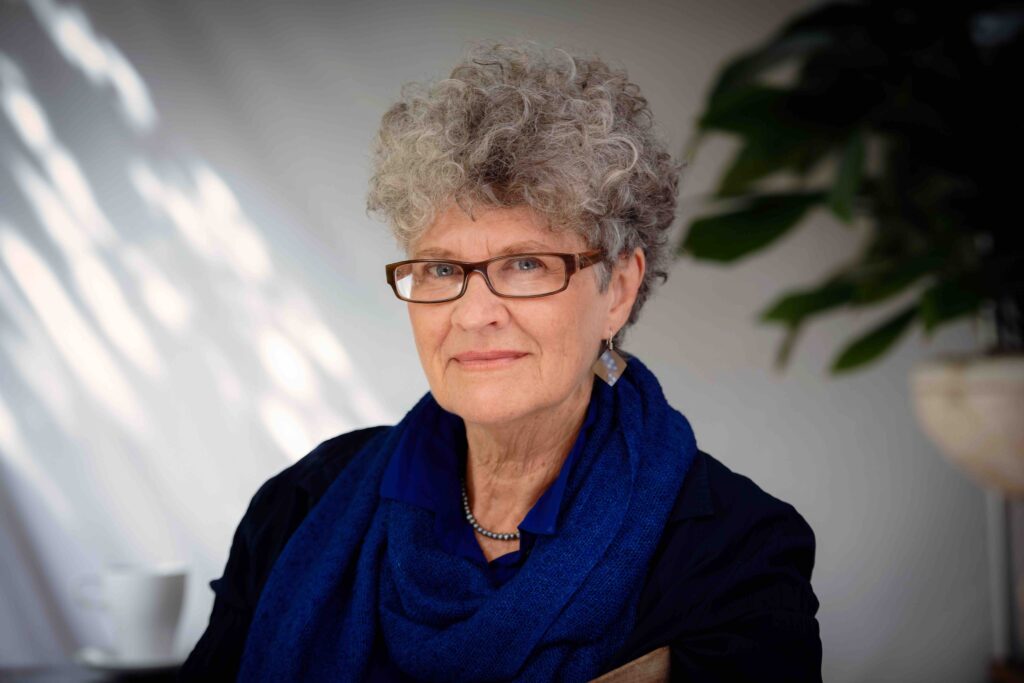
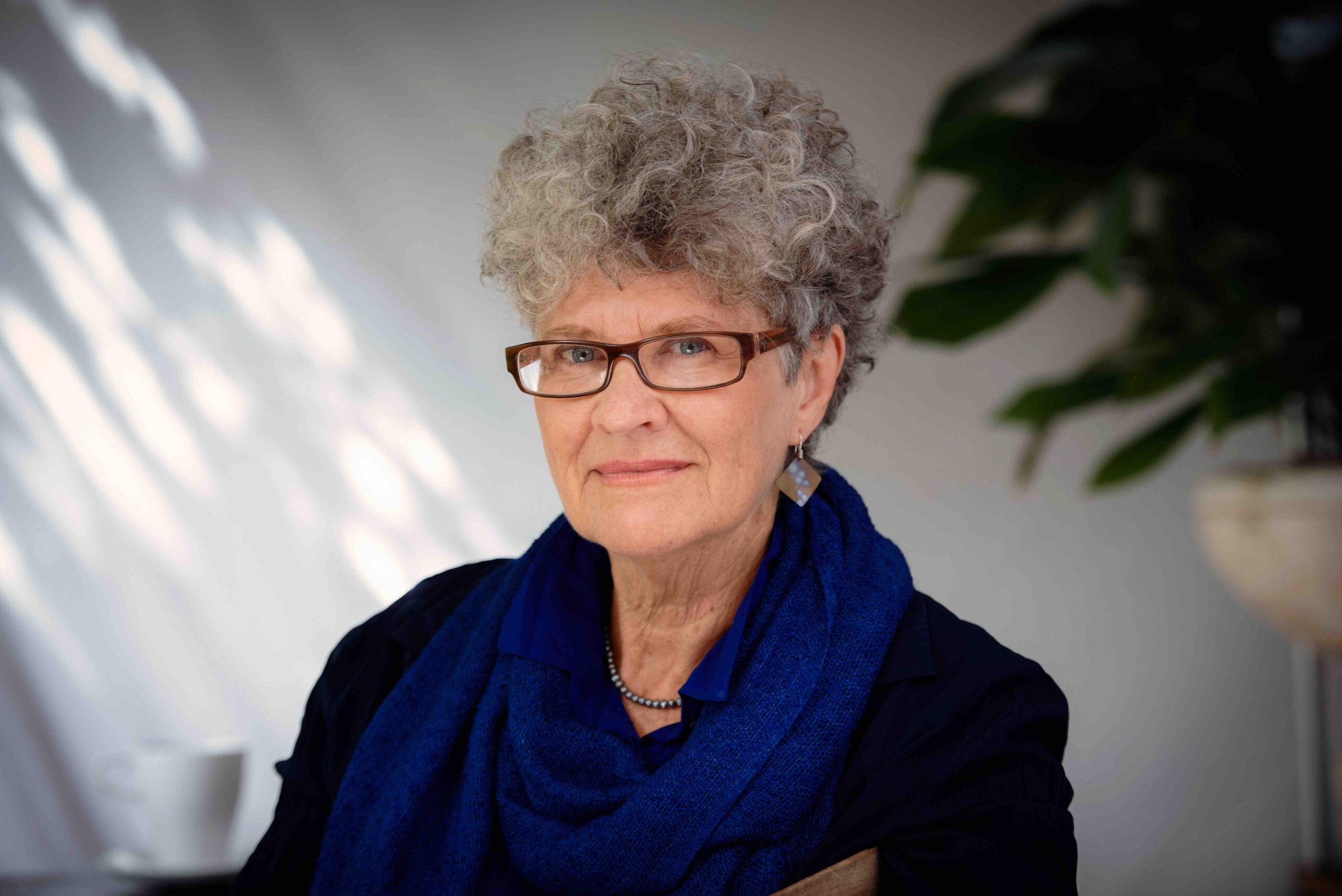
photo credit – Darren James
I’ve been writing with a view to being published since I was 16 – though it took me twelve years to see my first short story in print. Since then I’ve published 16 books. Ten of them are fiction, three are books about the writing process, one is a biography (of my mother), one is a memoir (about the research and writing of The Secret River, my best-known book), and one of them is a science-y book about fragrance.
I’ve been lucky – many of these books have won prizes, three have been adapted for the screen, and one had sell-out runs at Adelaide and Edinburgh Festivals as a play. They’ve all been published around the world and all the novels have been translated into many languages.
I was born in 1950 and grew up in Sydney, Australia, earning an Arts degree from Sydney University. My first job was at Film Australia, editing documentary films. Then I went to Europe and the US for five years, working and studying (I did an MA in Creative Writing at the University of Colorado). When I came back home I worked for several years at the Special Broadcasting Service as an editor of subtitles, then became a freelance writer, reviewer and teacher of Creative Writing. Several grants from the Australia Council let me go on writing between those part-time jobs.
A version of The Secret River was the thesis for a Doctorate of Creative Arts from the University of Technology Sydney, and I’ve also been privileged to be granted honorary doctorates from Sydney University, Macquarie University and the University of NSW, and an award for Lifetime Achievement in Literature from the Australia Council. I was honoured to receive the Order of Australia in 2018.
I’ve been very fortunate to have been able to spend my life doing what I love. I’m very grateful to a world of readers who are interested in the same things I am.
0 Comments